Showing posts with label first time buyer. Show all posts

Wednesday, February 6, 2019

Is the lack of a sizable down payment holding you back from buying a home? Don't let it!

One More Time… You Do Not Need 20% Down to Buy a Home

One More Time... You Do Not Need 20% Down to Buy a Home | MyKCM
The largest obstacle renters face when planning to buy a home is saving for a down payment. This challenge is amplified by rising rents, which has eaten into the amount of money renters have leftover for savings each month after paying expenses.
In combination with higher rents, survey after survey has shown that non-homeowners (renters and those living rent-free with family or friends) believe they need to save upwards of 20% for their down payment!
According to the “Barriers to Accessing Homeownership” study commissioned in partnership between the Urban Institute, Down Payment Resource, and Freddie Mac, 39% of non-homeowners and 30% of those who already own a home believe they need more than a 20% down payment.
The percentage of those who are aware of low down payment programs (those under 5%) is surprisingly low at 12% for non-homeowners and 13% for homeowners.
In a recent Convergys Analytics report, they found that 49% of renters believe they need at least a 20% down payment.
The median down payment on loans approved in 2018 was only 5%! Those waiting until they have over 20% may already have enough saved to buy now!
There are over 45 million millennials (33%) who are mortgage ready right now, meaning their income, debt, and credit scores would all allow them to qualify for a mortgage today!


Bottom Line

If your five-year plan includes buying a home, let’s get together to determine what it will take to make that plan a reality. You may be closer to your dream than you realize!

Monday, October 29, 2018

Wouldn't you rather build your own equity, as opposed to someone else's?

Rent or Buy: Either Way You’re Paying A Mortgage!

Rent or Buy: Either Way You’re Paying A Mortgage! | MyKCM

There are some people who have not purchased homes because they are uncomfortable taking on the obligation of a mortgage. Everyone should realize, however, that unless you are living with your parents rent-free, you are paying a mortgage – either yours or your landlord’s.
As Entrepreneur Magazine, a premier source for small business, explained in their article, “12 Practical Steps to Getting Rich”:
“While renting on a temporary basis isn’t terrible, you should most certainly own the roof over your head if you’re serious about your finances. It won’t make you rich overnight, but by renting, you’re paying someone else’s mortgage. In effect, you’re making someone else rich.”
With home prices rising, many renters are concerned about their house-buying power. Mark Fleming, Chief Economist at First American, explained:
“Over the last three years, renter house-buying power has increased fast enough to keep pace with house price appreciation, so the share of homes that a renter can afford to buy has remained the same since 2015.
Although mortgage rates are expected to rise, they are still low by historic standards, and real household incomes are the highest they have ever been. Assuming this trend continues, our measure of affordability, which takes into account income, interest rates, and house prices, indicates that homeownership is still within reach for renters.”
As an owner, your mortgage payment is a form of ‘forced savings’ which allows you to build equity in your home that you can tap into later in life. As a renter, you guarantee the landlord is the person building that equity.
Interest rates are still at historic lows, making it one of the best times to secure a mortgage and make a move into your dream home. Freddie Mac’s latest report shows that rates across the country were at 4.51% last week.

Bottom Line

Whether you are looking for a primary residence for the first time or are considering a vacation home on the shore, now may be the time to buy.

Wednesday, October 17, 2018

In a lot of markets buying a home is cheaper than renting.


Rents Are on The Rise: Don’t Get Caught in The Rental Trap!


Rents Are on The Rise: Don’t Get Caught in The Rental Trap! | MyKCM
There are many benefits to homeownership, but one of the top benefits is protecting yourself from rising rents by locking in your housing cost for the life of your mortgage.

Don’t Become Trapped 

A recent article by Apartment List addressed rising rents by stating:
“Our national rent index is up 0.1 percent month-over-month, marking the sixth straight month of increasing rents. Year-over-year growth now stands at 1.2 percent.”
The article continues, explaining that:
“Rents increased month-over-month in 62 of the nation’s 100 largest cities, down significantly from the 85 cities that saw rents rise last month. That said, rents are still up year-over-year in most of the nation’s largest markets — 77 of the 100 largest cities have seen rents increase over the past twelve months.”
Additionally, Urban Land Magazine explained that,
“Currently, nearly half (47 percent) of renter households are cost burdened (i.e., paying more than 30 percent of income for housing), while 25 percent (totaling 11 million households) are severely cost burdened, paying over 50 percent of their total household income for rent.”
These households struggle to save for a rainy day and pay other bills, including groceries and healthcare.

It’s Cheaper to Buy Than Rent

As we have previously mentioned, the results of the latest Rent vs. Buy Report from Trulia show that homeownership remains cheaper than renting with a traditional 30-year fixed rate mortgage in the 100 largest metro areas in the United States.
The updated numbers show that the range is an average of 2% less expensive in Honolulu (HI), all the way up to 48.9% less expensive in Detroit (MI), and 26.3% nationwide!

Know Your Options

Perhaps you have already saved enough to buy your first home. A nationwide survey of about 1,166 renters found that 34% said they rent because they cannot afford to buy, 29% said they cannot afford to buy where they live, and nearly a quarter (24%) were saving to buy.
Many first-time homebuyers who believe that they need a large down payment may be holding themselves back from their dream homes. As we have reported before, in many areas of the country, a first-time homebuyer can save for a 3% down payment in less than two years. You may have already saved enough!

Bottom Line

Don’t get caught in the trap that so many renters are currently in. If you are ready and willing to buy a home, find out if you are able. Let’s get together to determine if you can qualify for a mortgage today!

Thursday, February 15, 2018

Know your credit score BEFORE you start your home buying process...


Thinking About Buying? Know Your Credit Score


Thinking About Buying? Know Your Credit Score | MyKCM
Knowing your credit score or getting a recent copy of your credit report is one of the first steps that you can take toward knowing how ready you are to start the home buying process.
Make sure all the information listed on your report is accurate and work to correct any mistakes. The higher your credit score, the more likely you will be to receive a better interest rate for your mortgage, which will translate into more ‘home for your money.'
Many potential buyers believe that they need a 750 FICO® Score or higher to be able to purchase a home. The truth is that according to Ellie Mae’s Origination Report, over 53% of loans were approved with a FICO® score under 750 last month!

Here are some tips for improving your credit score:

  • Make payments, including rent, credit cards, and car loans, on time.
  • Keep your spending to no more than 30% of your limit on credit cards.
  • Pay down high-balance credit cards to lower balances, and consider balance transfers to free up credit.
  • Check for errors on your credit report and work toward fixing them.
  • Shop for mortgage rates within a 30-day period — too many spread-out inquiries can lower your score.
  • Work with a credit counselor or a lender to improve your score.
Once you know your score, your next step will be finding a lender and getting pre-approved for a mortgage. Doing this will ensure that you know your budget before you start looking for your dream home.

Thursday, December 14, 2017

If you choose to rent to avoid paying a mortgage, you still are doing that. It is just someone else's mortgage that you are paying...

Renting or Buying…Either Way, You're Paying Someone's Mortgage

Renting or Buying…Either Way, You're Paying Someone's Mortgage | MyKCM
There are some people who have not purchased homes yet because they are uncomfortable taking on the obligation of a mortgage. Everyone should realize that, unless you are living with your parents rent-free, you are paying a mortgage – either yours or your landlord’s.
As Entrepreneur Magazine, a premier source for small business, explained in their article, “12 Practical Steps to Getting Rich,”
“While renting on a temporary basis isn’t terrible, you should most certainly own the roof over your head if you’re serious about your finances. It won’t make you rich overnight, but by renting, you’re paying someone else’s mortgage. In effect, you’re making someone else rich.”
Christina Boyle, Senior Vice President and head of the Single-Family Sales & Relationship Managementorganization at Freddie Mac, explains another benefit of securing a mortgage vs. paying rent:
“With a 30-year fixed rate mortgage, you’ll have the certainty & stability of knowing what your mortgage payment will be for the next 30 years – unlike rents which will continue to rise over the next three decades.”
As an owner, your mortgage payment is a form of ‘forced savings’ which allows you to build equity in your home that you can tap into later in life. As a renter, you guarantee the landlord is the person with that equity.
Interest rates are still at historic lows, making it one of the best times to secure a mortgage and make a move into your dream home. Freddie Mac’s latest report shows that rates across the country were at 3.94% last week.

Bottom Line

Whether you are looking for a primary residence for the first time or are considering a vacation home on the shore, now may be the time to buy.

Thursday, November 2, 2017

Buying a home isn't free. Closing costs are often forgotten, or overlooked, by buyers and can lead to trouble at the closing table. Knowing the average closing cost in your area can help you be more prepared.

More Than Half of All Buyers Are Surprised by Closing Costs

More Than Half of All Buyers Are Surprised by Closing Costs | MyKCM
According to a survey conducted by ClosingCorp, over half of all homebuyers are surprised by the closing costs required to obtain their mortgage.
After surveying 1,000 first-time and repeat homebuyers, the results revealed that 17% of homebuyers were surprised that closing costs were required at all, while another 35% were stunned by how much higher the fees were than expected.
“Homebuyers reported being most surprised by mortgage insurance, followed by bank fees and points, taxes, title insurance and appraisal fees.”
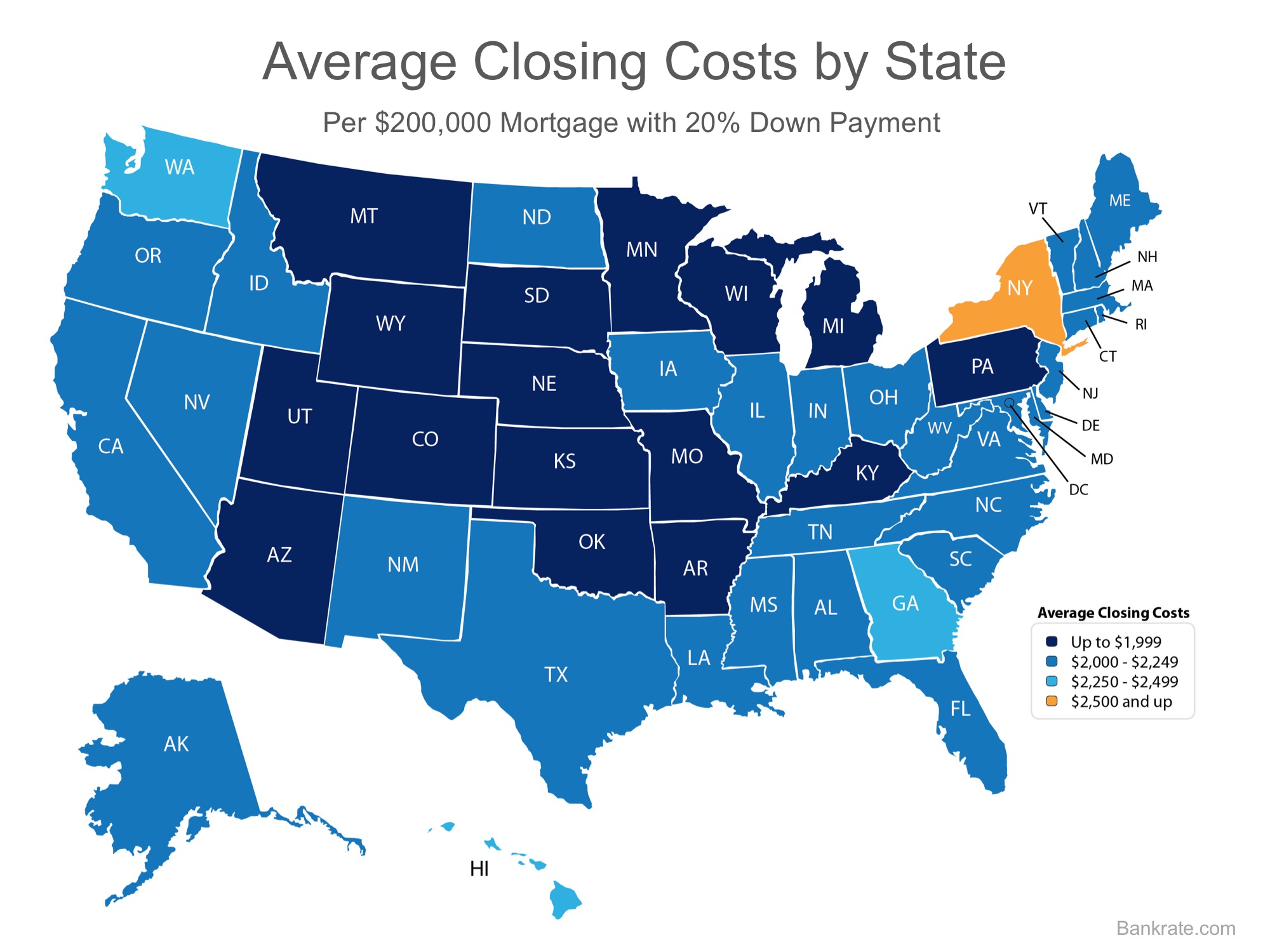
Bankrate.com gathered closing cost data from lenders in every state and Washington, D.C. in order to share the average costs in each state. The map below was created using the closing costs on a $200,000 mortgage with a 20% down payment.
More Than Half of All Buyers Are Surprised by Closing Costs | MyKCM
Keep in mind that if you are in the market for a home above this price range, your costs could be significantly greater. According to Freddie Mac,
“Closing costs are typically between 2 and 5% of your purchase price.”

Bottom Line

Speak with your lender and agent early and often to determine how much you’ll be responsible for at closing. Finding out that you’ll need to come up with thousands of dollars right before closing is not a surprise anyone is ever looking forward to.

Thursday, July 27, 2017

More than 70% of first time home buyers put down less than 20% this spring. Looking to buy? Don't get caught up in these myths...

Home Buying Myths Slayed [INFOGRAPHIC]

Home Buying Myths Slayed [INFOGRAPHIC] | MyKCM

Some Highlights:

  • Interest rates are still below historic numbers.
  • 88% of property managers raised their rent in the last 12 months!
  • The credit score requirements for mortgage approval continue to fall.

Friday, June 23, 2017

Last winter, projections were all about increasing mortgage rates. Reality has rates still at a strong, low position. Expectation is still for a rise in the second half of the year.

Mortgage Interest Rates Reverse Course in 2017

Mortgage Interest Rates Reverse Course in 2017 | MyKCM
To start the year, housing experts all agreed on one thing: 2017 was going to be the year we would see mortgage interest rates begin to rise. After years of historically low rates, and an improving economy, the question wasn’t if they would increase but instead how much they would increase. Some thought we could see rates hit 5-5.5% by the end of the year.
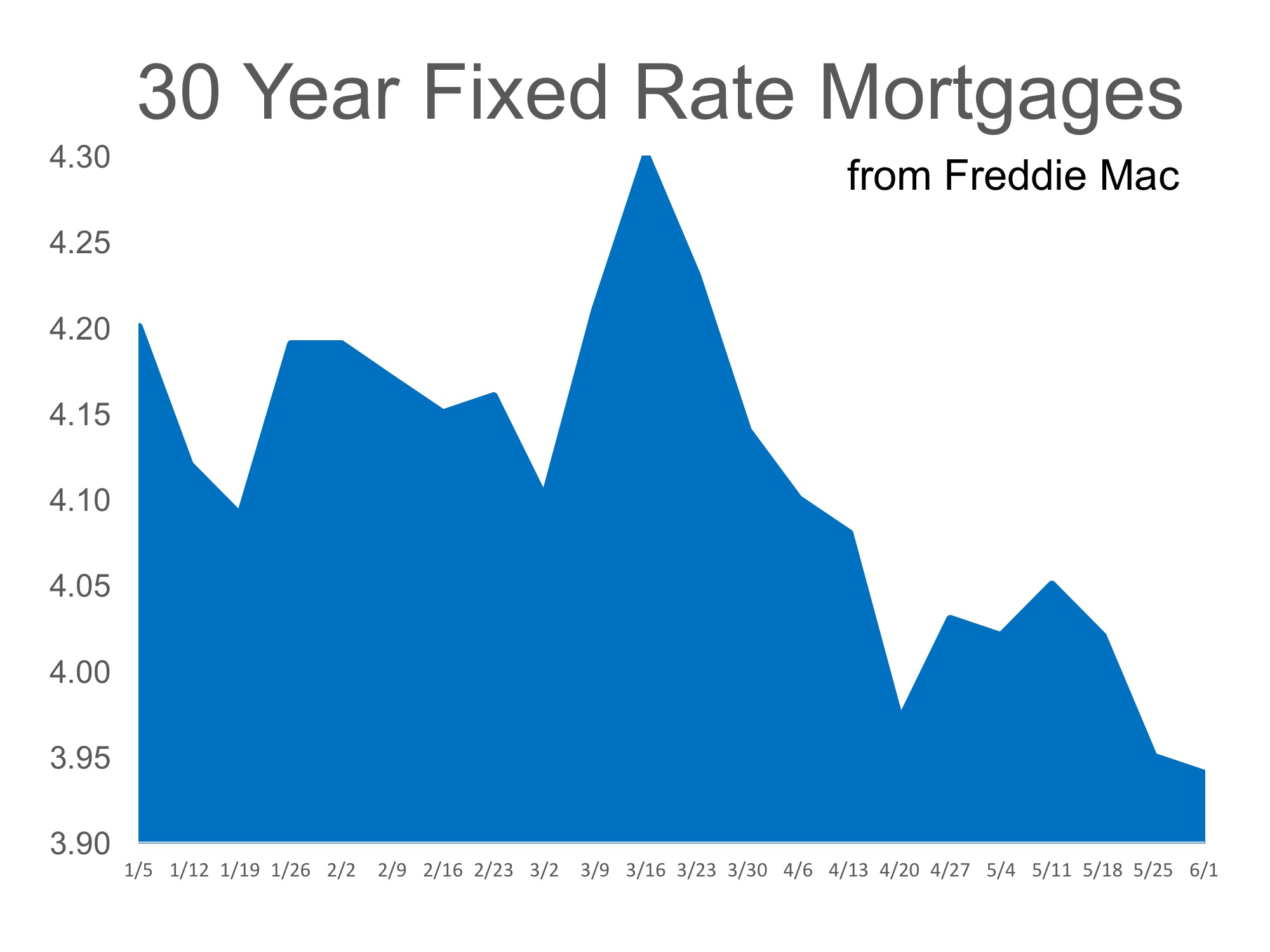
However, the exact opposite has happened. Instead of higher rates as we head into the middle of 2017, we now have the lowest rates of the year (as reported by Freddie Mac). Here is a graph of mortgage rate movement since the beginning of the year:
Mortgage Interest Rates Reverse Course in 2017 | MyKCM

Projections still call for an increase…

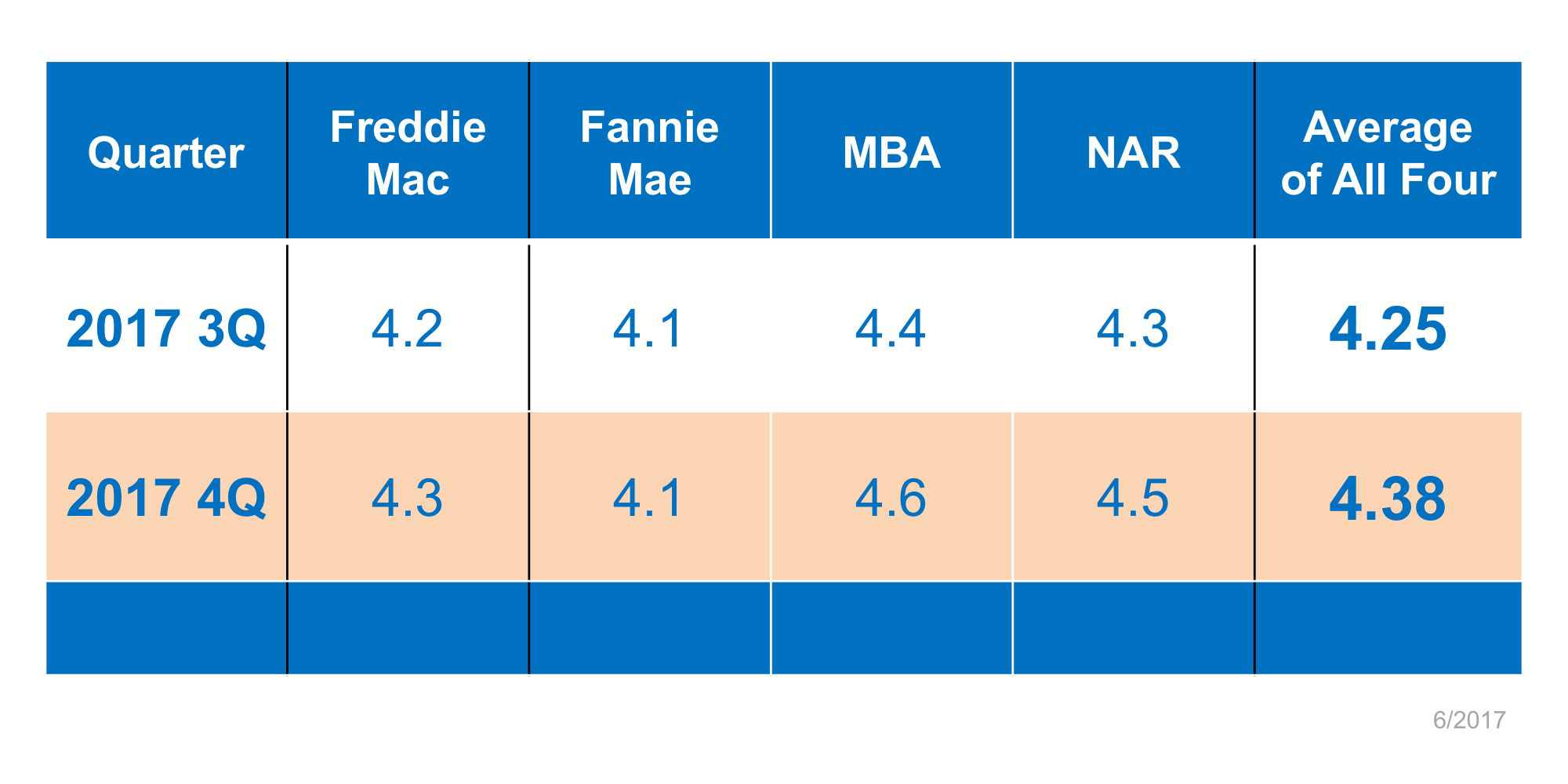
Four major entities (Freddie Mac, Fannie Mae, the Mortgage Bankers Association and the National Association of Realtors) are still projecting that rates will increase by the fourth quarter of the year.

Mortgage Interest Rates Reverse Course in 2017 | MyKCM

Bottom Line

No one knows for sure where interest rates will be in six months. However, if you are thinking about buying your first house or trading up to the home of your dreams, you can still get a mortgage at historically low rates RIGHT NOW.

Wednesday, May 31, 2017

According to Gallup - real estate remains the best long-term investment...

Gallup: Real Estate is Best Long-Term Investment 4 Years Running

Gallup: Real Estate is Best Long-Term Investment 4 Years Running | MyKCM
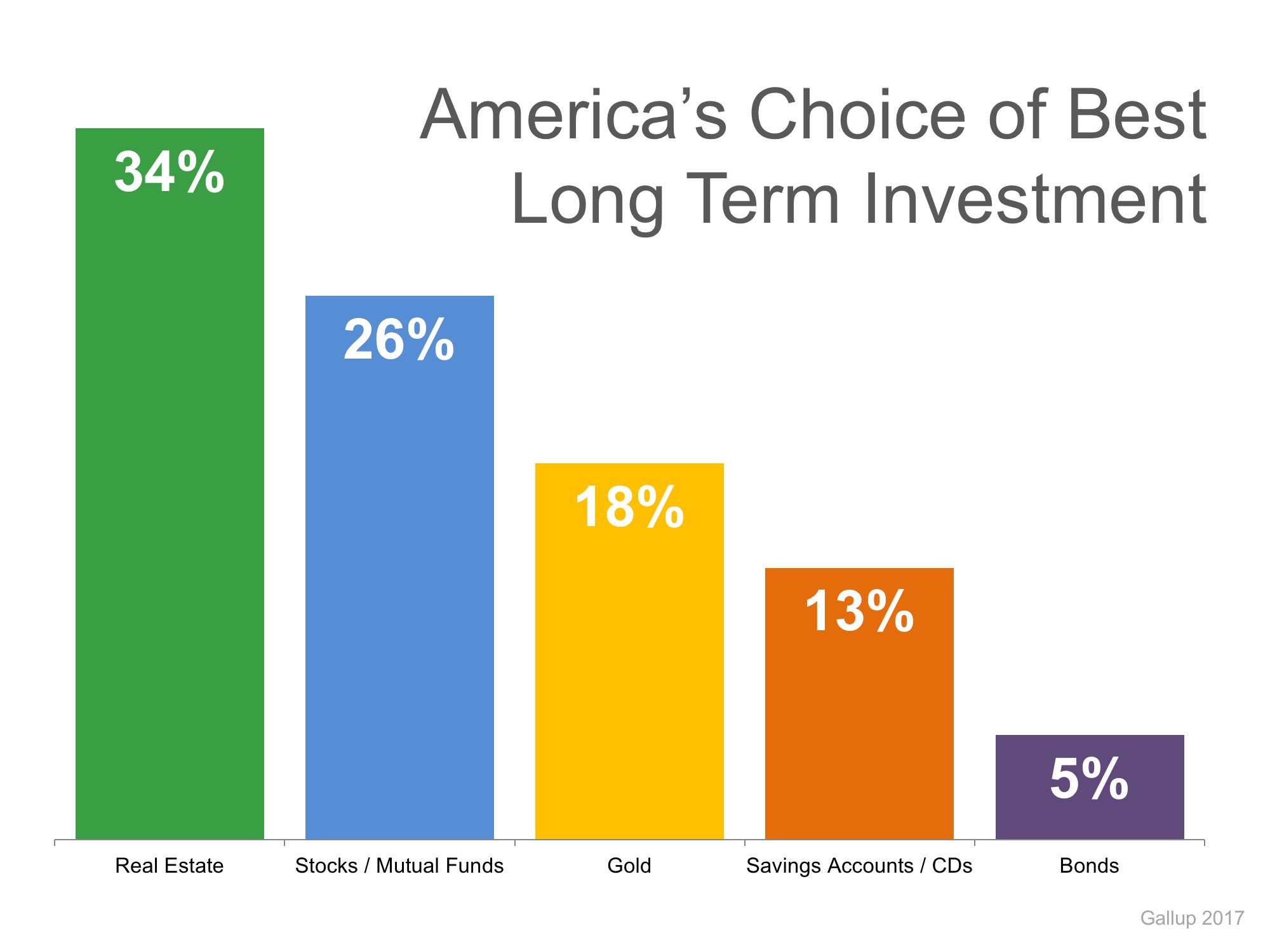
Every year, Gallup surveys Americans to determine their choice for the best long-term investment. Respondents are given a choice between real estate, stocks/mutual funds, gold, savings accounts/CDs, or bonds.
For the fourth year in a row, Real Estate has come out on top as the best long-term investment! This year’s results showed that 34% of Americans chose real estate, followed by stocks at 26%. The full results are shown in the chart below.
Gallup: Real Estate is Best Long-Term Investment 4 Years Running | MyKCM
The study makes it a point to draw attention to the contrast of the sentiment over the last four years compared to that of 2011-2012, when gold took the top slot with 34% of the votes. Real estate and stocks took second and third place, respectively, while still in recovery from the Great Recession.

Bottom Line

As the real estate market has recovered, so has the belief of the American people in the stability of housing as a long-term investment.

Monday, May 15, 2017

Knowing real estate "lingo" comes in very handy when you are involved with buying a home. Here is a list, and definitions, of the most popular terms in real estate transactions...

Buying a Home? Do You Know the Lingo?

Buying a Home? Do You Know the Lingo? | MyKCM
Buying a home can be intimidating if you are not familiar with the terms used during the process. To start you on your path with confidence, we have compiled a list of some of the most common terms used when buying a home.
Freddie Mac has compiled a more exhaustive glossary of terms in their “My Home” section of their website.
Annual Percentage Rate (APR) – This is a broader measure of your cost for borrowing money. The APR includes the interest rate, points, broker fees and certain other credit charges a borrower is required to pay. Because these costs are rolled in, the APR is usually higher than your interest rate.
Appraisal – A professional analysis used to estimate the value of the property. This includes examples of sales of similar properties. This is a necessary step in getting your financing secured as it validates the home’s worth to you and your lender.
Closing Costs – The costs to complete the real estate transaction. These costs are in addition to the price of the home and are paid at closing. They include points, taxes, title insurance, financing costs, items that must be prepaid or escrowed and other costs. Ask your lender for a complete list of closing cost items.
Credit Score – A number ranging from 300-850, that is based on an analysis of your credit history. Your credit score plays a significant role when securing a mortgage as it helps lenders determine the likelihood that you’ll repay future debts. The higher your score, the better, but many buyers believe they need at least a 780 score to qualify when, in actuality, over 55% of approved loans had a score below 750.
Discount Points – A point equals 1% of your loan (1 point on a $200,000 loan = $2,000). You can pay points to buy down your mortgage interest rate. It’s essentially an upfront interest payment to lock in a lower rate for your mortgage.
Down Payment – This is a portion of the cost of your home that you pay upfront to secure the purchase of the property. Down payments are typically 3 to 20% of the purchase price of the home. There are zero-down programs available through VA loans for Veterans, as well as USDA loans for rural areas of the country. Eighty percent of first-time buyers put less than 20% down last month.
Escrow – The holding of money or documents by a neutral third party before closing. It can also be an account held by the lender (or servicer) into which a homeowner pays money for taxes and insurance.
Fixed-Rate Mortgages – A mortgage with an interest rate that does not change for the entire term of the loan. Fixed-rate mortgages are typically 15 or 30 years.
Home Inspection – A professional inspection of a home to determine the condition of the property. The inspection should include an evaluation of the plumbing, heating and cooling systems, roof, wiring, foundation and pest infestation.
Mortgage Rate – The interest rate you pay to borrow money to buy your house. The lower the rate, the better. Interest rates for a 30-year fixed rate mortgage have hovered between 4 and 4.25% for most of 2017.
Pre-Approval Letter – A letter from a mortgage lender indicating that you qualify for a mortgage of a specific amount. It also shows a home seller that you're a serious buyer. Having a pre-approval letter in hand while shopping for homes can help you move faster, and with greater confidence, in competitive markets.
Primary Mortgage Insurance (PMI) – If you make a down payment lower than 20% on your conventional loan, your lender will require PMI, typically at a rate of .51%. PMI serves as an added insurance policy that protects the lender if you are unable to pay your mortgage and can be cancelled from your payment once you reach 20% equity in your home. For more information on how PMI can impact your monthly housing cost, click here.
Real Estate Professional – An individual who provides services in buying and selling homes. Real estate professionals are there to help you through the confusing paperwork, to help you find your dream home, to negotiate any of the details that come up, and to help make sure that you know exactly what’s going on in the housing market. Real estate professionals can refer you to local lenders or mortgage brokers along with other specialists that you will need throughout the home-buying process.

The best way to ensure that your home-buying process is a confident one is to find a real estate professional who will guide you through every aspect of the transaction with ‘the heart of a teacher,’ and who puts your family’s needs first.

Friday, April 28, 2017

Married couples make up the largest group of first-time homebuyers as "old" Millennials are more actively entering the housing market...

Is Your First Home Within Your Grasp? [INFOGRAPHIC]

Is Your First Home Within Your Grasp? [INFOGRAPHIC] | MyKCM

Some Highlights:

  • ‘Millennials’ are defined as 18-36 year olds according to the US Census Bureau.
  • According to NAR’s latest Profile of Home Buyers & Sellers, the median age of all first-time home buyers is 31 years old.
  • More and more ‘Old Millennials’ (25-36 year olds) are realizing that homeownership is within their reach now!

Tuesday, April 25, 2017

There is a new housing crisis in town - rising rents that are affecting rental housing affordability.

Careful…Don’t Get Caught in the Rental Trap!

Careful…Don’t Get Caught in the Rental Trap! | MyKCM
There are many benefits to homeownership. One of the top benefits is being able to protect yourself from rising rents by locking in your housing cost for the life of your mortgage.

Don’t Become Trapped 

Jonathan Smoke, Chief Economist at realtor.com, reported on what he calls a “Rental Affordability Crisis.” He warns that,
“Low rental vacancies and a lack of new rental construction are pushing up rents, and we expect that they’ll outpace home price appreciation in the year ahead.”
In the Joint Center for Housing Studies at Harvard University's 2016 State of the Nation’s Housing Report, they revealed that “The number of cost-burdened households rose to 21.3 million. Even more troubling, the number with severe burdens (paying more than 50% of income for housing) jumped to a record 11.4 million.” These households struggle to save for a rainy day and pay other bills, such as food and healthcare.

It’s Cheaper to Buy Than Rent 

In Smoke’s article, he went on to say,
“Housing is central to the health and well-being of our country and our local communities. In addition, this (rental affordability) crisis threatens the future value of owned housing, as the burdensome level of rents will trap more aspiring owners into a vicious financial cycle in which they cannot save and build a solid credit record to eventually buy a home.”
“While more than 85% of markets have burdensome rents today, it’s perplexing that in more than 75% of the counties across the country, it is actually cheaper to buy than rent a home. So why aren’t those unhappy renters choosing to buy?”

Know Your Options

Perhaps you have already saved enough to buy your first home. HousingWire reported that analysts at Nomura believe:
"It’s not that Millennials and other potential homebuyers aren’t qualified in terms of their credit scores or in how much they have saved for their down payment. 
It’s that they think they’re not qualified or they think that they don’t have a big enough down payment.” (emphasis added)
Many first-time homebuyers who believe that they need a large down payment may be holding themselves back from their dream home. As we have reported before, in many areas of the country, a first-time home buyer can save for a 3% down payment in less than two years. You may have already saved enough!

Bottom Line

Don’t get caught in the trap so many renters are currently in. If you are ready and willing to buy a home, find out if you are able. Let’s get together to determine if you can qualify for a mortgage now!

Monday, February 6, 2017

Buying a home? Make sure that you hire a home inspector...

What to Expect From Your Home Inspection

What to Expect From Your Home Inspection | MyKCM
So you made an offer, it was accepted, and now your next task is to have the home inspected prior to closing. More often than not, your agent may have made your offer contingent on a clean home inspection.
This contingency allows you to renegotiate the price paid for the home, ask the sellers to cover repairs, or even, in some cases, walk away. Your agent can advise you on the best course of action once the report is filed.

How to Choose an Inspector

Your agent will most likely have a short list of inspectors that they have worked with in the past that they can recommend to you. Realtor.com suggests that you consider the following 5 areas when choosing the right home inspector for you:
  1. Qualifications – find out what’s included in your inspection & if the age or location of your home may warrant specific certifications or specialties.
  2. Sample Reports – ask for a sample inspection report so you can review how thoroughly they will be inspecting your dream home. The more detailed the report, the better in most cases.
  3. References – do your homework – ask for phone numbers and names of past clients that you can call to ask about their experience.
  4. Memberships – Not all inspectors belong to a national or state association of home inspectors, and membership in one of these groups should not be the only way to evaluate your choice. Membership in one of these organizations often means that there is continued training and education provided.
  5. Errors & Omission Insurance – Find out what the liability of the inspector or inspection company is once the inspection is over. The inspector is only human after all, and it is possible that they might miss something they should have seen.
Ask your inspector if it’s ok for you to tag along during the inspection, that way they can point out anything that should be addressed or fixed.
Don’t be surprised to see your inspector climbing on the roof, crawling around in the attic, and on the floors. The job of the inspector is to protect your investment and find any issues with the home, including but not limited to: the roof, plumbing, electrical components, appliances, heating & air conditioning systems, ventilation, windows, the fireplace & chimney, the foundation and so much more!

Bottom Line

They say ‘ignorance is bliss,’ but not when investing your hard-earned money in a home of your own. Work with a professional you can trust to give you the most information possible about your new home so that you can make the most educated decision about your purchase.

Thursday, February 2, 2017

We may be in for 6 more weeks of winter, but with low inventory and increasing buyer demand, our spring housing market is off to an early start!

No Matter What the Groundhog Says, Here are 5 Reasons to Sell Before Spring!

No Matter What the Groundhog Says, Here are 5 Reasons to Sell Before Spring! | MyKCM
Is spring closer than we think? Depending on which groundhog you listen to today, you may have less time than you think to get your home on the market before the busy spring season.
Many sellers feel that the spring is the best time to place their homes on the market as buyer demand traditionally increases at that time of year. However, the next six weeks before spring hits also have their own advantages.

Here are five reasons to sell now.

1. Demand is Strong 

Foot traffic refers to the number of people who are out, physically looking at homes right now. The latest foot traffic numbers from the National Association of Realtors (NAR) show that the number of buyers out looking for their dream homes in December reached the highest mark since February 2016.
These buyers are ready, willing and able to buy…and are in the market right now! Take advantage of the strong buyer activity currently in the market.

2. There Is Less Competition Now 

Housing inventory just dropped to a 3.6-month supply, which is well under the 6-month supply needed for a normal housing market. This means, in many areas, there are not enough homes for sale to satisfy the number of buyers in that market. This is good news for home prices; however, additional inventory is about to come to market.
There is a pent-up desire for many homeowners to move, as they were unable to sell over the last few years because of a negative equity situation. Homeowners are now seeing a return to positive equity as real estate values have increased over the last four years. Many of these homes will be coming to market soon.
Also, new construction of single-family homes is again beginning to increase. A study by Harris Poll revealed that 41% of buyers would prefer to buy a new home, while only 21% prefer an existing home (38% had no preference).
The choices buyers have will increase in the spring. Don’t wait for this other inventory to come to market before you sell.

3. The Process Will Be Quicker

One of the biggest challenges of the housing market has been the length of time it takes from contract to closing. Banks are requiring more and more paperwork before approving a mortgage. There is less overall business done in the winter. Therefore, the process will be less onerous than it will be in the spring. Getting your house sold and closed before the spring delays begin will lend to a smoother transaction.

4. There Will Never Be a Better Time to Move-Up

If you are moving up to a larger, more expensive home, consider doing it now. Prices are projected to appreciate by 4.7% over the next 12 months according to CoreLogic. If you are moving to a higher priced home, it will wind-up costing you more in raw dollars (both in down payment and mortgage payment) if you wait. You can also lock-in your 30-year housing expense with an interest rate around 4% right now. Rates are projected to rise by half a percentage point by the end of 2017.

5. It’s Time to Move on with Your Life

Look at the reason you decided to sell in the first place and determine whether it is worth waiting. Is money more important than being with family? Is money more important than your health? Is money more important than having the freedom to go on with your life the way you think you should?
Only you know the answers to the questions above. You have the power to take back control of the situation by putting your home on the market. Perhaps, the time has come for you and your family to move on and start living the life you desire.

That is what is truly important.

Wednesday, January 18, 2017

Freddie Mac has identified "the 4 C's" that helps a buyer determine the mortgage that you will qualify for. Do you know the 4 C's?

Why Pre-Approval Should Be Your First Step

Why Pre-Approval Should Be Your First Step | MyKCM

In many markets across the country, the number of buyers searching for their dream homes greatly outnumbers the amount of homes for sale. This has led to a competitive marketplace where buyers often need to stand out. One way to show you are serious about buying your dream home is to get pre-qualified or pre-approved for a mortgage before starting your search.
Even if you are in a market that is not as competitive, knowing your budget will give you the confidence of knowing if your dream home is within your reach. 
Freddie Mac lays out the advantages of pre-approval in the My Home section of their website:
“It’s highly recommended that you work with your lender to get pre-approved before you begin house hunting. Pre-approval will tell you how much home you can afford and can help you move faster, and with greater confidence, in competitive markets.”
One of the many advantages of working with a local real estate professional is that many have relationships with lenders who will be able to help you with this process. Once you have selected a lender, you will need to fill out their loan application and provide them with important information regarding “your credit, debt, work history, down payment and residential history.” 
Freddie Mac describes the 4 Cs that help determine the amount you will be qualified to borrow:
  1. Capacity: Your current and future ability to make your payments
  2. Capital or cash reserves: The money, savings and investments you have that can be sold quickly for cash
  3. Collateral: The home, or type of home, that you would like to purchase
  4. Credit: Your history of paying bills and other debts on time
Getting pre-approved is one of many steps that will show home sellers that you are serious about buying, and it often helps speed up the process once your offer has been accepted.

Bottom Line

Many potential home buyers overestimate the down payment and credit scores needed to qualify for a mortgage today. If you are ready and willing to buy, you may be pleasantly surprised at your ability to do so as well.

Thursday, November 3, 2016

Millennials are beginning to make their move...literally!


Think All Millennials Live in Their Parent's Basement? Think Again!


Think All Millennials Live in Their Parent's Basement? Think Again! | MyKCM
According to the Census Bureau, millennials have overtaken baby boomers as the largest generation in U.S. History. Millennials, or America's youth born between 1982-2000, now represent more than one quarter of the nation’s population, totaling 83.1 million.
There has been a lot of talk about how, as a generation, millennials have ‘failed to launch’ into adulthood and have delayed moving out of their family’s home. Some experts have even questioned whether or not millennials want to move out.
The great news is that not only do millennials want to move out… they are moving out! The National Association of Realtors (NAR) recently released their 2016 Profile of Home Buyers and Sellers in which they revealed that 61% of all first-time homebuyers were millennials in 2015!  
The median age of all first-time buyers in 2015 was 31 years old. 
Here is chart showing the breakdown by age:
Think All Millennials Live in Their Parent's Basement? Think Again! | MyKCM
Many social factors have contributed to millennials waiting to buy their first home. The latest Census results show that the median age of Americans at the time of their first marriage has increased significantly over the last 60 years, from 23 for men & 20 for women in 1955, to 29 & 27, respectively, in 2015.
Those who went to college and took out student loans are finally paying them off, as the terms on traditional student loans are 10 years. This means that a large portion of the generation is making its last loan payments and is working toward saving for a first home.
As a whole, the first-time homebuyer share increased to 35% of all buyers, up from 32% in 2014. Not all millennials are first-time buyers, they also made up 12% of all repeat buyers!

Bottom Line

Millennials will continue to drive the housing market next year, as well as in the years to come. As more and more realize that owning a home is within their grasp, they will flock to own their piece of the American Dream. Are you ready to buy your first or even second home?

Monday, October 31, 2016

Prepare yourself properly, before you begin the home buying process, and you will find that it isn't scary at all!


Taking the Fear out of the Mortgage Process


Taking the Fear out of the Mortgage Process | MyKCM
A considerable number of potential buyers shy away from jumping into the real estate market due to their uncertainty about the buying process. A specific cause for concern tends to be mortgage qualification.

For many, the mortgage process can be scary, but it doesn’t have to be!

In order to qualify in today’s market, you’ll need to have saved for a down payment (the average down payment on all loans was 11% last month, with many buyers putting down 3% or less), a stable income and good credit history.
Throughout the entire home buying process, you will interact with many different professionals, all of which perform necessary roles. These professionals are also valuable resources for you.
Once you’re ready to apply, here are 5 easy steps that Freddie Mac suggests to follow:
  1. Find out your current credit history & score – even if you don’t have perfect credit, you may already qualify for a loan. The average FICO Score of all closed loans in September was 731, according to Ellie Mae.
  2. Start gathering all of your documentation – income verification (such as W-2 forms or tax returns), credit history, and assets (such as bank statements to verify your savings).
  3. Contact a professional – your real estate agent will be able to recommend a loan officer that can help you develop a spending plan, as well as determine how much home you can afford.
  4. Consult with your lender – he or she will review your income, expenses, and financial goals in order to determine the type and amount of mortgage you qualify for.
  5. Talk to your lender about pre-approval – a pre-approval letter provides an estimate of what you might be able to borrow (provided your financial status doesn’t change), and demonstrates to home sellers that you are serious about buying!

Bottom Line

Do your research, reach out to professionals, stick to your budget, and be sure that you are ready to take on the financial responsibilities of becoming a homeowner.

Friday, October 28, 2016

Don't be spooked by the home buying process...


Buying a Home Can Be Scary... Know the Facts


Buying a Home Can Be Scary... Know the Facts [INFOGRAPHIC] | MyKCM

Some Highlights:

  • 36% of Americans think they need a 20% down payment to buy a home.
  • 44% of Millennials who purchased a home this year have put down less than 10%.
  • 71.8% of loan applications were approved last month.
  • The average credit score of approved loans was 731 in September.

Thursday, October 20, 2016

Why rent, if you can buy?

Do You Know the Cost of Renting vs. Buying?

Do You Know the Cost of Renting vs. Buying? [INFOGRAPHIC] | MyKCM

Some Highlights:

  • Historically, the choice between renting or buying a home has been a close decision.
  • Looking at the percentage of income needed to rent a median priced home today (30%) vs. the percentage needed to buy a median priced home (15%), the choice becomes obvious.
  • Every market is different. Before you renew your lease again, find out if you could use your housing costs to own a home of your own!

Tuesday, October 18, 2016

Think that your credit score is too low to buy a home? Think again. Over 50% of approved buyers have a FICO score between 650-750...


Don’t Disqualify Yourself… Over Half of All Loans Approved Have a FICO Score Under 750


Don’t Disqualify Yourself… Over Half of All Loans Approved Have a FICO Score Under 750 | MyKCM
The results of countless studies have shown that potential home buyers, and even current homeowners, have an inflated view of what is really required to qualify for a mortgage in today’s market.
One such study by the Wharton School of Business at the University of Pennsylvania, revealed that many Millennials have not yet considered purchasing a home, simply because they don’t believe they can qualify for a mortgage.
The article quoted Jessica Lautz, the National Association of Realtors’ Managing Director of Survey Research, as saying that there is a significant population that does not think they will be approved for a mortgage and doesn’t even try. The article also quoted Fannie Mae CEO Tim Mayopoulos: 
“I do think that there’s a sense out there in the marketplace among borrowers that credit may not be available, especially for people with lower credit scores.”
Ellie Mae’s Vice President, Jonas Moe recently encouraged buyers to know their options before assuming that they do not qualify for a mortgage:
“Many potential home buyers are 'disqualifying' themselves. You don't need a 750 FICO Score and a 20% down payment to buy.”

So what credit score is necessary?

Below is a breakdown of the FICO Score Distribution of all closed (approved) loans in August from Ellie Mae’s latest Origination Report.
Don’t Disqualify Yourself… Over Half of All Loans Approved Have a FICO Score Under 750 | MyKCM
Over 50% of all approved loans had a FICO Score under 750. Many potential home buyers believe that they need a score over 780 to qualify.

Bottom Line

If owning a home of your own has always been a dream of yours and you are ready and willing to buy, find out if you are able to! Let’s get together to determine if your dreams can become a reality sooner than you thought!