Showing posts with label housing predictions. Show all posts

Thursday, September 7, 2017

Are you a Millennial homeowner? Have you been in your home for several years? You may have built up enough money to sell your current home, and upgrade to something a little larger.

Hey, Millennial Homeowners!! It May Be Time to Sell

Hey, Millennial Homeowners!! It May Be Time to Sell | MyKCM
Contrary to what many believe, Millennials are not the ‘renter’ generation. Millennials purchased a larger percentage (34%) of homes in the U.S. than any other age group in 2017 and the most recent Census Bureau report shows that the homeownership rate among Millennials is finally on the rise.
Many Millennials took advantage of post housing crash prices and the First-Time Homebuyers’ Tax Credit and jumped into homeownership in 2010. If you are one of these buyers, now may be the time to sell for many reasons. Here are a few:

1. Equity Build-Up

Home prices have been on the rise since the beginning of 2012 and your house may have appreciated by more than you think. ATTOM Data Solutions, in their Q2 2017 U.S. Home Sales Report revealed that:
“…homeowners who sold in the second quarter realized an average price gain of $51,000 since purchase — the highest average price gain for home sellers since Q2 2007, when it was $57,000.
The average home seller price gain of $51,000 in Q2 2017 represented an average return of 26 percent on the previous purchase price of the home, the highest average home seller return since Q3 2007, when it was 27 percent.”


2. Projected Home Price Increases

If you just got married or just found out you are about to become a parent, you may have plans to move up a bigger home or perhaps move to a different area. Waiting to buy a more expensive home in this market probably doesn’t make sense. The experts contacted for the Home Price Expectation Survey are projecting home prices to increase by nearly 5% over the next year. Yes, your house’s price will increase but not as much as a home currently valued higher than yours.

3. Projected Interest Rate Increases

The Mortgage Bankers’ Association, Freddie Mac, Fannie Mae and the National Association of Realtors are each projecting mortgage rates to increase over the next year.

Higher PRICES + Higher INTEREST RATES = LARGER MORTGAGE PAYMENTS.

Bottom Line

If you are lucky enough to be one of those Millennials who purchased a house in 2010 (or even later), now might be the perfect time to move up to the home of your dreams!

Tuesday, August 1, 2017

No matter the market conditions, a buyer with an offer is always better than the buyer that "could still be out there"

A ‘Buyer’ in Hand is Worth Two in the Bush

A ‘Buyer’ in Hand is Worth Two in the Bush | MyKCM
In today’s highly competitive seller’s market where there are more buyers than there are homes for them to buy, some sellers may feel like the ball is in their court.
And they would be right when it comes to choosing which offer to accept, the closing date, or even which improvements they are willing to make to their house prior to selling.
One thing to remember though, is that there is always a line that shouldn’t be crossed.
Interest rates can change, financing might not go through, the appraisal might not come back at the price that you have agreed to. These are all opportunities to work with your buyer to make sure that the sale still happens.
You may think that, because buyer demand is so high right now, you can choose to make your buyer jump through hoops. But what happens if they reach their limit and need to walk away? You’re starting over… weeks, maybe months later… and other buyers may wonder what’s wrong with the house since the last deal fell through.

The Golden Rule

We were all taught from a young age to “treat others as you would like to be treated.” This shouldn’t change once you have a buyer who seems as though they would do anything to buy your home.

Monday, July 31, 2017

Rising property values means that homeowners are building equity, which translates into greater financial stability.

Rising Home Prices Mean Great News for Homeowners

Rising Home Prices Mean Great News for Homeowners | MyKCM
Recently there has been a lot of talk about home prices and if they are accelerating too quickly. As we mentioned before, in some areas of the country, seller supply (homes for sale) cannot keep up with the number of buyers who are out looking for homes, which has caused prices to rise.
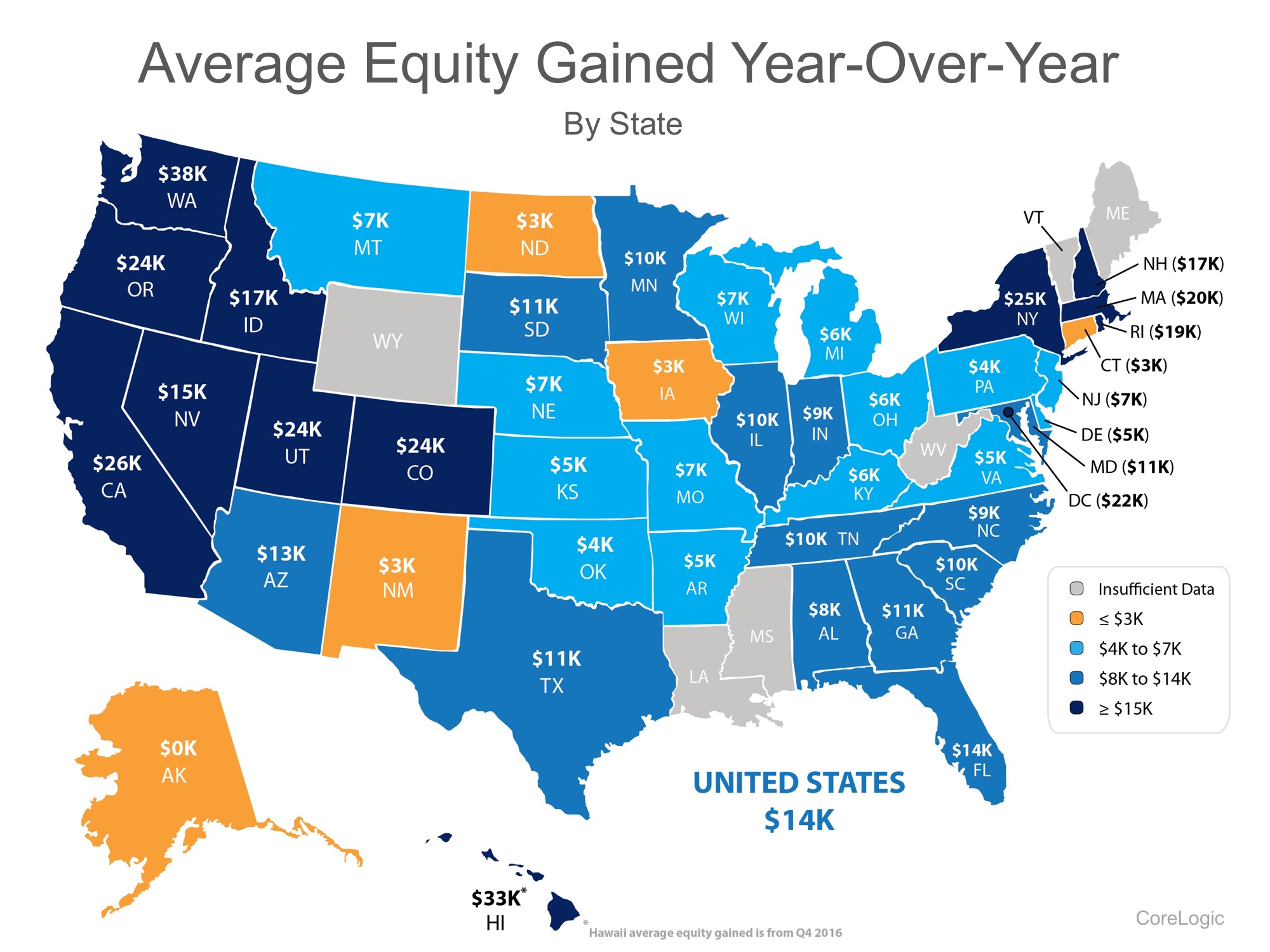
The great news about rising prices, however, is that according to CoreLogic’s Homeowner Equity Report, the average American household gained over $14,000 in equity over the course of the last year, largely due to home value increases.
The map below was created using the same report from CoreLogic and shows the average equity gain per mortgaged home during the 1st quarter of 2017 (the latest data available).
Rising Home Prices Mean Great News for Homeowners | MyKCM
For those who are worried that we are doomed to repeat 2006 all over again, it is important to note that homeowners are investing their new-found equity in their homes and themselves, not in depreciating assets.
The added equity is helping families put their children through college, invest in starting small businesses, pay off their mortgages sooner and even move up to the home that will better suit their needs now.

Bottom Line

If you are a homeowner looking to take advantage of your home equity by moving up to your dream home, let’s get together to discuss your options!

Monday, June 26, 2017

Should you buy or rent? That all depends...

The TRUTH Behind the RENT vs. BUY Debate

The TRUTH Behind the RENT vs. BUY Debate | MyKCM
In a blog post published last Friday, CNBC’s Diana Olnick reported on the latest results of the FAU Buy vs. Rent Index. The index examines the entire US housing market and then isolates 23 major markets for comparison. The researchers at FAU use a “‘horse race’ comparison between an individual that is buying a home and an individual that rents a similar-quality home and reinvests all monies otherwise invested in homeownership.”
Having read both the index and the blog post, we would like to clear up any confusion that may exist. There are three major points that we would like to counter:

1. The Title

The CNBC blog post was titled, “Don’t put your money in a house, says a new report.” The title of the press release about the report on FAU’s website was “FAU Buy vs. Rent Index Shows Rising Prices and Mortgage Rates Moving Housing Markets in the Direction of Renting.”
Now, we all know headlines can attract readers and the stronger the headline the more readership you can attract, but after dissecting the report, this headline may have gone too far. The FAU report notes that rising home prices and the threat of increasing mortgage rates could make the decision of whether to rent or to buy a harder one in three metros, but does not say not to buy a home.

2. Mortgage Interest Rates are Rising

According to Freddie Mac, mortgage interest rates reached their lowest mark of 2017 last week at 3.89%. Interest rates have hovered around 4% for the majority of 2017, giving many buyers relief from rising home prices and helping with affordability.
While experts predict that rates will increase by the end of 2017, the latest projections have softened, with Freddie Mac predicting that rates will rise to 4.3% in Q4.

3. “Renting may be a better option than buying, according to the report.”

Of the 23 metros that the study reports on, 11 of them are firmly in buy territory, including New York, Boston, Chicago, Cleveland, and more. This means that in nearly half of all the major cities in the US, it makes more financial sense to buy a home than to continue renting one.
In 9 of the remaining metros, the decision as to whether to rent or buy is closer to a toss-up right now. This means that all things being equal, the cost to rent or buy is nearly the same. That leaves the decision up to the individual or family as to whether they want to renew their lease or buy a home of their own.
The 3 remaining metros Dallas, Denver and Houston, have experienced high levels of price appreciation and have been reported to be in rent territory for well over a year now, so that’s not news…

Beer & Cookies

One of the three authors of the study, Dr. Ken Johnson has long reported on homeownership and the decision between renting and buying a home. The methodology behind the report goes on to explain that even in a market where a renter would be able to spend less on housing, they would have to be disciplined enough to reinvest their remaining income in stocks/bonds/other investments for renting a home to be a more attractive alternative to buying.
Johnson himself has said:
“However, in perhaps a more realistic setting where renters can spend on consumption (beer, cookies, education, healthcare, etc.), ownership is the clear winner in wealth accumulation. Said another way, homeownership is a self-imposed savings plan on the part of those that choose to own.” 

Bottom Line

In the end, you and your family are the only ones who can decide if homeownership is the right path to go down. Real estate is local and every market is different. Let’s get together to discuss what’s really going on in your area and how we can help you make the best, most informed decision for you and your family.

Friday, June 23, 2017

Last winter, projections were all about increasing mortgage rates. Reality has rates still at a strong, low position. Expectation is still for a rise in the second half of the year.

Mortgage Interest Rates Reverse Course in 2017

Mortgage Interest Rates Reverse Course in 2017 | MyKCM
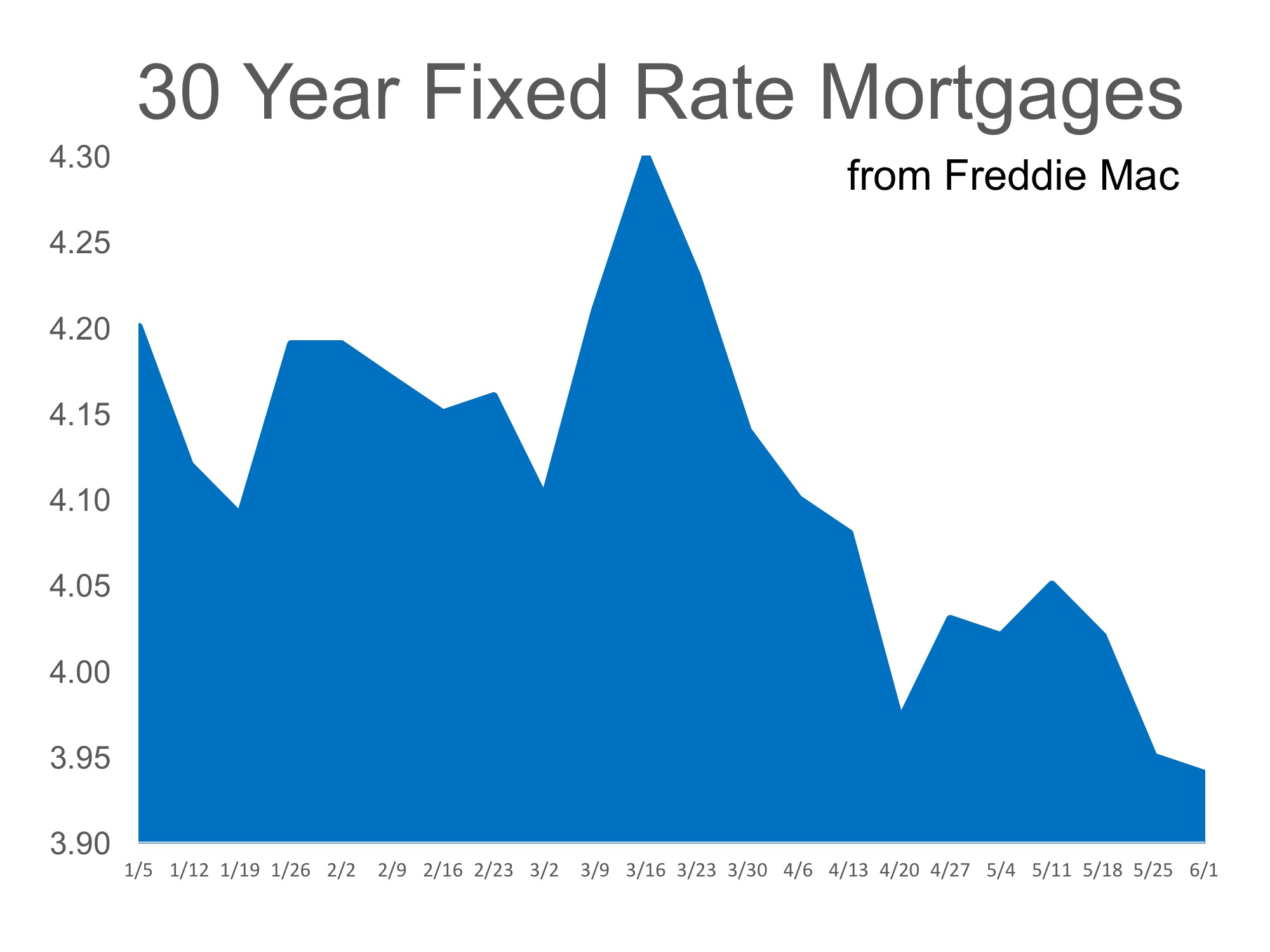
To start the year, housing experts all agreed on one thing: 2017 was going to be the year we would see mortgage interest rates begin to rise. After years of historically low rates, and an improving economy, the question wasn’t if they would increase but instead how much they would increase. Some thought we could see rates hit 5-5.5% by the end of the year.
However, the exact opposite has happened. Instead of higher rates as we head into the middle of 2017, we now have the lowest rates of the year (as reported by Freddie Mac). Here is a graph of mortgage rate movement since the beginning of the year:
Mortgage Interest Rates Reverse Course in 2017 | MyKCM

Projections still call for an increase…

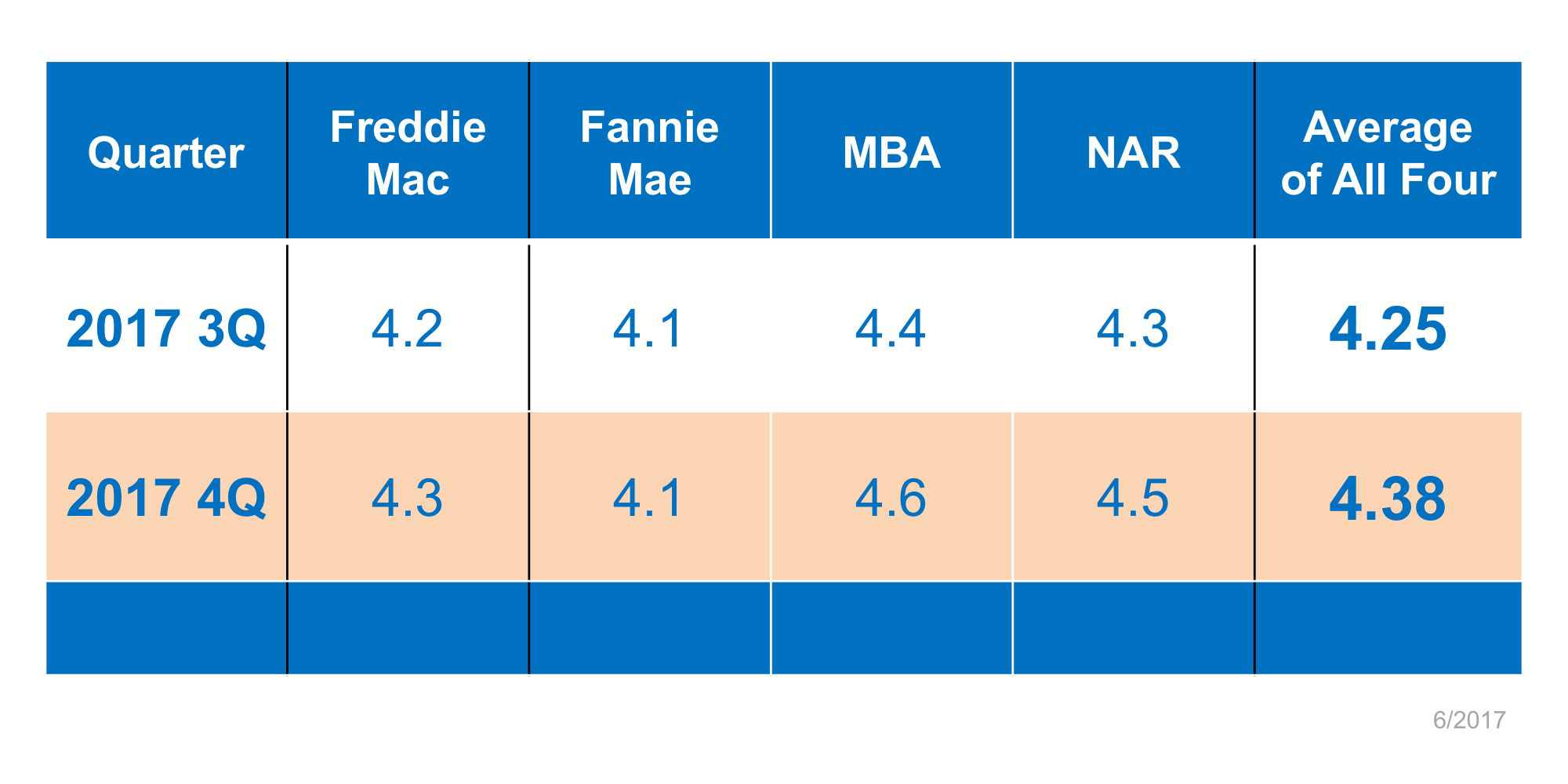
Four major entities (Freddie Mac, Fannie Mae, the Mortgage Bankers Association and the National Association of Realtors) are still projecting that rates will increase by the fourth quarter of the year.

Mortgage Interest Rates Reverse Course in 2017 | MyKCM

Bottom Line

No one knows for sure where interest rates will be in six months. However, if you are thinking about buying your first house or trading up to the home of your dreams, you can still get a mortgage at historically low rates RIGHT NOW.

Thursday, June 1, 2017

Concerned that there may be another housing bubble burst? Here are 3 reasons you shouldn't be...

3 Reasons the Housing Market is NOT in a Bubble

3 Reasons the Housing Market is NOT in a Bubble | MyKCM
With housing prices appreciating at levels that far exceed historical norms, some are fearful that the market is heading for another bubble. To alleviate that fear, we just need to look back at the reasons that caused the bubble ten years ago.
Last decade, demand for housing was artificially propped up because mortgage lending standards were way too lenient. People that were not qualified to purchase were able to obtain a mortgage anyway. Prices began to skyrocket. This increase in demand caused homebuilders in many markets to overbuild.
Eventually, the excess in new construction and the flooding of the market with distressed properties (foreclosures & short sales), caused by the lack of appropriate lending standards, led to the housing crash.

Where we are today…

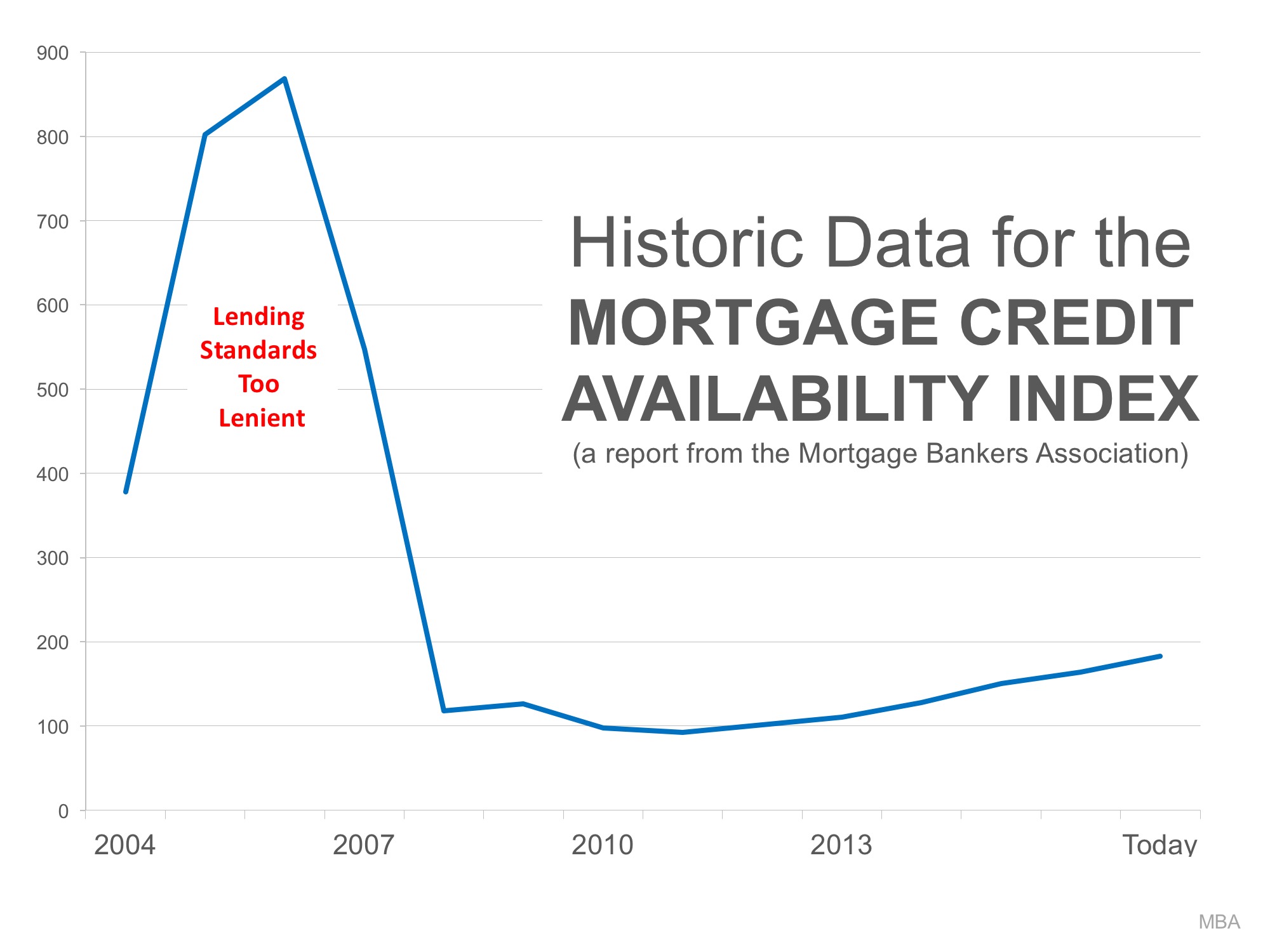
1. If we look at lending standards based on the Mortgage Credit Availability Index released monthly by the Mortgage Bankers Association, we can see that, though standards have become more reasonable over the last few years, they are nowhere near where they were in the early 2000s.
3 Reasons the Housing Market is NOT in a Bubble | MyKCM
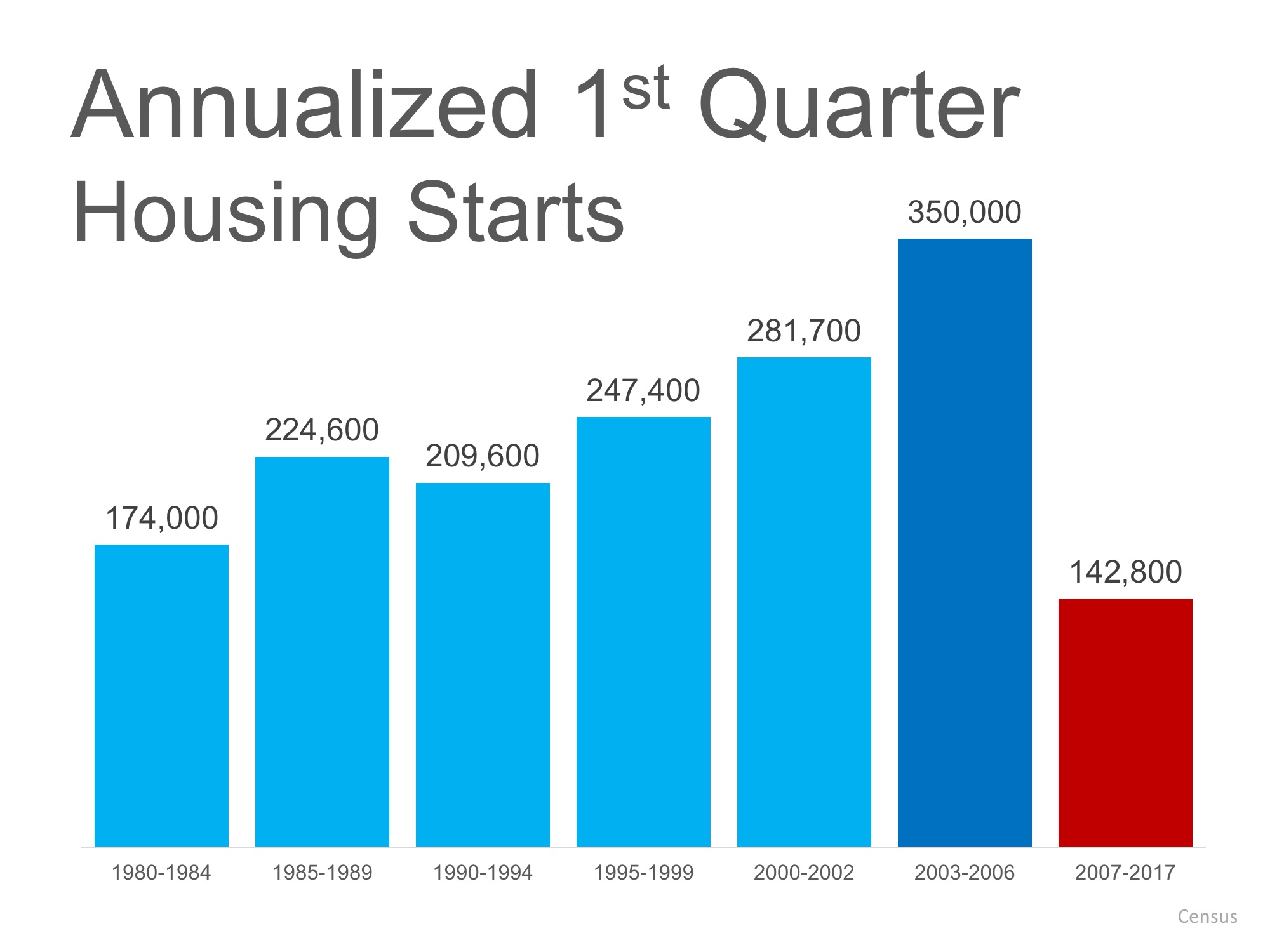
2. If we look at new construction, we can see that builders are not “over building.” Average annual housing starts in the first quarter of this year were not just below numbers recorded in 2002-2006, they are below starts going all the way back to 1980.
3 Reasons the Housing Market is NOT in a Bubble | MyKCM
3. If we look at home prices, most homes haven’t even returned to prices seen a decade ago. Trulia just released a report that explained:
“When it comes to the value of individual homes, the U.S. housing market has yet to recover. In fact, just 34.2% of homes nationally have seen their value surpass their pre-recession peak.”

Bottom Line

Mortgage lending standards are appropriate, new construction is below what is necessary and home prices haven’t even recovered. It appears fears of a housing bubble are over-exaggerated.

Wednesday, May 31, 2017

According to Gallup - real estate remains the best long-term investment...

Gallup: Real Estate is Best Long-Term Investment 4 Years Running

Gallup: Real Estate is Best Long-Term Investment 4 Years Running | MyKCM
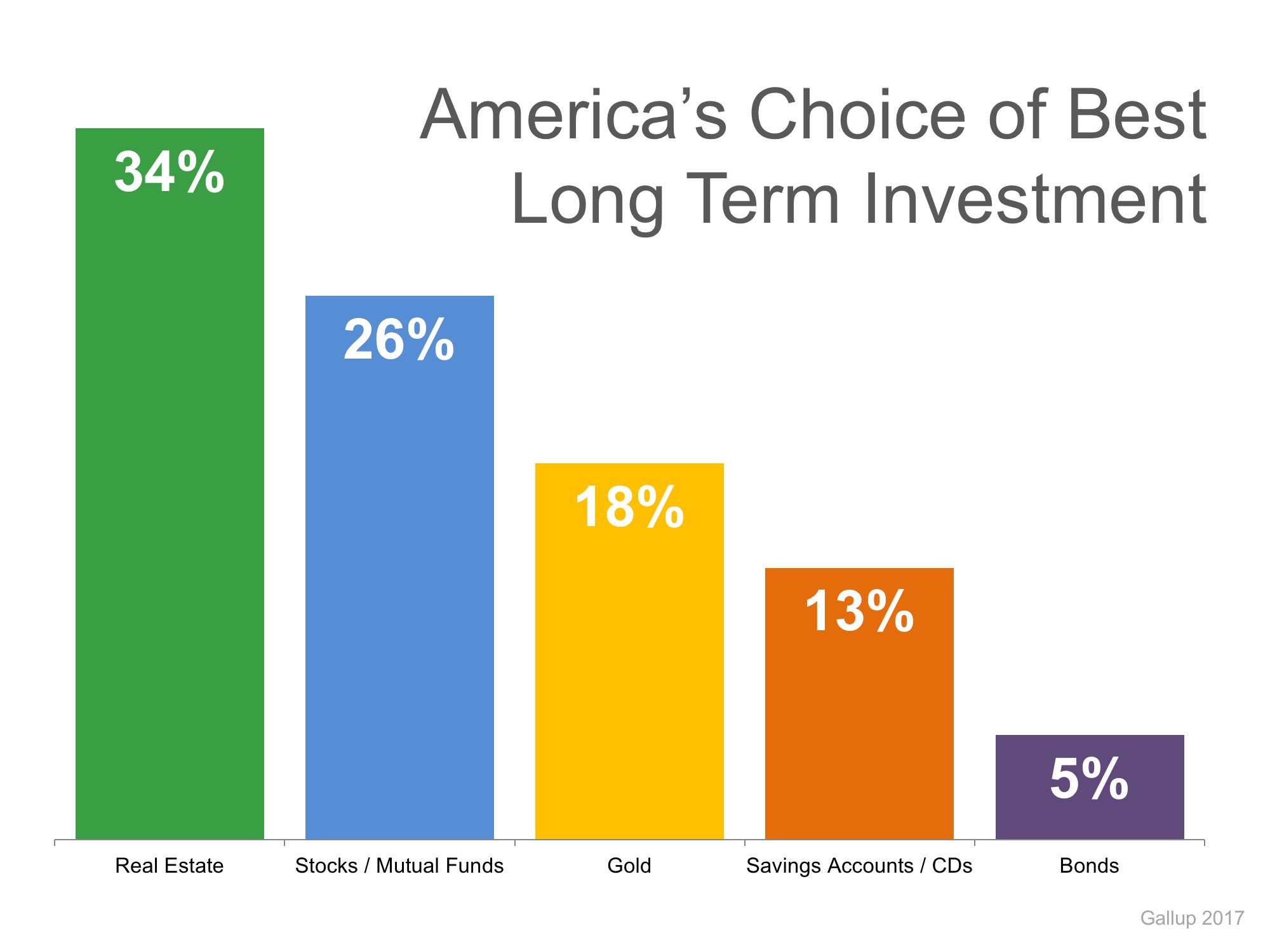
Every year, Gallup surveys Americans to determine their choice for the best long-term investment. Respondents are given a choice between real estate, stocks/mutual funds, gold, savings accounts/CDs, or bonds.
For the fourth year in a row, Real Estate has come out on top as the best long-term investment! This year’s results showed that 34% of Americans chose real estate, followed by stocks at 26%. The full results are shown in the chart below.
Gallup: Real Estate is Best Long-Term Investment 4 Years Running | MyKCM
The study makes it a point to draw attention to the contrast of the sentiment over the last four years compared to that of 2011-2012, when gold took the top slot with 34% of the votes. Real estate and stocks took second and third place, respectively, while still in recovery from the Great Recession.

Bottom Line

As the real estate market has recovered, so has the belief of the American people in the stability of housing as a long-term investment.

Tuesday, May 30, 2017

Housing inventory remains low, while buyer demand for remains high. However, buyers are not buying to buy, they are waiting for the right house.

Inventory Challenges Continue! [INFOGRAPHIC]

Inventory Challenges Continue! [INFOGRAPHIC] | MyKCM

Some Highlights:

  • After a surge in March, existing home sales and new home sales slowed due to a drop in inventory available for sale in the start-up and trade-up categories.
  • Median existing home prices surged for the 62nd straight month, up 6.0% over last year to $244,800.
  • New home prices slowed as builders have started to turn their focus toward single family, smaller homes.

Thursday, May 25, 2017

Waiting until next year to buy? It may end up costing you tens of thousands of dollars overtime...

Do You Know the Cost of Waiting? [INFOGRAPHIC]

Do You Know the Cost of Waiting? [INFOGRAPHIC] | MyKCM

Some Highlights:

  • The “Cost of Waiting to Buy” is defined as the additional funds it would take to buy a home if prices and interest rates were to increase over a period of time.
  • Freddie Mac predicts that interest rates will increase to 4.8% by this time next year, while home prices are predicted to appreciate by 4.9% according to CoreLogic.
  • Waiting until next year to buy could cost you thousands of dollars a year for the life of your mortgage!

Monday, April 17, 2017

According to a recent survey by Fannie Mae - a boost in consumer confidence is also a boost for the housing market.

Consumer Confidence in Economy & Housing is Soaring

Consumer Confidence in Economy & Housing is Soaring | MyKCM
The success of the housing market is strongly tied to the consumer’s confidence in the overall economy. For that reason, we believe 2017 will be a great year for real estate. Here is just a touch of the news coverage on the subject.

HousingWire:

“Consumers’ faith in the housing market is stronger than it’s ever been before, according to a newly released survey from Fannie Mae.”

Bloomberg:

“Americans’ confidence continued to mount last week as the Bloomberg Consumer Comfort Index reached the highest point in a decade on more-upbeat assessments about the economy and buying climate.”

Yahoo Finance:

“Confidence continues to rise among America’s consumers…the latest consumer sentiment numbers from the University of Michigan showed that in March confidence rose again.”

MarketWatch:

“U.S. consumers are the most confident in the U.S. economy in 15 years, buoyed by the strongest job market since before the Great Recession. The survey of consumer confidence rose…according to the Conference Board, the private company that publishes the index. That’s the highest level since July 2001.”

Ivy Zelman, in her recent Z Report, probably best capsulized the reports:

"The results were incredibly strong and…offer one of the most positive consumer takes on housing since the recovery started.”

Tuesday, April 4, 2017

Housing inventory remains low, especially in starter & move-up markets. Buyers continue to snatch up the good homes, and a slight seller market is appearing in select areas.

A Tale of Two Markets: Inventory Mismatch Paints a More Detailed Picture

A Tale of Two Markets: Inventory Mismatch Paints a More Detailed Picture | MyKCM
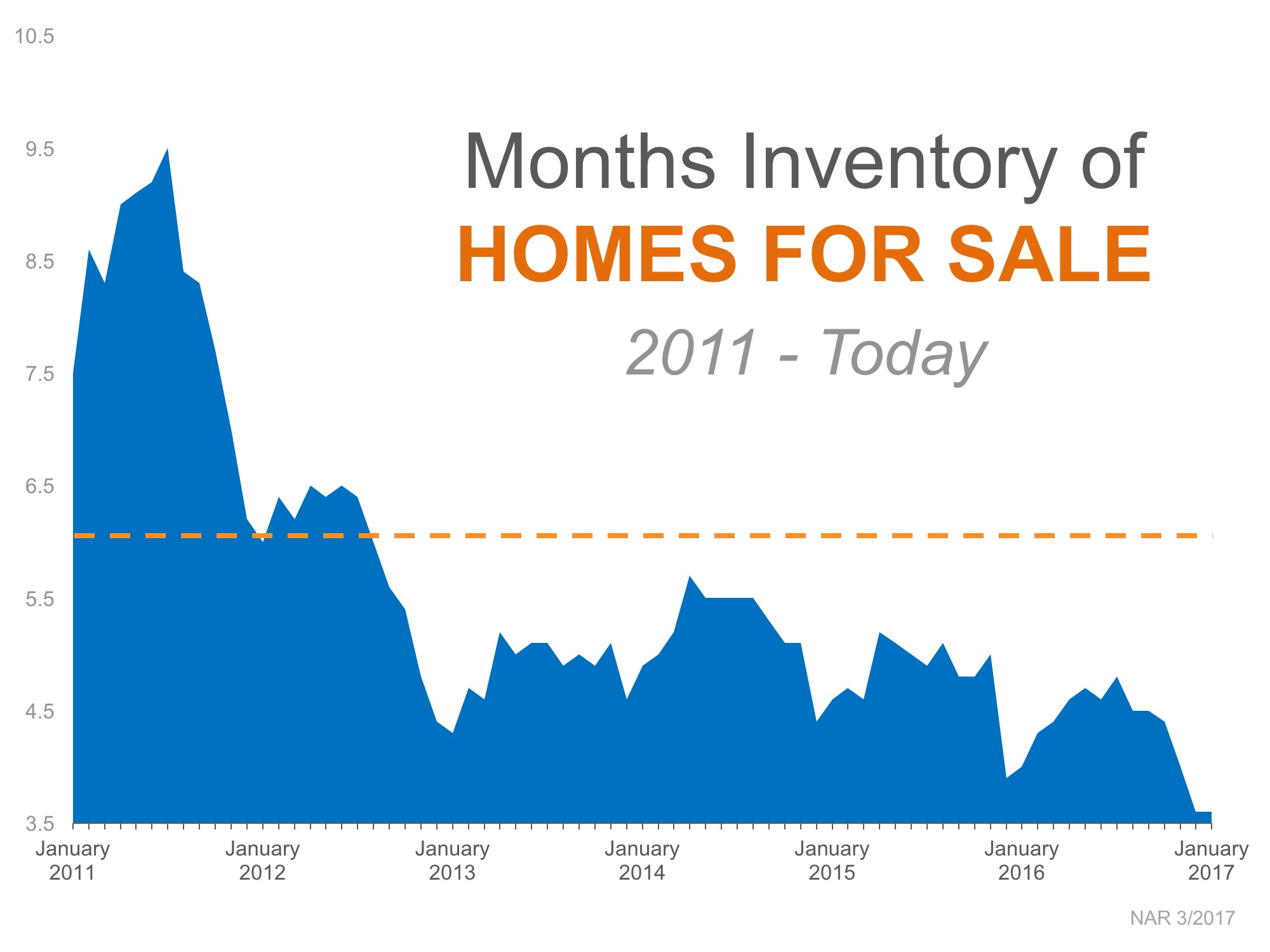
The inventory of existing homes for sale in today’s market was recently reported to be at a 3.6-month supply according to the National Association of Realtors latest Existing Home Sales Report. Inventory is now 7.1% lower than this time last year, marking the 20th consecutive month of year-over-year drops.
Historically, inventory must reach a 6-month supply for a normal market where home prices appreciate with inflation. Anything less than a 6-month supply is a sellers’ market, where the demand for houses outpaces supply and prices go up.
As you can see from the chart below, the United States has been in a sellers’ market since August 2012, but last month’s numbers reached a new low.
A Tale of Two Markets: Inventory Mismatch Paints a More Detailed Picture | MyKCM
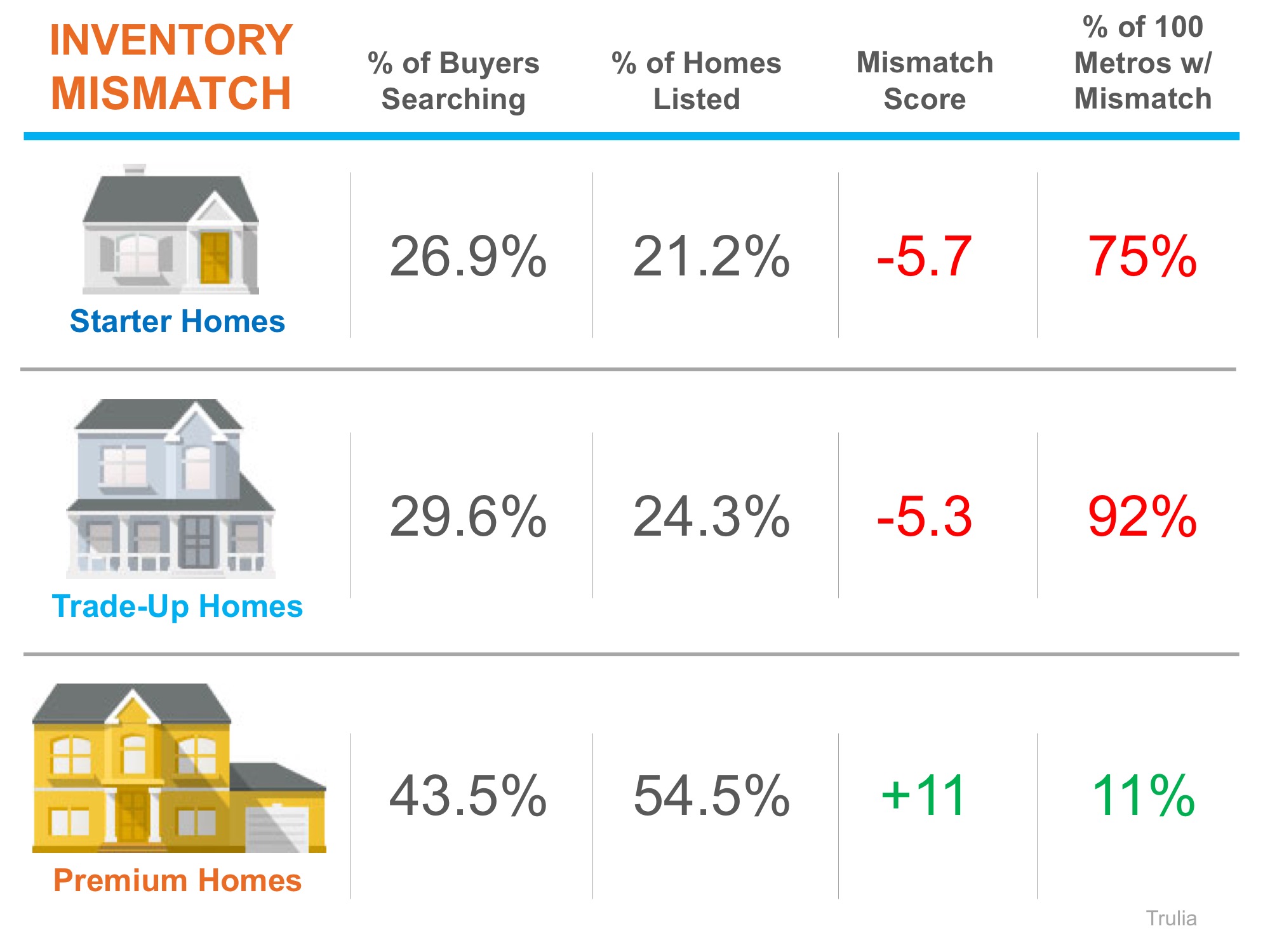
Recently Trulia revealed that not only is there a shortage of homes on the market in general, but the homes that are available for sale are not meeting the needs of the buyers that are searching.
Homes are generally bucketed into three groups by price range: starter, trade-up, and premium.
Trulia’s market mismatch score measures the search interest of buyers against the category of homes that are available on the market. For example: “if 60% of buyers are searching for starter homes but only 40% of listings are starter homes, [the] market mismatch score for starter homes would be 20.”
The results of their latest analysis are detailed in the chart below.
A Tale of Two Markets: Inventory Mismatch Paints a More Detailed Picture | MyKCM
Nationally, buyers are searching for starter and trade-up homes and are coming up short with the listings available, leading to a highly competitive seller’s market in these categories. Ninety-two of the top 100 metros have a shortage in trade-up inventory.
Premium homebuyers have the best chance of less competition and a surplus of listings in their price range with an 11-point surplus, leading to more of a buyer’s market.
“It leaves Americans who are in the market for a home increasingly chasing too fewer options in lower price ranges, and sellers of premium homes more likely to be left waiting longer for a buyer.”
 Lawrence Yun, NAR’s Chief Economist doesn’t see an end to this coming any time soon: 
“Competition is likely to heat up even more heading into the spring for house hunters looking for homes in the lower- and mid-market price range.”

Bottom Line

Real estate is local. If you are thinking about buying OR selling this spring, let’s get together to discuss the exact market conditions in your area.

Monday, April 3, 2017

Interest rates have risen, and are expected to continue to rise. BUT...they are still at a historical low!

Mortgage Interest Rates Went Up Again… Should I Wait to Buy?

https://goo.gl/SupglQ
Mortgage interest rates, as reported by Freddie Mac, have increased over the last several weeks. Freddie Mac, along with Fannie Mae, the Mortgage Bankers Association and the National Association of Realtors, is calling for mortgage rates to continue to rise over the next four quarters.
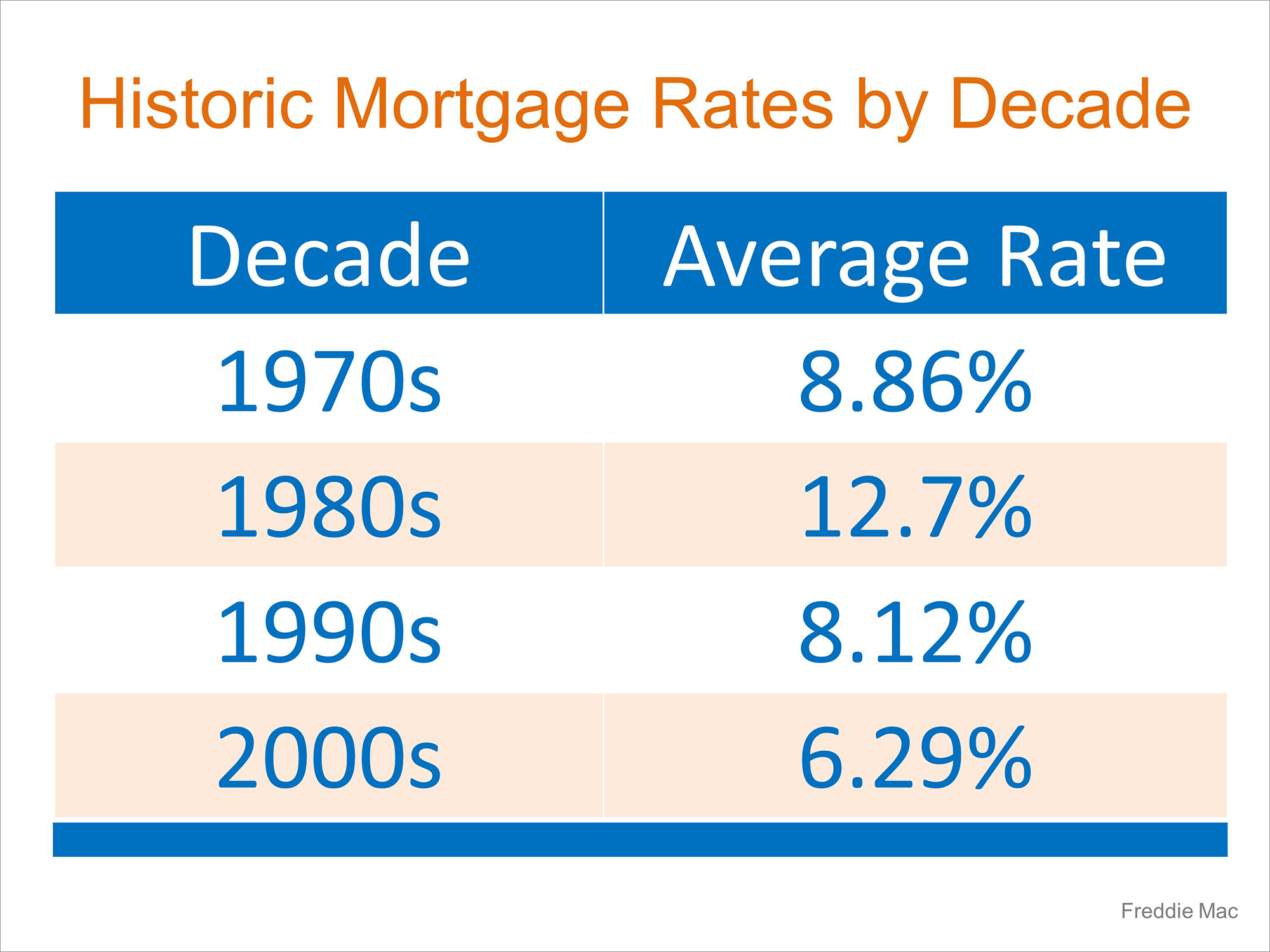
This has caused some purchasers to lament the fact they may no longer be able to get a rate below 4%. However, we must realize that current rates are still at historic lows.
Here is a chart showing the average mortgage interest rate over the last several decades.
Mortgage Interest Rates Went Up Again… Should I Wait to Buy? | MyKCM

Bottom Line

Though you may have missed getting the lowest mortgage rate ever offered, you can still get a better interest rate than your older brother or sister did ten years ago, a lower rate than your parents did twenty years ago, and a better rate than your grandparents did forty years ago.

Monday, March 20, 2017

Interest rates are projected to rise as the year goes on...

Don’t Let Your Luck Run Out [INFOGRAPHIC]

Don’t Let Your Luck Run Out [INFOGRAPHIC] | MyKCM

Some Highlights:

  • The “Cost of Waiting to Buy” is defined as the additional funds it would take to buy a home if prices and interest rates were to increase over a period of time.
  • Freddie Mac predicts that interest rates will increase to 4.8% by this time next year, while home prices are predicted to appreciate by 4.8% according to CoreLogic.
  • Waiting until next year to buy could cost you thousands of dollars a year for the life of your mortgage!

Wednesday, March 8, 2017

Over the next 5 years, nationally, home values are expected to hit an annual average appreciate of 3.22%. That's good news for the housing industry.

Where Are the Home Prices Heading in the Next 5 Years?

Where Are the Home Prices Heading in the Next 5 Years? | MyKCM
Today, many real estate conversations center on housing prices and where they may be headed. That is why we like the Home Price Expectation Survey.
Every quarter, Pulsenomics surveys a nationwide panel of over one hundred economists, real estate experts, and investment & market strategists about where they believe prices are headed over the next five years. They then average the projections of all 100+ experts into a single number.

The results of their latest survey:

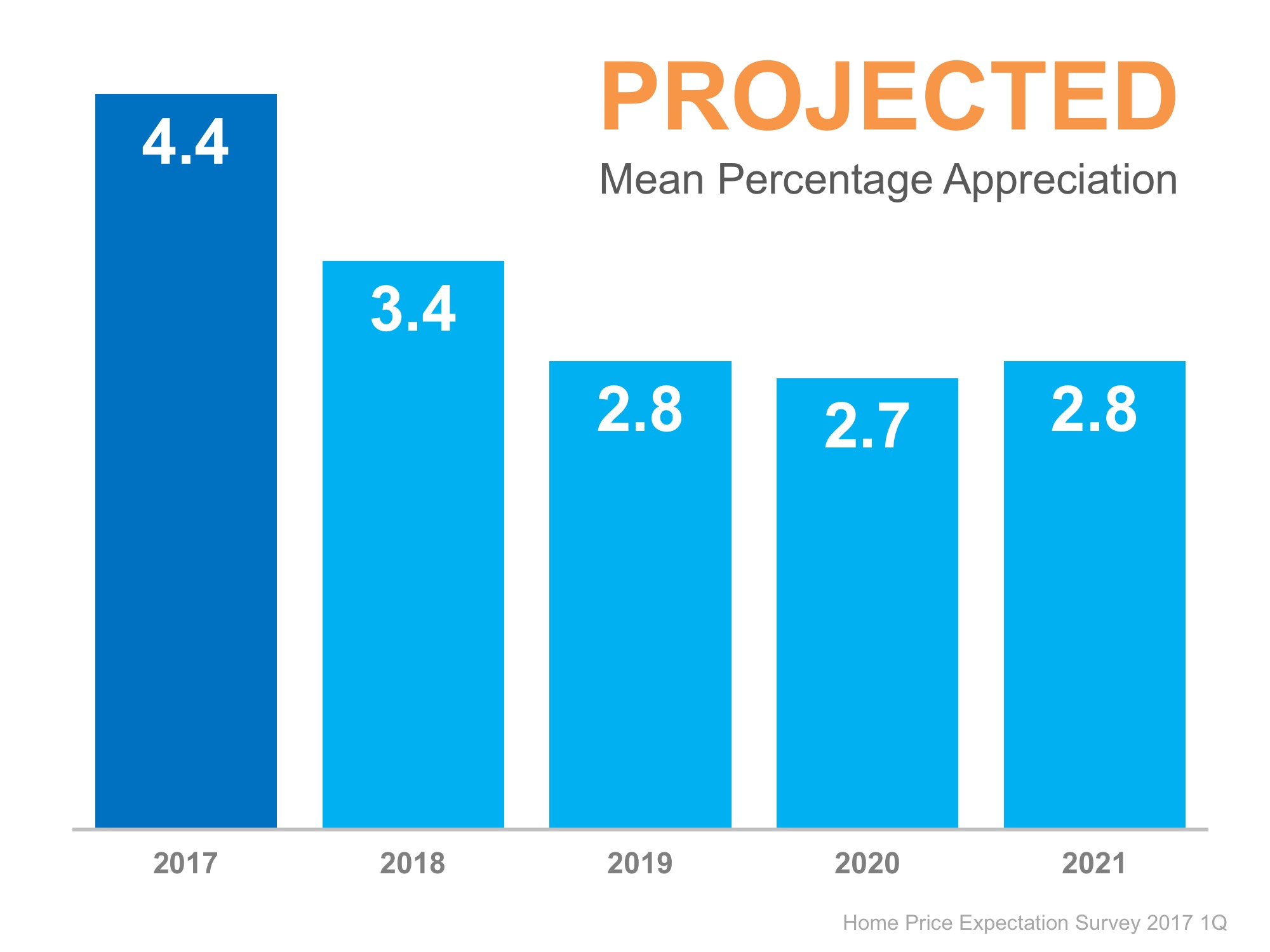
Home values will appreciate by 4.4% over the course of 2017, 3.4% in 2018, 2.8% in 2019, 2.7% in 2020, and 2.8% in 2021. That means the average annual appreciation will be 3.22% over the next 5 years.
Where Are the Home Prices Heading in the Next 5 Years? | MyKCM
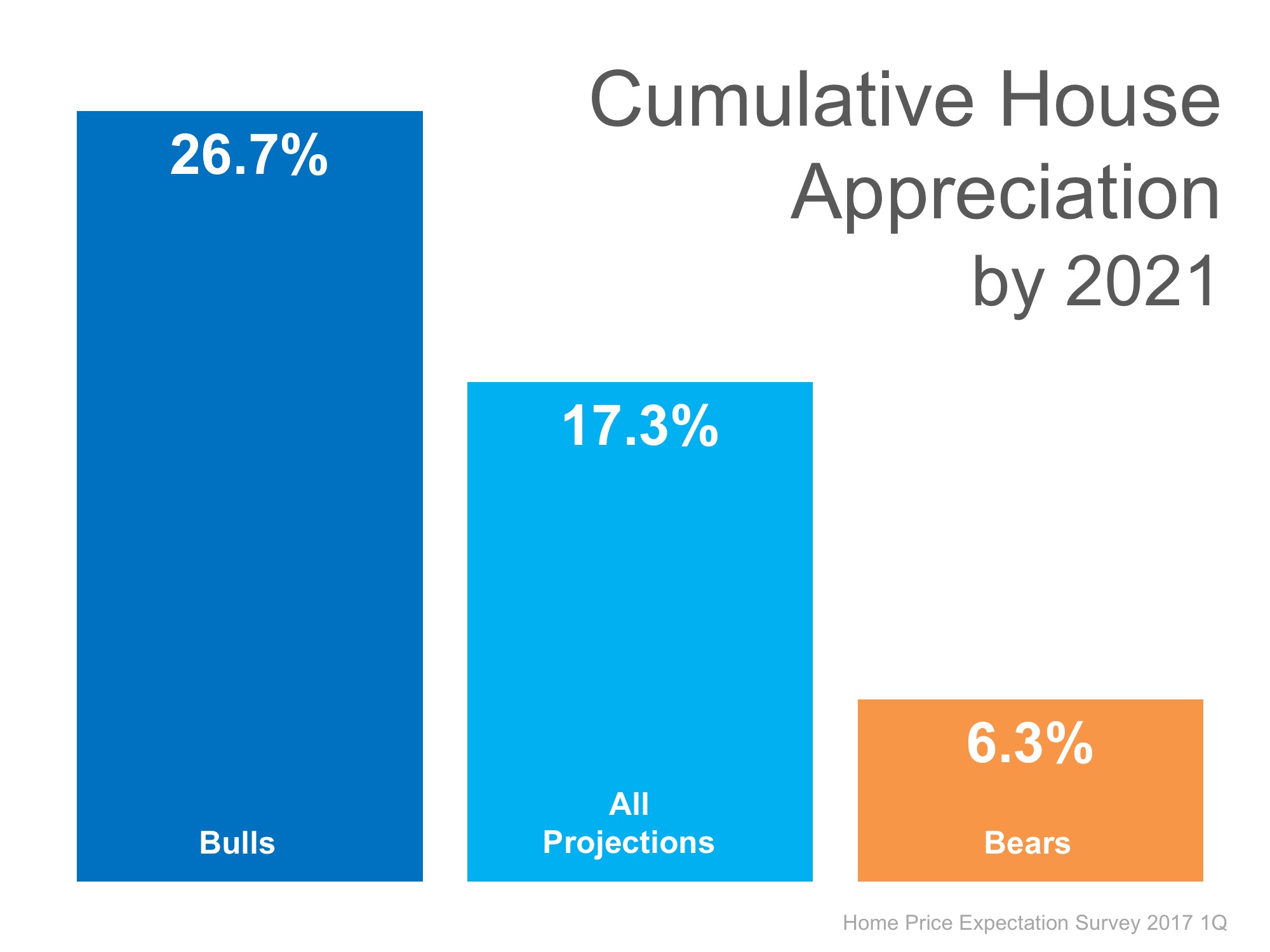
The prediction for cumulative appreciation fell from 21.4% to 17.3% by 2021. The experts making up the most bearish quartile of the survey are projecting a cumulative appreciation of 6.3%.
Where Are the Home Prices Heading in the Next 5 Years? | MyKCM

Bottom Line

Individual opinions make headlines. We believe this survey is a fairer depiction of future values.

Friday, March 3, 2017

As many as 1 out of 4 Americans could be buying a home this year. Are you one of them?

Are You 1 of the 59 Million Planning to Buy This Year?

Are You 1 of the 59 Million Planning to Buy This Year? | MyKCM
According to a survey conducted by Bankrate.com, one in four Americans are considering buying a home this year. If this statistic proves to be true, that means that 59 million people will be looking to enter the housing market in 2017.

The survey also revealed 3 key takeaways:

  1. Those most likely to buy are ‘Older Millennials’ (ages 27-36) or ‘Generation X’ (ages 37-52)
  2. Minorities, particularly African-Americans, were twice as likely to respond that they were considering purchasing a home this year than white respondents.
  3. Many potential buyers believe they need to put 20% down and need to have perfect credit to own and are unaware of programs that would allow them to buy now.
Holden Lewis, a mortgage analyst for Bankrate.com, pointed to one big reason why many Americans are starting to consider homeownership:
“Having kids and raising a family is a primary reason why Americans take the leap into homeownership—many consider it a key component of the American dream.”

Bottom Line

If buying a home is a part of your dream for 2017, let’s get together to determine if you are able to.

Thursday, February 2, 2017

We may be in for 6 more weeks of winter, but with low inventory and increasing buyer demand, our spring housing market is off to an early start!

No Matter What the Groundhog Says, Here are 5 Reasons to Sell Before Spring!

No Matter What the Groundhog Says, Here are 5 Reasons to Sell Before Spring! | MyKCM
Is spring closer than we think? Depending on which groundhog you listen to today, you may have less time than you think to get your home on the market before the busy spring season.
Many sellers feel that the spring is the best time to place their homes on the market as buyer demand traditionally increases at that time of year. However, the next six weeks before spring hits also have their own advantages.

Here are five reasons to sell now.

1. Demand is Strong 

Foot traffic refers to the number of people who are out, physically looking at homes right now. The latest foot traffic numbers from the National Association of Realtors (NAR) show that the number of buyers out looking for their dream homes in December reached the highest mark since February 2016.
These buyers are ready, willing and able to buy…and are in the market right now! Take advantage of the strong buyer activity currently in the market.

2. There Is Less Competition Now 

Housing inventory just dropped to a 3.6-month supply, which is well under the 6-month supply needed for a normal housing market. This means, in many areas, there are not enough homes for sale to satisfy the number of buyers in that market. This is good news for home prices; however, additional inventory is about to come to market.
There is a pent-up desire for many homeowners to move, as they were unable to sell over the last few years because of a negative equity situation. Homeowners are now seeing a return to positive equity as real estate values have increased over the last four years. Many of these homes will be coming to market soon.
Also, new construction of single-family homes is again beginning to increase. A study by Harris Poll revealed that 41% of buyers would prefer to buy a new home, while only 21% prefer an existing home (38% had no preference).
The choices buyers have will increase in the spring. Don’t wait for this other inventory to come to market before you sell.

3. The Process Will Be Quicker

One of the biggest challenges of the housing market has been the length of time it takes from contract to closing. Banks are requiring more and more paperwork before approving a mortgage. There is less overall business done in the winter. Therefore, the process will be less onerous than it will be in the spring. Getting your house sold and closed before the spring delays begin will lend to a smoother transaction.

4. There Will Never Be a Better Time to Move-Up

If you are moving up to a larger, more expensive home, consider doing it now. Prices are projected to appreciate by 4.7% over the next 12 months according to CoreLogic. If you are moving to a higher priced home, it will wind-up costing you more in raw dollars (both in down payment and mortgage payment) if you wait. You can also lock-in your 30-year housing expense with an interest rate around 4% right now. Rates are projected to rise by half a percentage point by the end of 2017.

5. It’s Time to Move on with Your Life

Look at the reason you decided to sell in the first place and determine whether it is worth waiting. Is money more important than being with family? Is money more important than your health? Is money more important than having the freedom to go on with your life the way you think you should?
Only you know the answers to the questions above. You have the power to take back control of the situation by putting your home on the market. Perhaps, the time has come for you and your family to move on and start living the life you desire.

That is what is truly important.

Friday, January 27, 2017

If you want to sell your home this spring, get it on the market now!

Thinking of Selling? Why Now is the Time

Thinking of Selling? Why Now is the Time | MyKCM
It is common knowledge that a large number of homes sell during the spring-buying season. For that reason, many homeowners hold off on putting their homes on the market until then. The question is whether or not that will be a good strategy this year.
The other listings that do come out in the spring will represent increased competition to any seller. Do a greater number of homes actually come to the market in the spring, as compared to the rest of the year? The National Association of Realtors (NAR) recently revealed the months in which most people listed their homes for sale in 2016. Here is a graphic showing the results:
Thinking of Selling? Why Now is the Time | MyKCM
The three months in the second quarter of the year (represented in red) are consistently the most popular months for sellers to list their homes on the market. Last year, the number of homes available for sale in January was 1,820,000.

That number spiked to 2,140,000 by May!

What does this mean to you?

With the national job situation improving, and mortgage interest rates projected to rise later in the year, buyers are not waiting until the spring; they are out looking for a home right now. If you are looking to sell this year, waiting until the spring to list your home means you will have the greatest competition for a buyer.

Bottom Line

It may make sense to beat the rush of housing inventory that will enter the market in the spring and list your home today.

Monday, January 23, 2017

Good news for the housing market - even though there is an expectation of rising property values and interest rates, the Housing Affordability Index indicates that affordability remains better than the prior 9 years.

Will Housing Affordability Be a Challenge in 2017?

Will Housing Affordability Be a Challenge in 2017? | MyKCM
Some industry experts are saying that the housing market may be heading for a slowdown in 2017 based on rising home prices and a jump in mortgage interest rates. One of the data points they use is the Housing Affordability Index, as reported by the National Association of Realtors (NAR).
Here is how NAR defines the index:
“The Housing Affordability Index measures whether or not a typical family earns enough income to qualify for a mortgage loan on a typical home at the national level based on the most recent price and income data.”
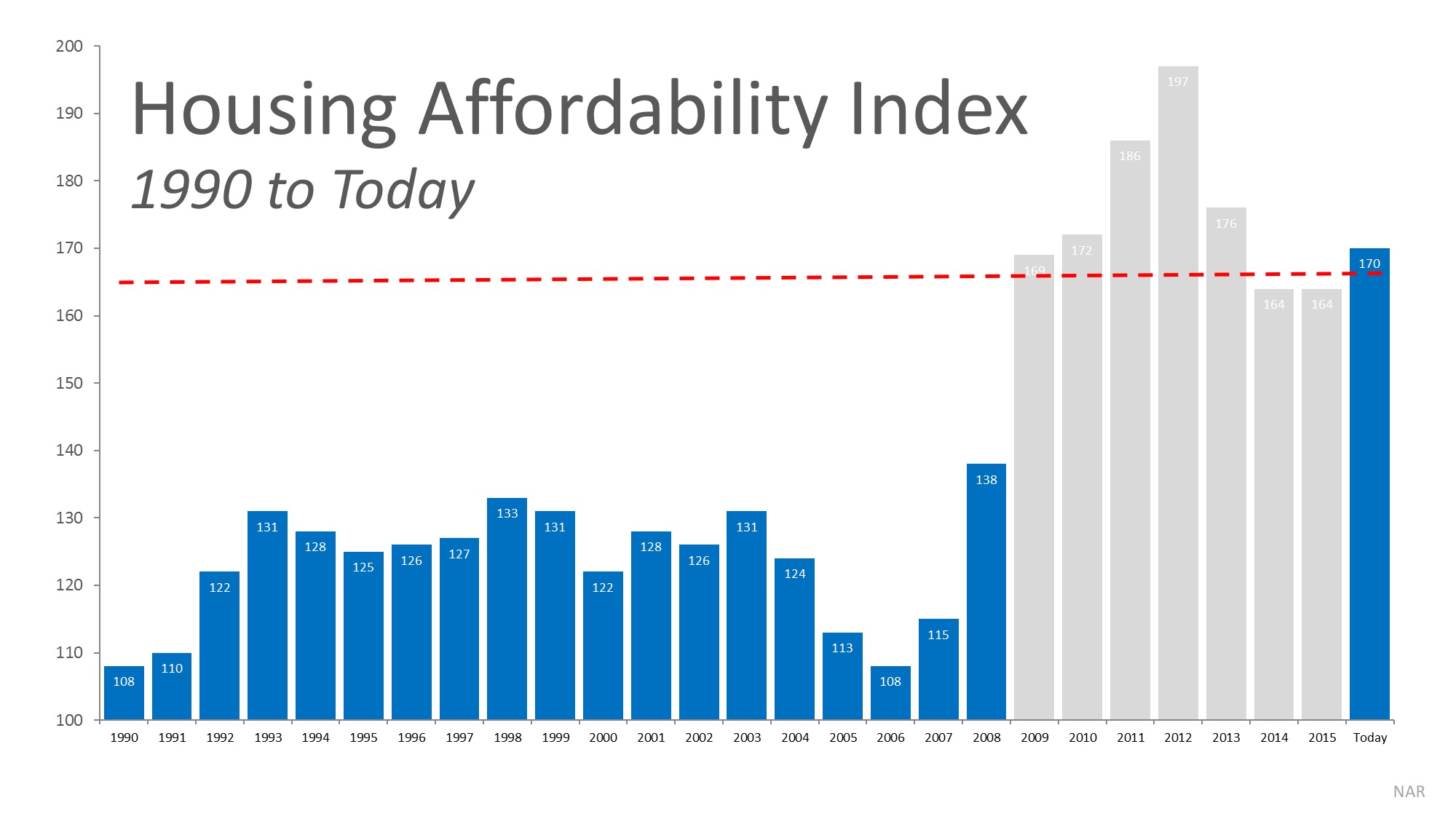
Basically, a value of 100 means a family earning the median income earns enough to qualify for a mortgage on a median-priced home, based on the price and mortgage interest rates at the time. Anything above 100 means the family has more than enough to qualify.
The higher the index, the easier it is to afford a home.

Why the concern?

The index has been declining over the last several years as home values increased. Some are concerned that too many buyers could be priced out of the market.
But, wait a minute…
Though the index skyrocketed from 2009 through 2013, we must realize during that time the housing crisis left the market with an overabundance of housing inventory with as many as one out of three listings being a distressed property (foreclosure or short sale). All prices dropped dramatically and distressed properties sold at major discounts. Then, mortgage rates fell like a rock.
The market is recovering, and values are coming back nicely. That has caused the index to fall.
However, let’s remove the crisis years and look at the current index as compared to the index from 1990 – 2008:
Will Housing Affordability Be a Challenge in 2017? | MyKCM
We can see that, even though prices have increased, mortgage rates are still lower than historical averages and have put the index in a better position than every year for the nineteen years before the crash.

Bottom Line

The Housing Affordability Index is in great shape and should not be seen as a challenge to the real estate market’s continued recovery.

Friday, January 20, 2017

While Millennials have been slow to jump into the housing market, they are beginning to expand their families. Growing families will change their priorities, and may translate to more Millennials homebuyers than before.

What Would a Millennial Baby Boom Mean for Housing?

What Would a Millennial Baby Boom Mean for Housing? | MyKCM
Recently released data from the National Center for Health Statistics revealed that 1.3 million Millennial women gave birth for the first time in 2015. There are now over 16 million women in this generation who have become mothers.
“All told, Millennial women (those born between 1981 to 1997) accounted for about eight in ten (82%) of U.S. births in 2015.”
The data also shows that this generation has waited until later in life to become parents as only 42% of Millennial women were moms in 2014, compared to 49% of Generation X at the same age. A Pew Research Center article discussing the data, points to social influences that may have contributed to the delay:
“The rising age at first birth is hardly limited to the Millennial generation. It has been a trend since at least 1970. Many factors may contribute, including a shift away from marriage, increasing educational attainment and the movement of women into the labor force.”

Do Millennials Want to Be Parents?

“While Millennials may be delaying parenthood, it’s not for a lack of interest in eventually becoming moms and dads. Members of this generation rated being a good parent as a top priority in a 2010 Pew Research Center survey.  
Some 52% said it was one of the most important goals in their lives, well ahead of having a successful marriage, which 30% said was one of their most important lifetime goals.”

So, What Does This Mean for the Housing Market?

As Jonathan Smoke, Chief Economist for realtor.com explained: “At any given time in our history, demographics would explain 60-80% of what’s happening [in the market], and we are in a period of time where Millennials make up a largest demographic group.” 
As more and more Millennial families are formed, this generation will shift their focus to providing the best home for their children to grow up in, the best school districts, and often to the stability that owning a home of their own provides.
Two-thirds of Millennials have not yet reached the average first-time home buying age of 32, as reported by the National Association of Realtor. The homeownership rate amongst Millennials has nowhere to go but up!

Bottom Line

Millennials as a generation have delayed traditional social norms until later in their lives. Whether getting married, having children or buying a home, the desire to provide for their family is still there, even if it takes a little while longer than it did for previous generations.

Thursday, January 12, 2017

Another wave of baby boomers are looking to make their move. The number one reason for choosing their next home? Location.

Top 3 Things Second-Wave Baby Boomers Look for in a Home

Top 3 Things Second-Wave Baby Boomers Look for in a Home | MyKCM
According to data from the U.S Census bureau, there are approximately 76.4 million baby boomers living in the United States today. Contrary to what many think, there are very different segments within this generation, and one piece that sets them apart are their housing needs.
John McManus, editorial director of Hanley Wood’s Residential Group says his company “is focusing on the preferences of the younger half, or second-wave baby boomers, as they exhibit different needs than the older boomers.”

What are ‘second-wave baby boomers’ looking for?

McManus says, “They are seeking a fun, dynamic lifestyle with a home that can also adjust to their changing needs in the future. Living space should either include accessibility features, such as doorway space, lower shelves, and nonslip surfaces, or be easily adjustable when the time comes.
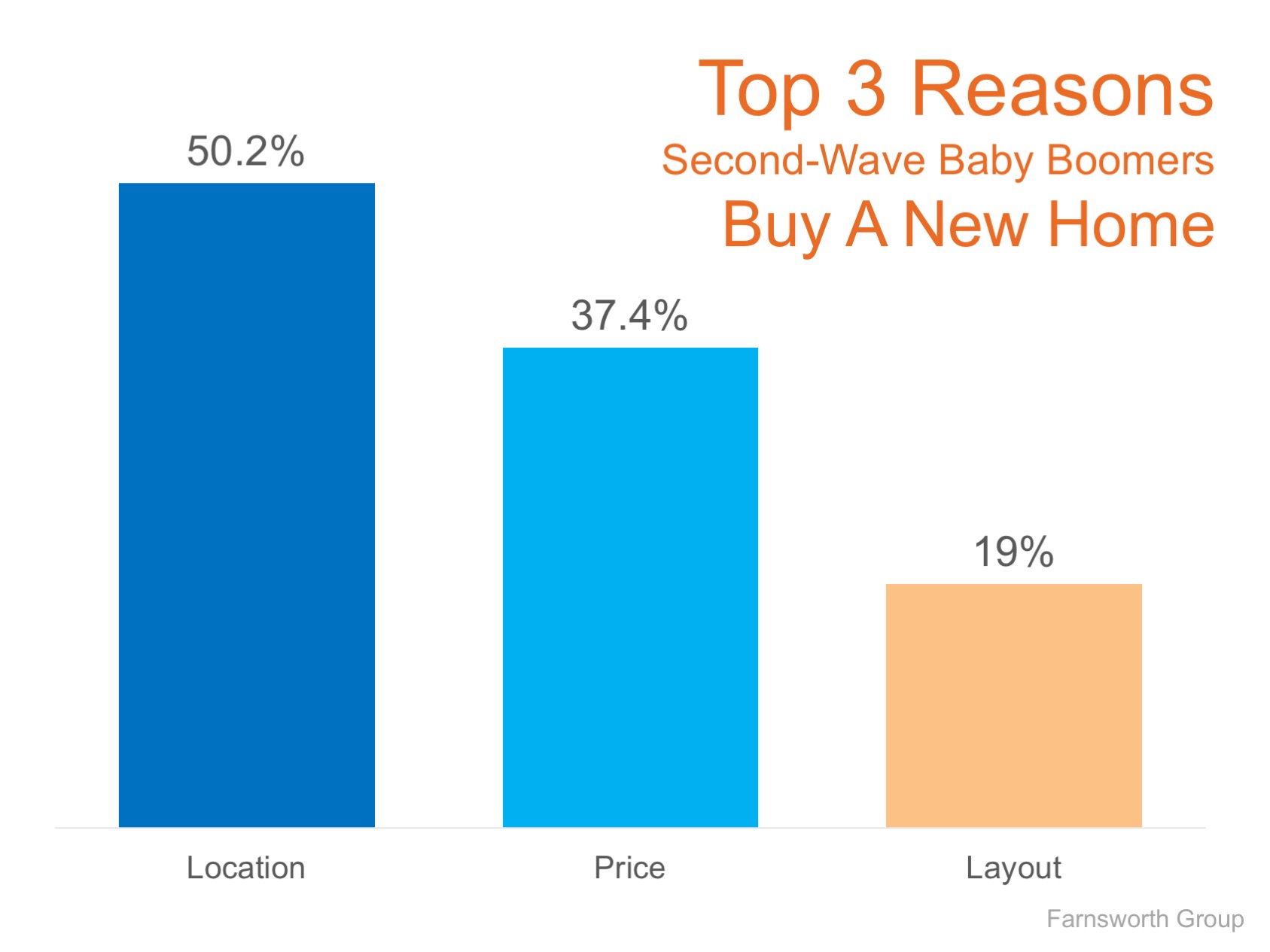
In a homebuyer study performed by The Farnsworth Group, the participants revealed their reasons for purchasing a new home. The top three factors that influence their purchase include area/location (50.2%), price/affordability (37.4%), and the layout of the home (19%) (as shown in the graph below).
Top 3 Things Second-Wave Baby Boomers Look for in a Home | MyKCM
The report also found that when buying a new home, there were other concerns like quality of construction (9%), a safer neighborhood (8.4%), better floor plans (8.25%). The most important rooms or areas are the kitchen (82.8%), master bedroom (59.2%), and great room (36%).
Technology also plays an important role! Second-wave baby boomers prefer wireless security systems (7.1%), lighting that senses and adapts to them (6.3%) and integrated home technology, including “smart” thermostats and lighting controlled by a smartphone (6.2%).
Grey Matter Research and Consulting points to a sense of community as a major factor in wanting to purchase:
The first impressions are important when entering a new community, as is feeling welcome in the community. Amenities such as clubhouses, pools, and walking trails featured prominently in the decision to purchase in a community. Location was key, as residents want their new homes to be near shopping, dining, medical services and entertainment.

Bottom Line

If you are one of the many ‘second-wave’ baby boomers who is starting to feel like their current homes no longer fit their needs, take advantage of the low inventory of existing homes in today’s market by selling your current home and moving on to one that truly fits your new lifestyle.