Showing posts with label @properties. Show all posts

Tuesday, February 23, 2016

On the fence about when to buy?

Inventory is still low, and buyers are beginning their spring search now.  Delaying the process may mean higher prices, if buyer demand increases faster than the seller supply...


Thinking of Buying A Home? What Are You Waiting For? | Keeping Current Matters
With spring right around the corner, you may be wondering if you should wait to enter the housing market. Here are four great reasons to consider buying a home today instead of waiting.

1. Prices Will Continue to Rise

CoreLogic’s latest Home Price Index reports that home prices have appreciated by 6.3% over the last 12 months. The same report predicts that prices will continue to increase at a rate of 5.4% over the next year. The Home Price Expectation Survey polls a distinguished panel of over 100 economists, investment strategists, and housing market analysts. Their most recent report projects home values to appreciate by more than 3.2% a year for the next 5 years.
The bottom in home prices has come and gone. Home values will continue to appreciate for years. Waiting no longer makes sense.

2. Mortgage Interest Rates Are Projected to Increase

Freddie Mac’s Primary Mortgage Market Survey shows that interest rates for a 30-year mortgage have remained below 4%. Most experts predict that they will begin to rise over the next 12 months. The Mortgage Bankers Association, Freddie Mac & the National Association of Realtors are in unison projecting that rates will be up almost three-quarters of a percentage point by this time next year.
An increase in rates will impact YOUR monthly mortgage payment. Your housing expense will be more a year from now if a mortgage is necessary to purchase your next home.

3. Either Way You Are Paying a Mortgage

As a paper from the Joint Center for Housing Studies at Harvard University explains:
“Households must consume housing whether they own or rent. Not even accounting for more favorable tax treatment of owning, homeowners pay debt service to pay down their own principal while households that rent pay down the principal of a landlord plus a rate of return. That’s yet another reason owning often does—as Americans intuit—end up making more financial sense than renting.”

4. It’s Time to Move On with Your Life

The ‘cost’ of a home is determined by two major components: the price of the home and the current mortgage rate. It appears that both are on the rise.
But what if they weren’t? Would you wait?
Look at the actual reason you are buying and decide whether it is worth waiting. Whether you want to have a great place for your children to grow up, you want your family to be safer or you just want to have control over renovations, maybe it is time to buy.

If the right thing for you and your family is to purchase a home this year, buying sooner rather than later could lead to substantial savings.

Bottom Line

If you are ready and willing to buy, find out if you are able to. Meet with a local real estate professional who can help you find your dream home.

Monday, January 11, 2016

Buying a home in 2016?

As we head into the spring, the time of year when most buyers will begin their home search, here are 3 good questions to ask yourself... 
 

Thinking of Buying a Home? 3 Questions Every Buyer Should Answer First | Keeping Current Matters
If you are debating purchasing a home right now, you are probably getting a lot of advice. Though your friends and family will have your best interest at heart, they may not be fully aware of your needs and what is currently happening in the real estate market.
Answering the following 3 questions will help you determine if now is actually a good time for you to buy in today’s market.

1. Why am I buying a home in the first place?

This truly is the most important question to answer. Forget the finances for a minute. Why did you even begin to consider purchasing a home? For most, the reason has nothing to do with money.
A study by the Joint Center for Housing Studies at Harvard University reveals that the four major reasons people buy a home have nothing to do with money. They are:
  • A good place to raise children and for them to get a good education
  • A place where you and your family feel safe
  • More space for you and your family
  • Control of that space
What does owning a home mean to you? What non-financial benefits will you and your family gain from owning a home? The answer to that question should be the biggest reason you decide to purchase or not.

2. Where are home values headed?

According to the latest Home Price Index from CoreLogic, home values are projected to increase by 5.3% over the next 12 months.
What does that mean to you?
Simply put, if you are planning on buying a home that costs $250,000 today, that same home will cost you an additional $13,250 if you wait till next year. Your down payment will need to be higher as well to account for the higher home price.

3. Where are mortgage interest rates headed?

A buyer must be concerned about more than just prices. The ‘long term cost’ of a home can be dramatically impacted by even a small increase in mortgage rates.
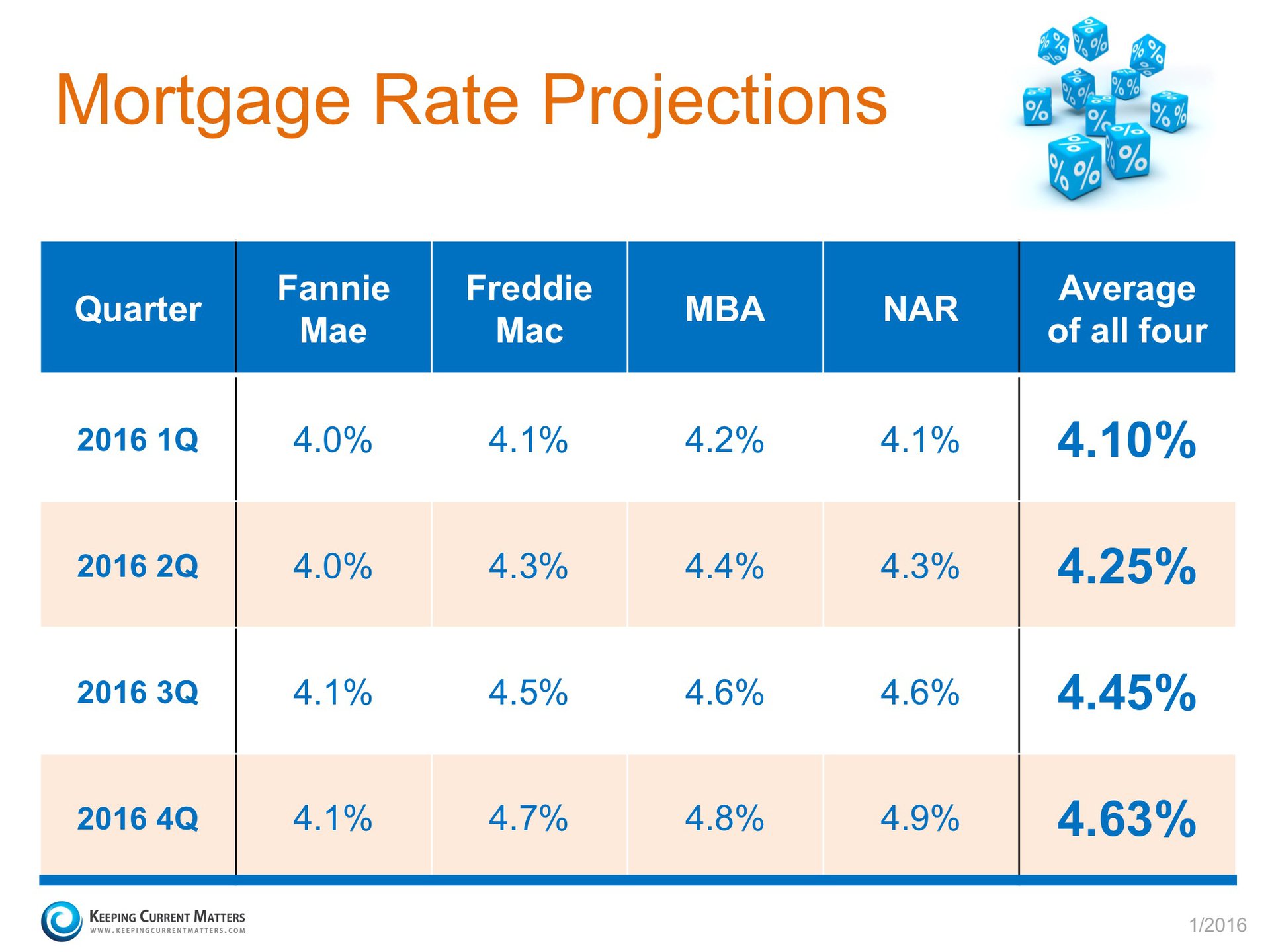
The Mortgage Bankers Association (MBA), the National Association of Realtors and Freddie Mac have all projected that mortgage interest rates will increase by approximately three-quarters of a percent over the next twelve months as you can see in the chart below:
Mortgage Rate Projections | Keeping Current Matters

Bottom Line

Only you and your family will know for certain if now is the right time to purchase a home. Answering these questions will help you make that decision.
 

Friday, January 8, 2016

I want to buy a home. But I can't because...

Most renters want to buy a home, however they are reluctant to begin the buying process due to their concerns over lack of a down payment, poor credit scores or a debt ratio that may be too high. The reality of those concerns, is that many of them can be resolved. 
 

Obstacles to Homeownership: Perceived or Real? | Keeping Current Matters
Yesterday, we discussed the belief Americans have in homeownership and their desire to partake in this piece of the American Dream. We also discussed some of the obstacles preventing them from attaining that goal. However, studies have shown that many of the obstacles mentioned are perceived, not real.
A recent study by Fannie Mae, What Do Consumers Know About The Mortgage Qualification Criteria?, revealed that many consumers are either unsure or misinformed regarding the minimum requirements necessary to obtain a mortgage. Let’s break down three such challenges.

Down Payment

Perceptions

Many renters have mentioned that the lack of an adequate down payment is preventing them from moving forward with the purchase of a home. According to the Fannie Mae report:
  • 40% of all renters don’t know what down payment is required
  • 15% think you need at least 20% down
  • An additional 4% think you need at least 10% down

The Reality

There are programs offered by Fannie Mae, Freddie Mac and FHA that require as little as 3-3.5% down. VA and USDA loans offer 0% down programs. According to the National Association of Realtors, the typical down payment for a first time buyer is 6%.

Credit Score

Perceptions

Many renters have mentioned that the lack of an adequate credit score is preventing them from moving forward with the purchase of a home. According to the Fannie Mae report:
  • 54% of all renters don’t know what credit score is required
  • 5% think you need at least a 740 credit score

The Reality

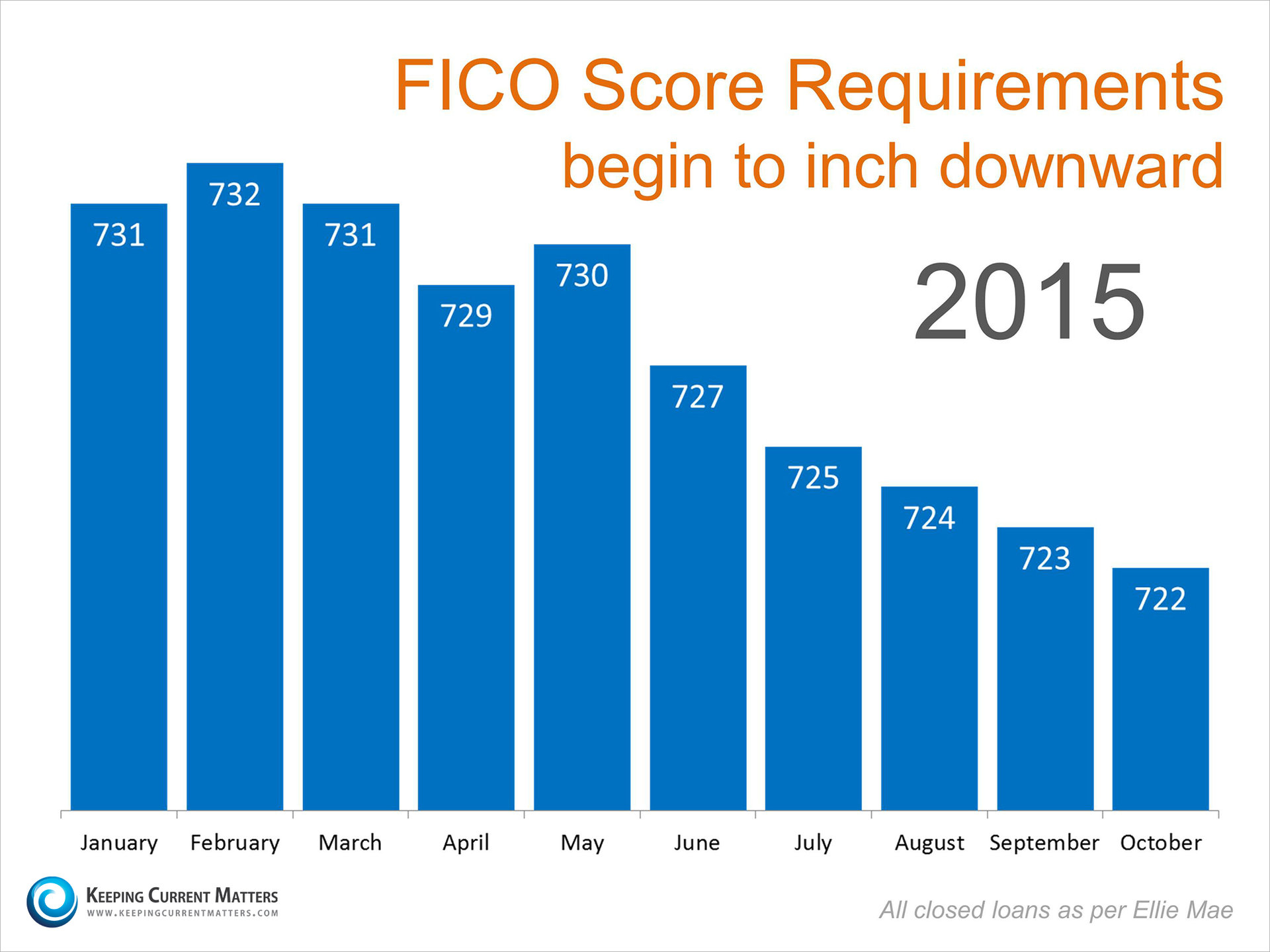
Many mortgages are granted to purchasers with a credit score of less than 700. According to Ellie Mae, the average credit score on a closed FHA purchase is 687 and the average credit score on all loans is 722.

Back End Debt-to-Income Ratio (DTI)

Perceptions

Many renters have mentioned that they carry too much debt which is preventing them from moving forward with the purchase of a home. According to the Fannie Mae report:
  • 59% of all renters don’t know what DTI is acceptable
  • 25% think you need at under 25%
  • 7% think you need under 39%

The Reality

Lenders like to see a back-end ratio that does not exceed 36%. Fannie Mae’s maximum total DTI ratio is 36% of the borrower’s stable monthly income. The maximum can be exceeded up to 45% based on credit score and other requirements.

Bottom Line

Don't let a lack of knowledge or misinformation keep your family from buying a home this year. Meet with a local real estate professional who can evaluate your ability to buy now!

Thursday, January 7, 2016

Owning a home has always been considered to be a big part of "living the American Dream"...

According to a recent survey by the National Association of Realtors, Americans still believe in home ownership.  
 
 Homeownership Still Part of the American Dream | Keeping Current Matters The National Association of Realtors (NAR) just released the first edition of their Housing Opportunities and Market Experience Survey (H.O.M.E.). NAR explained that the report covers:
“…core topics that will be tracked on a monthly basis such as views on housing as a good financial investment, whether homeownership is part of the American Dream…”
The current survey confirmed two long standing beliefs regarding homeownership:

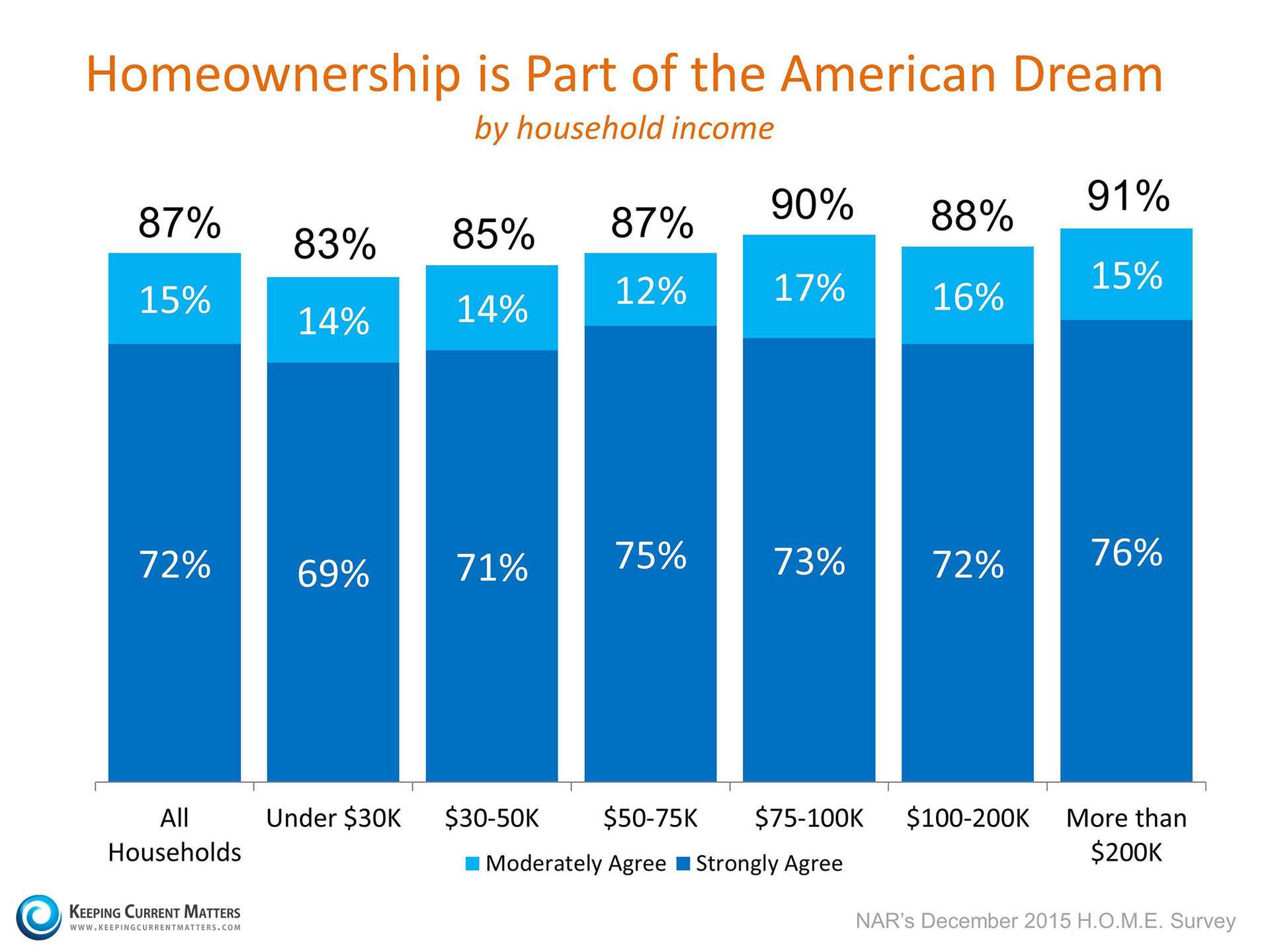
1. Americans at every income level believe homeownership is part of the American Dream

Homeownership is a Part of the American Dream | Keeping Current Matters

2.)  Americans at every age believe that homeownership is a good financial decision

Homeownership is a Good Financial Decision | Keeping Current Matters

Bottom Line

Americans in all age groups and income levels believe in homeownership as a piece of their American Dream. If you are ready and willing to buy your dream home, meet with a local real estate professional who can help you determine if you are able to.

Tuesday, January 5, 2016

Yes. Real estate had some rocky years recently. But...

Did you know that real estate was one of the top investments in 2015?  Maybe it is time to stop renting...

 Real Estate Shines as an Investment in 2015 | Keeping Current Matters
A survey by The Joint Center of Housing Studies at Harvard University reveals that when a family is buying a home they consider the financial benefits of homeownership along with the social benefits. The survey mentions things like:
  • Paying rent does not make sense
  • Homeownership provides a good financial opportunity
  • Owning a home helps you building family wealth
  • Buying a home is investing in your retirement
  • Home equity gives you something to borrow against
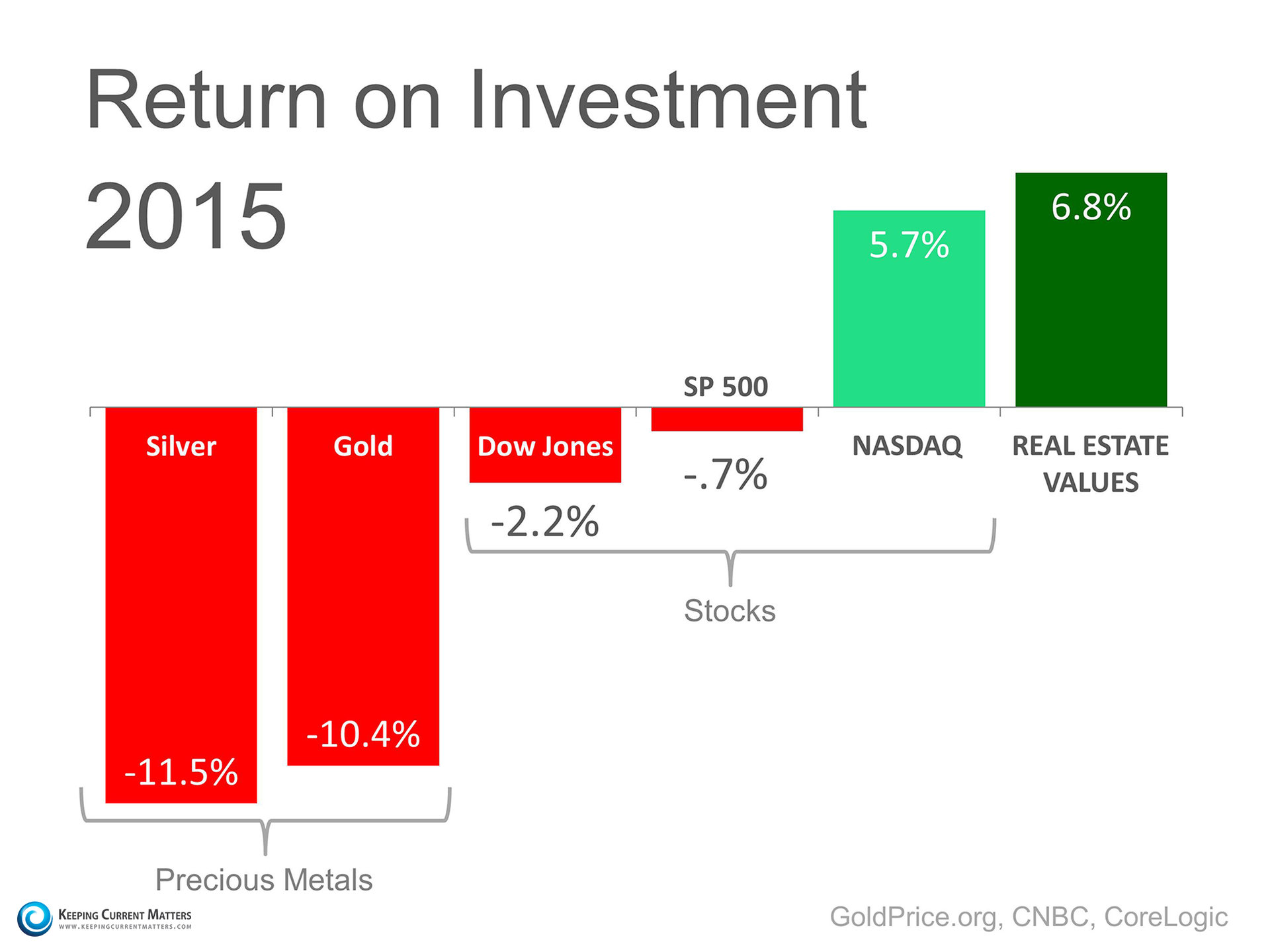
So how did homeownership match up against other investments in 2015? Here is a chart that compares its return on investment against precious metals and the stock market last year:
2015 Return on Investment | Keeping Current Matters

Bottom Line

Not only did homeownership offer all its social benefits. It also was a great investment financially.

Monday, January 4, 2016

Thinking of selling your home this spring?

Housing inventory remains low in most markets. Get a jump start on competing sellers by beating them to the market. Not sure what your home is worth? Call me and we will run through the numbers! 

 Top Reason to List Your House For Sale Now! | Keeping Current Matters
If you are debating listing your house for sale this year, here is the #1 reason not to wait!

Buyer Demand Continues to Outpace the Supply of Homes For Sale

The National Association of REALTORS’ (NAR) Chief Economist, Lawrence Yun recently commented on the inventory shortage:
“While feedback from REALTORS® continues to suggest healthy levels of buyer interest, available listings that are move-in ready and in affordable price ranges remain hard to come by for many would-be buyers.”
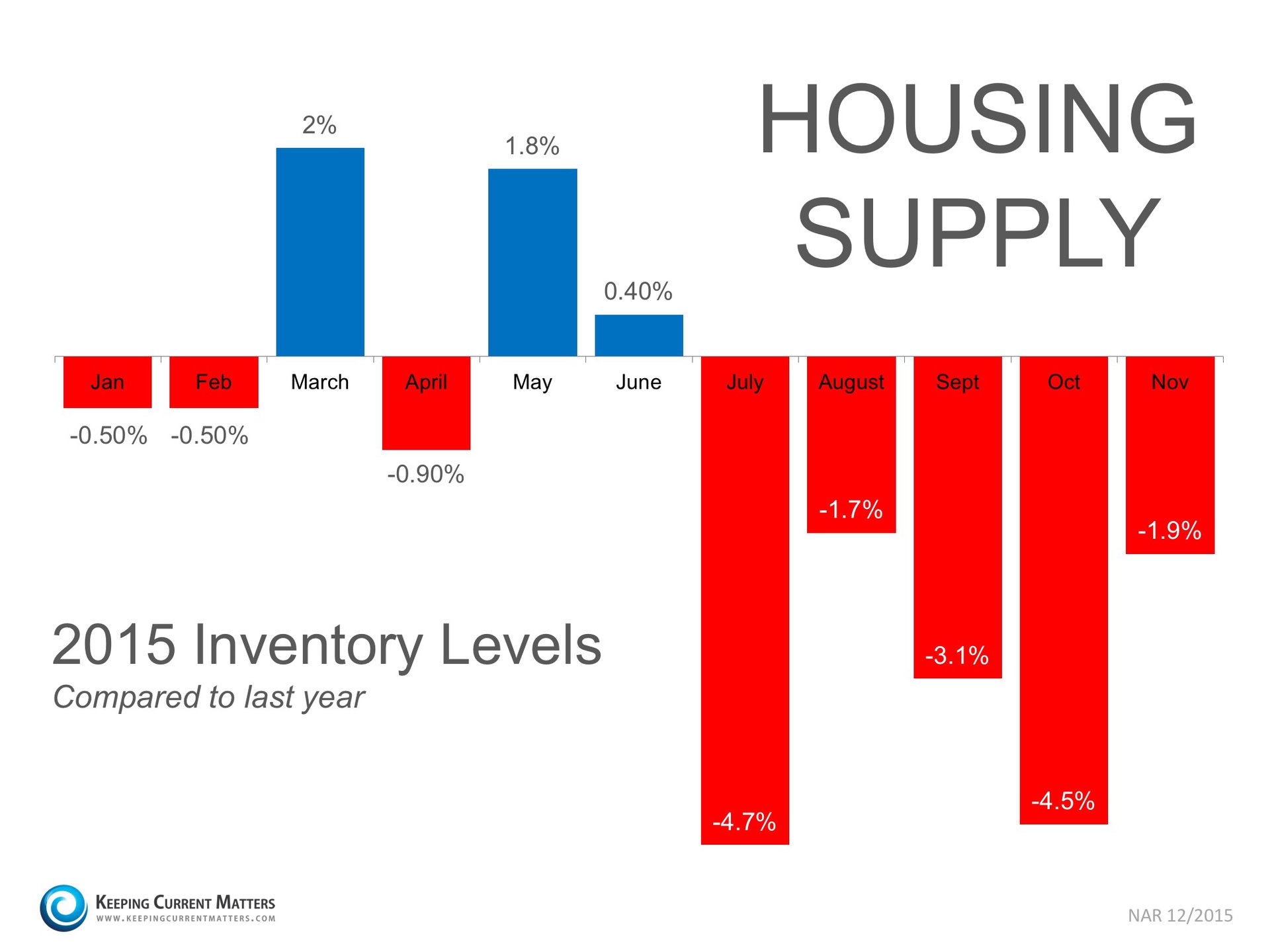
The latest Existing Home Sales Report shows that there is currently a 5.1-month supply of homes for sale. This remains lower than the 6-month supply necessary for a normal market and well below November 2014 numbers.
The chart below details the year-over-year inventory shortages experienced in 2015:
Housing Supply Year-Over-Year | Keeping Current Matters
Anything less than a six-month supply is considered a “Seller’s Market”.

Bottom Line

Meet with a local real estate professional who can show you the supply conditions in your neighborhood and assist you in gaining access to the buyers who are ready, willing and able to buy now!

Tuesday, December 29, 2015

Rents are expected to rise in 2016.

Now may be the time for you to buy!


Don't Let Rising Rents Trap You! | Keeping Current Matters

There are many benefits to homeownership. One of the top ones is being able to protect yourself from rising rents and lock in your housing cost for the life of your mortgage.

Don’t Become Trapped

Jonathan Smoke, Chief Economist at realtor.com recently reported on what he calls a “Rental Affordability Crisis”. He warns that,
“Low rental vacancies and a lack of new rental construction are pushing up rents, and we expect that they’ll outpace home price appreciation in the year ahead.”
The Joint Center for Housing Studies at Harvard University recently released their 2015 Report on Rental Housing, in which they reported that 49% of rental households are cost-burdened, meaning they spend more than 30% of their income on housing. These households struggle to save for a rainy day and pay other bills, such as food and healthcare.

It’s Cheaper to Buy Than Rent

In Smoke’s article, he went on to say,
“Housing is central to the health and well-being of our country and our local communities. In addition, this (rental affordability) crisis threatens the future value of owned housing, as the burdensome level of rents will trap more aspiring owners into a vicious financial cycle in which they cannot save and build a solid credit record to eventually buy a home.”
 “While more than 85% of markets have burdensome rents today, it’s perplexing that in more than 75% of the counties across the country, it is actually cheaper to buy than rent a home. So why aren’t those unhappy renters choosing to buy?”

Know Your Options

Perhaps, you have already saved enough to buy your first home. HousingWire reported that analysts at Nomura believe:
“It’s not that Millennials and other potential homebuyers aren’t qualified in terms of their credit scores or in how much they have saved for their down payment.
It’s that they think they’re not qualified or they think that they don’t have a big enough down payment.” (emphasis added)
Many first-time homebuyers who believe that they need a large down payment may be holding themselves back from their dream home. As we reported last week, in many areas of the country, a first-time home buyer can save for a 3% down payment in less than two years. You may have already saved enough!

Bottom Line

Don’t get caught in the trap so many renters are currently in. If you are ready and willing to buy a home, find out if you are able. Have a professional help you determine if you are eligible to get a mortgage.

Tuesday, December 22, 2015

The economy is showing signs of recovery, including pockets of the housing market.

Now may be the time to buy, and start building your family's weath. 
 
Building Family Wealth Over The Next 5 Years | Keeping Current Matters
As the economy continues to improve, more and more Americans are seeing their personal financial situations also improving. Instead of just getting by, many are now beginning to save and find other ways to build their net worth. One way to dramatically increase their family wealth is through the acquisition of real estate.
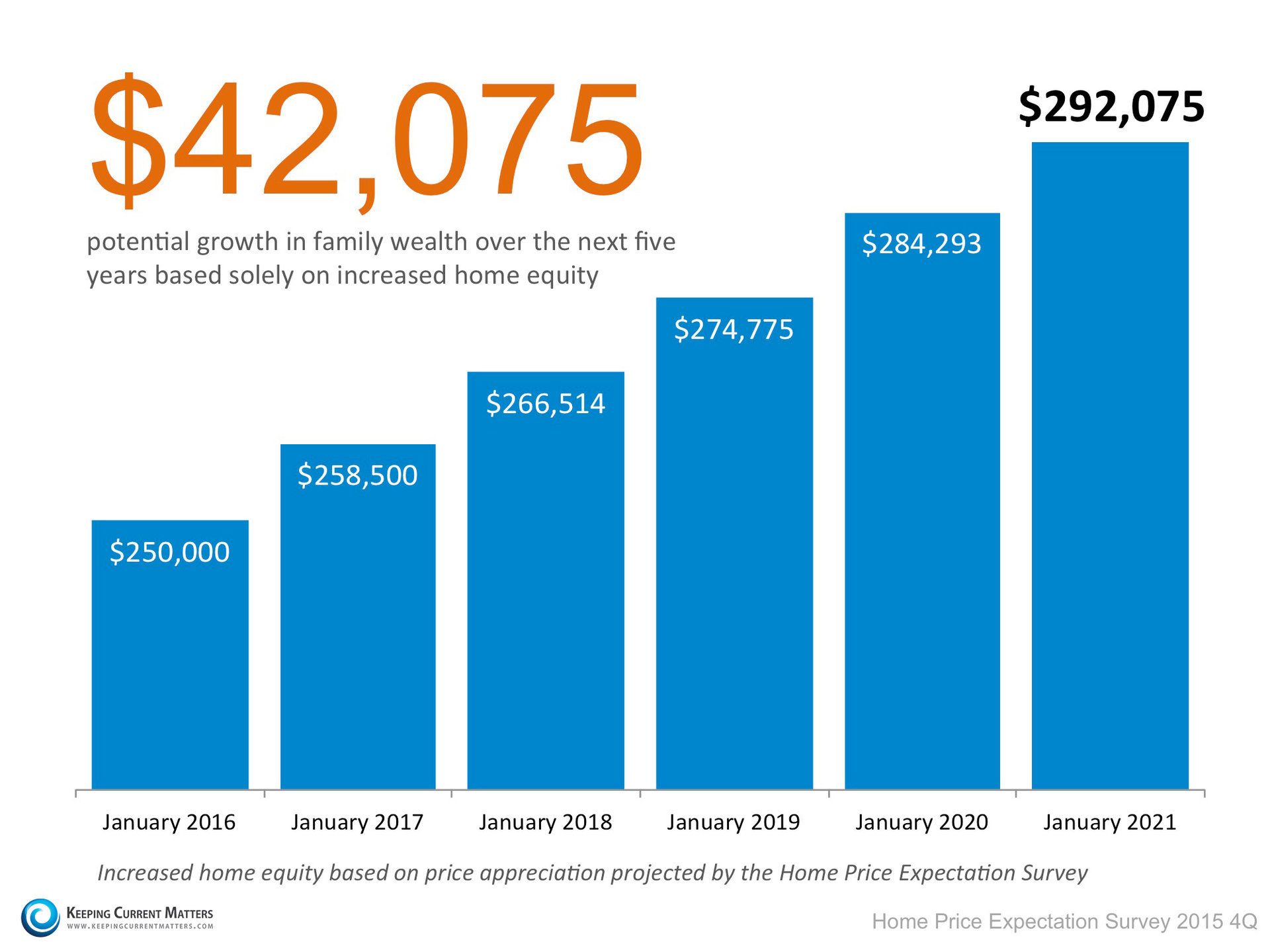
For example, let’s assume a young couple purchases and closes on a $250,000 home in January. What will that home be worth five years down the road?
Pulsenomics surveys a nationwide panel of over one hundred economists, real estate experts and investment & market strategists every quarter. They ask them to project how residential prices will appreciate over the next five years. According to their latest survey, here is how much value that $250,000 house will gain in the coming years.
Family Wealth Earned with Home Equity | Keeping Current Matters
Over a five year period, that homeowner can build their home equity to over $40,000. And, in many cases, home equity is large portion of a family’s overall net worth.

Bottom Line

If you are looking to better your family’s long-term financial situation, buying your dream home might be a great option.

Sunday, December 20, 2015

Getting ready to sell your home in 2016?

Here are some reasons to use a real estate professional to help sell your home...


Selling Your House? 5 Reasons You Shouldn't For Sale By Owner | Keeping Current Matters
In today's market, with homes selling quickly and prices rising, some homeowners might consider trying to sell their home on their own, known in the industry as a For Sale by Owner (FSBO). There are several reasons this might not be a good idea for the vast majority of sellers.
Here are five of those reasons:

1. There Are Too Many People to Negotiate With

Here is a list of some of the people with whom you must be prepared to negotiate if you decide to For Sale By Owner:
  • The buyer who wants the best deal possible
  • The buyer’s agent who solely represents the best interest of the buyer
  • The buyer’s attorney (in some parts of the country)
  • The home inspection companies, which work for the buyer and will almost always, find some problems with the house
  • The appraiser if there is a question of value

2. Exposure to Prospective Purchasers

Recent studies have shown that 89% of buyers search online for a home. That is in comparison to only 20% looking at print newspaper ads. Most real estate agents have an internet strategy to promote the sale of your home. Do you?

3. Results Come from the Internet

Where do buyers find the home they actually purchased?
  • 44% on the internet
  • 33% from a Real Estate Agent
  • 9% from a yard sign
  • 1% from newspaper
The days of selling your house by just putting up a sign and putting it in the paper are long gone. Having a strong internet strategy is crucial.

4. FSBOing has Become More and More Difficult

The paperwork involved in selling and buying a home has increased dramatically as industry disclosures and regulations have become mandatory. This is one of the reasons that the percentage of people FSBOing has dropped from 19% to 8% over the last 20+ years.
The 8% share represents the lowest recorded figure since NAR began collecting data in 1981.

5. You Net More Money when Using an Agent

Many homeowners believe that they will save the real estate commission by selling on their own. Realize that the main reason buyers look at FSBOs is because they also believe they can save the real estate agent’s commission. The seller and buyer can’t both save the commission.
Studies have shown that the typical house sold by the homeowner sells for $210,000 while the typical house sold by an agent sells for $249,000. This doesn’t mean that an agent can get $39,000 more for your home as studies have shown that people are more likely to FSBO in markets with lower price points. However, it does show that selling on your own might not make sense.

Bottom Line


Before you decide to take on the challenges of selling your house on your own, sit with a real estate professional in your marketplace and see what they have to offer.

Friday, December 18, 2015

How long will it take...

Depending on your housing region, it may take a lot longer to save up for a down payment on a house than you had anticipated. But what if you look at other mortgage options that require a lower down payment? You could shorten that wait by years... 
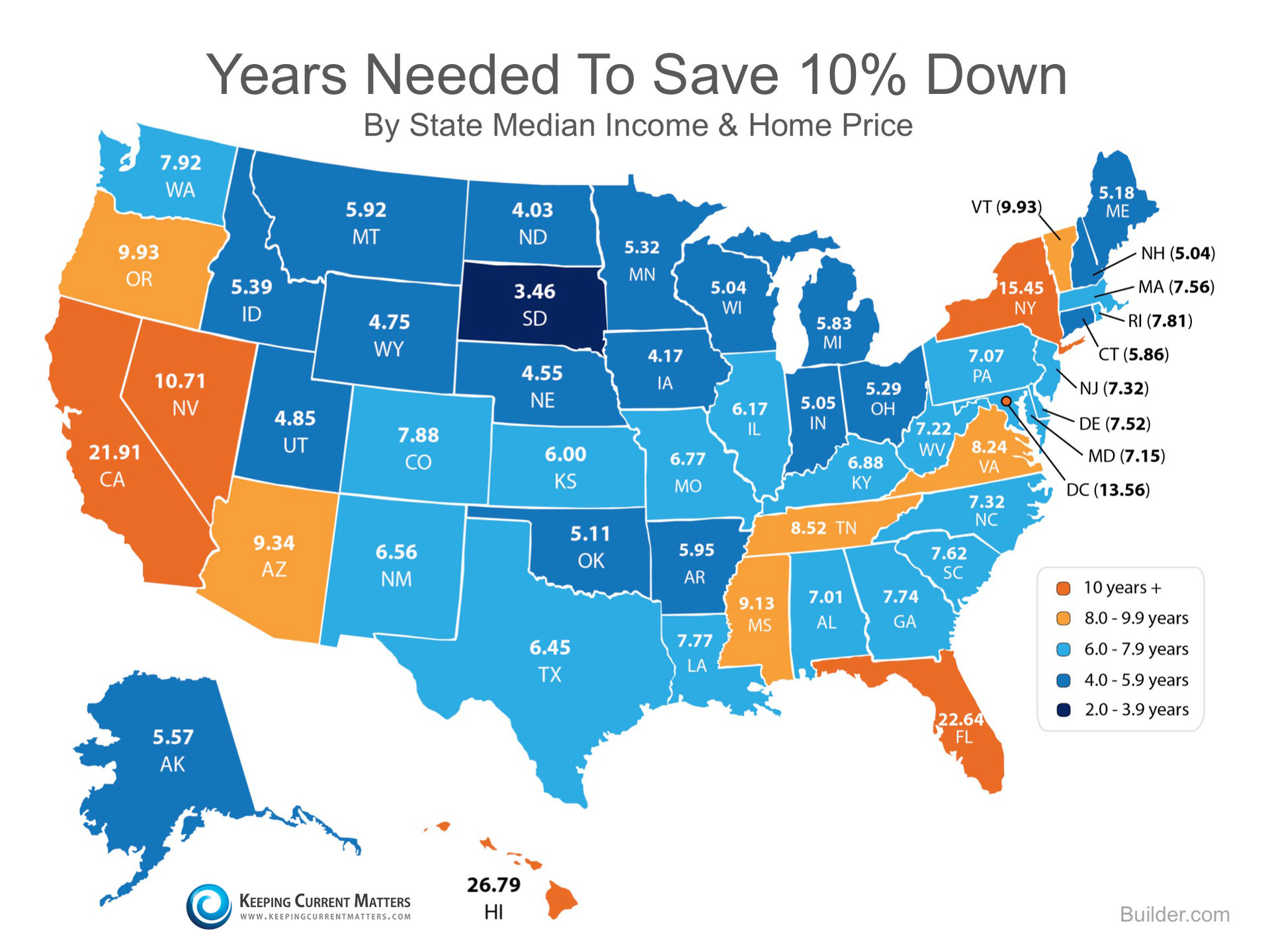
 How Long Does It Take To Save A Down Payment? | Keeping Current Matters In a recent study conducted by Builder.com, researchers determined that nationwide it would take “nearly eight years” for a first-time buyer to save enough for a down payment on their dream home.
Depending on where you live, median rents, incomes and home prices all vary. By determining the percentage a renter spends on housing in each state and the amount needed for a 10% down payment, they were able to establish how long (in years) it would take for an average resident to save.
According to the study, residents in South Dakota are able to save for a down payment the quickest in just under 3.5 years. Below is a map created using the data for each state:
Years Needed to Save 10% Down | Keeping Current Matters

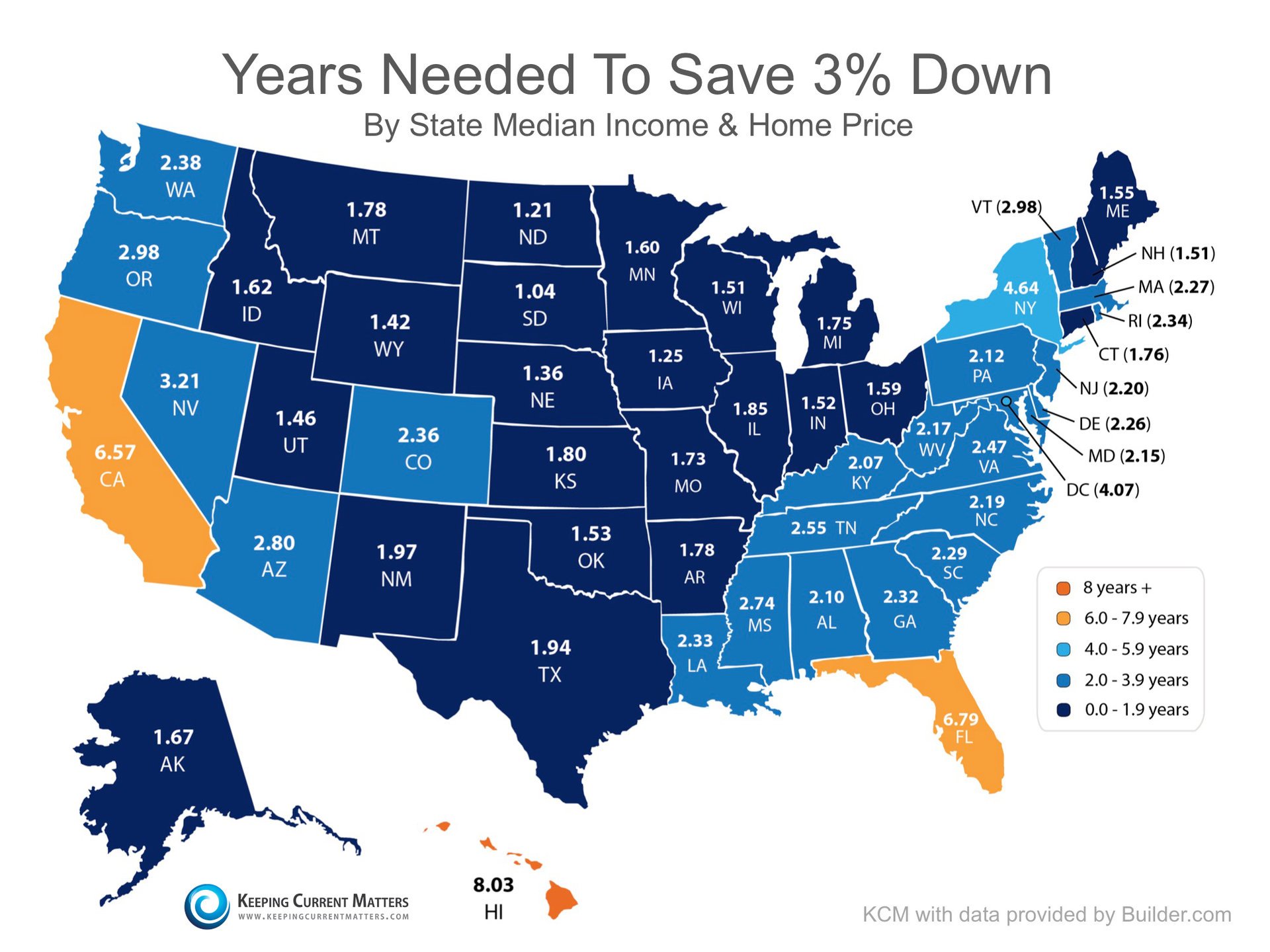
What if you only needed to save 3%?

What if you were able to take advantage of one of the Freddie Mac or Fannie Mae 3% down programs? Suddenly saving for a down payment no longer takes 5 or 10 years, but becomes attainable in under two years in many states as shown in the map below.
Years Needed to Save 3% Down | Keeping Current Matters

Bottom Line

Whether you have just started to save for a down payment, or have been for years, you may be closer to your dream home than you think! Meet with a local real estate professional who can help you evaluate your ability to buy today.

Tuesday, December 15, 2015

For most of our area school's, winter break begins at the final bell on Friday.

At our house, that means no alarm at 6:15 am for the following 2 weeks :) It also means travel for a lot of families. Are you going somewhere for the holidays? If so, make sure that you take the necessary stapes to ensure that your home is prepared for your absence.  A few keys actions to take, as outlined by @ properties:

1)  Securely lock your home.  Doors, windows, garage access.

2)  Stop your mail, or make arrangements for a neighbor to empty your box frequently.

3)  Set up deterrents - lights on alternate timers, ask a friend to stop by for an evening, have neighbors park in your driveway.

4)  Prepare for the weather.  If it is really cold, shut off your water so pipes can't freeze.  Schedule snow removal services so that snow doesn't pile up outside and call attention to the fact that you are not home.

5)  Pamper your pups.  Don't foget to make arrangments for the care of your furry family members.  Boarding sites fill up quickly at the holidays, and pet sitters may be booked to the brim as well.  Plan ahead so Fido has the care he needs.

6)  Tidy up your home.  There is no place like home, except for a clean one!  Spending the extra minutes to leave your home clean and smelling fresh will be well worth it when you arrive home after traveling, and exhausted.  

Take a few minutes to read through these tips in the full article 6 ways to prep your home for a holiday vacation

Thursday, December 10, 2015

Renting? As you head into 2016, you may want to reconsider...


The Residential Rental Market Heading into 2016 | Keeping Current Matters
Below are quotes from experts as well as industry reports & articles that cover the residential rental market in the U.S.

The experts…

Zillow Chief Economist Svenja Gudell:

"Make no mistake: Despite this recent slowdown in rental appreciation, the rental affordability crisis we've been enduring for the past few years shows no signs of easing, especially as income growth remains weak. It will take a lot more supply, and a lot more renters-turned-homeowners, to fully reverse this.”

Lawrence Yun, Chief Economist of the National Association of Realtors

“Rents and home prices are expected to exceed income growth into next year because of the insufficient creation of new home construction and the detrimental impact its inadequacy continues to have on housing costs in several markets.”

David Brickman, Executive Vice President of Freddie Mac Multifamily

"We know rents are rising faster than incomes, and now we have data to show that many renters don't have enough to pay all their debts each month, which is forcing them to make tradeoffs, such as cutting spending on other items.”

The reports and articles…

Zillow's 2016 Housing Market Predictions

“Rising rents won't let up in 2016, and will continue to set new records. The next year will bring the least affordable median rents ever.”

2015 rent.com Rental Market Report

“68% of property managers predict that rental rates will continue to rise in the next year by an average of 8%”

CNBC

“The primary reasons cited for the latest rises were increasing demand and low inventory. Vacancy rates for rental housing nationally dropped to a 20-year low of 6.8 percent in the second quarter…Rents and occupancies are currently hovering at historic highs as supply isn't keeping up with demand.”

 Bottom Line

If you are one of the many renters debating a home purchase, meet with a real estate professional in your area who can show you your options, before your rent goes up!

Tuesday, December 8, 2015

Some fun state trivia...

Jackie Joyner Kersee over Michael Jordan as the greatest sports figure from Illinois?  I don't think so.

click on the map for the facts

1. What Each State Calls That Carbonated Beverage

Tuesday, December 1, 2015

Rumor has it...

...that mortgage interest rates are at risk of rising as much as 1% over the course of the next year.  Thinking of moving?  Act sooner than later!


The Impact of Higher Interest Rates | Keeping Current Matters
Last week, an article in the Washington Post discussed a new ‘threat’ homebuyers will soon be facing: higher mortgage rates. The article revealed:
“The Mortgage Bankers Association expects that rates on 30-year loans could reach 4.8 percent by the end of next year, topping 5 percent in 2017. Rates haven’t been that high since the recession.”

How can this impact the housing market?

The article reported that recent analysis from Realtor.com found that -
“…as many as 7% of people who applied for a mortgage during the first half of the year would have had trouble qualifying if rates rose by half a percentage point.”
This doesn’t necessarily mean that those buyers negatively impacted by a rate increase would not purchase a home. However, it would mean that they would either need to come up with substantially more cash for a down payment or settle for a lesser priced home.
Below is a table showing how a jump in mortgage interest rates would impact the purchasing power of a prospective buyer on a $300,000 home.
Buyers Purchasing Power | Keeping Current Matters

Bottom Line

If you are considering a home purchase (either as a first time buyer or move-up buyer), purchasing sooner rather than later may make more sense from a pure financial outlook.

Monday, November 30, 2015

Renting to avoid a mortgage payment?

Some people rent in order to avoid the commitment of a mortgage payment. A renter is still paying a mortgage - it just happens to be for someone else. 


Rent vs. Buy: Either Way You're Paying A Mortgage | Keeping Current Matters
There are some people that have not purchased a home because they are uncomfortable taking on the obligation of a mortgage. Everyone should realize that, unless you are living with your parents rent free, you are paying a mortgage - either your mortgage or your landlord’s.
As The Joint Center for Housing Studies at Harvard University explains:
“Households must consume housing whether they own or rent. Not even accounting for more favorable tax treatment of owning, homeowners pay debt service to pay down their own principal while households that rent pay down the principal of a landlord plus a rate of return.  
That’s yet another reason owning often does—as Americans intuit—end up making more financial sense than renting.”
Christina Boyle, a Senior Vice President, Head of Single-Family Sales & Relationship Management at Freddie Mac, explains another benefit of securing a mortgage vs. paying rent:
“With a 30-year fixed rate mortgage, you’ll have the certainty & stability of knowing what your mortgage payment will be for the next 30 years – unlike rents which will continue to rise over the next three decades.”
As an owner, your mortgage payment is a form of ‘forced savings’ that allows you to have equity in your home that you can tap into later in life. As a renter, you guarantee your landlord is the person with that equity.
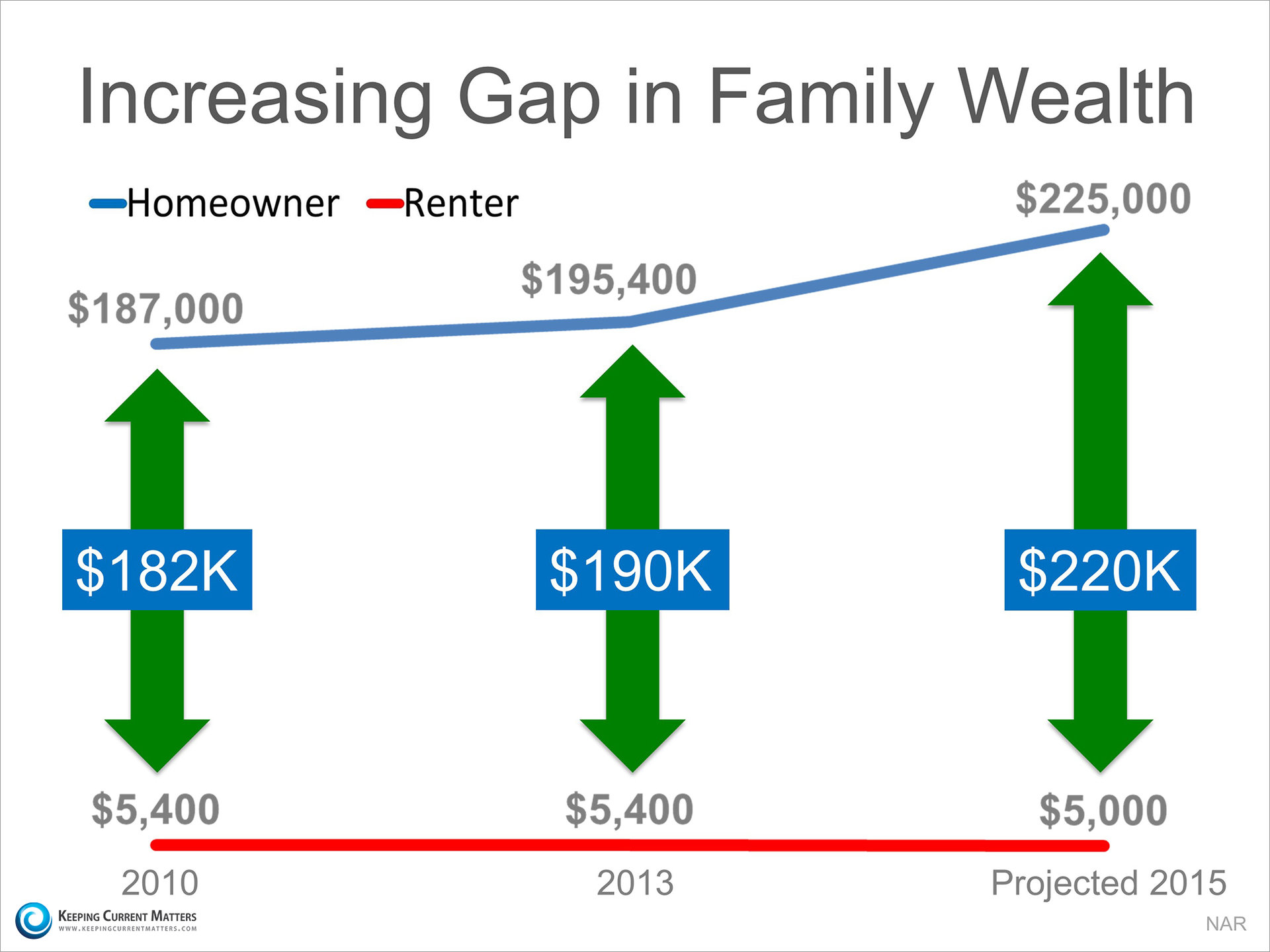
The graph below shows the widening gap in net worth between a homeowner and a renter:
Increasing Gap in Family Wealth | Keeping Current Matters

Bottom Line

Whether you are looking for a primary residence for the first time or are considering a vacation home on the shore, owning might make more sense than renting with home values and interest rates projected to climb.

Friday, November 27, 2015

In the mood to kick off the holiday season?

There are plenty of Villages sponsoring tree lighting ceremonies this weekend. I am heading to the one in Libertyville tonight. Here is a link with a list of local festivities...


Wednesday, November 25, 2015

Distressed sales dropping...

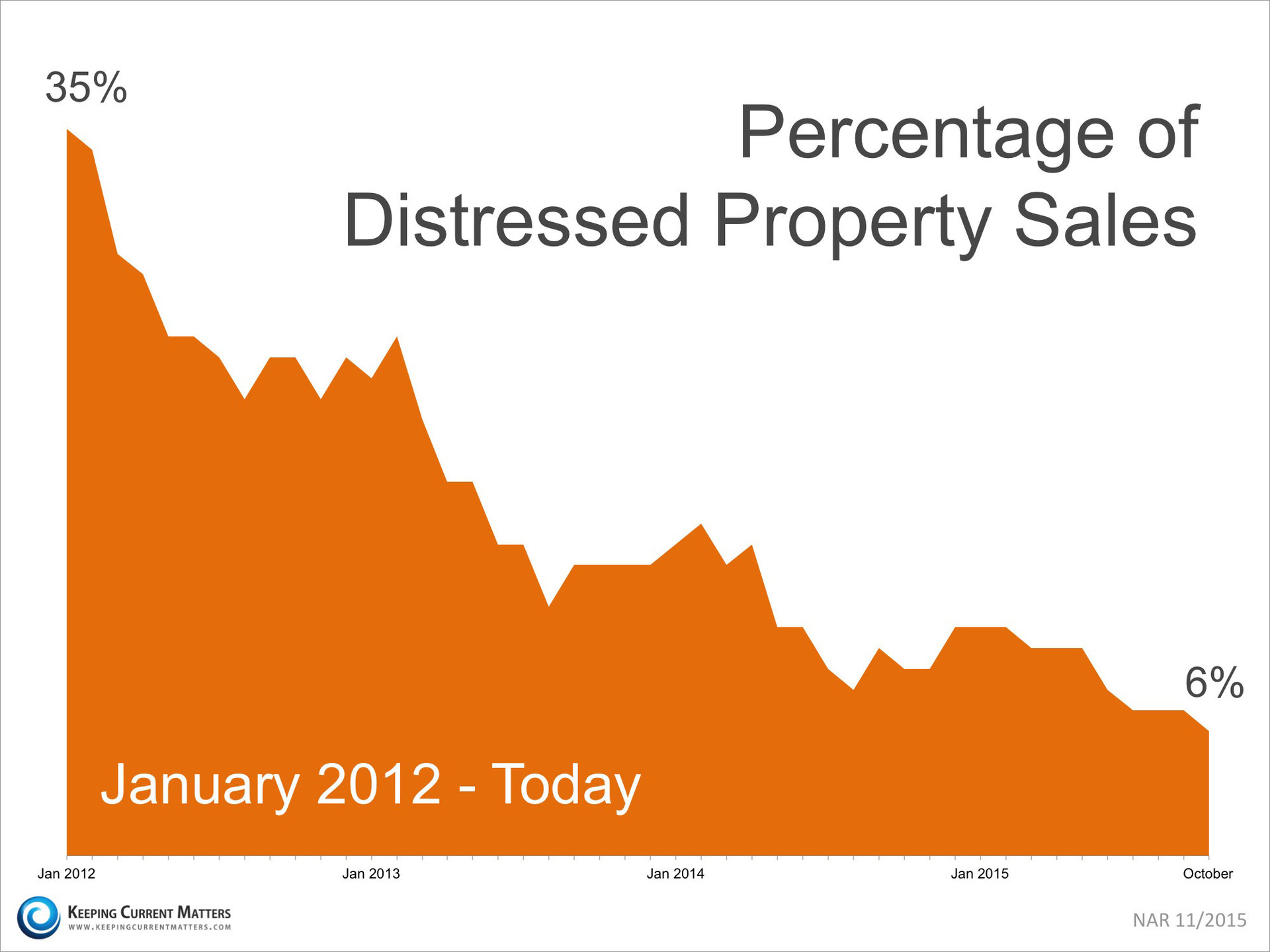
The National Association of Realtors began tracking distressed sales in October of 2008. When the housing market hit its lowest point in 2012, distressed sales accounted for 35% of all homes sold. This October, distressed sales amounted to only 6% of all homes sold. That is an improvement from 9% in October of 2014, and the lowest ever, since NAR started keeping tabs on distressed sales. Now that is something to be thankful for!  
 
 
Distressed Property Sales Hit New Low | Keeping Current Matters
The National Association of Realtors (NAR) just released their Existing Home Sales Report revealing that distressed property sales accounted for 6% of sales in October. This is down from 9% in 2014 and the lowest figure since NAR began tracking distressed sales in October 2008.
Below is a graph that shows just how far the market has come since January 2012 when distressed sales accounted for 35% of all sales.
Percentage of Distressed Property Sales | Keeping Current Matters

Existing Home Sales Up Year-Over-Year

Mortgage interest rates remained below 4% in October prompting existing home sales to stay at a healthy annual pace of 5.36 million. Year-over-year sales were up 3.9%.
Inventory of homes for sale remain below the 6-month supply that is necessary for a normal market, as they fell 2.3% to a 4.8-months supply. The shortage in inventory has contributed to the median home price rising an additional 5.8% to $219,600.
NAR’s Chief Economist, Lawrence Yun had this to say about the lack of inventory:
"New and existing-home supply has struggled to improve so far this Fall, leading to few choices for buyers and no easement of the ongoing affordability concerns still prevalent in some markets."
There is good news though, as Yun went on to say:
"As long as solid job creation continues, a gradual easing of credit standards even with moderately higher mortgage rates should support steady demand and sales continuing to rise above a year ago."

Bottom Line

If you are debating putting your home on the market this year, now may be the time. Buyers are still out there looking for their dream home. Meet with a local real estate professional who can help you determine your best plan.

Tuesday, November 24, 2015

Interest rates may be inching up, however the FICO score requirement is dropping...


Millennials: What FICO Score is Needed to Buy a Home? | Keeping Current Matters
In a recent article by the Wharton School of Business at the University of Pennsylvania, it was revealed that some Millennials are not looking to purchase a home simply because they don’t believe they can qualify for a mortgage.
The article quoted Jessica Lautz, the National Association of RealtorsManaging Director of Survey Research, as saying that there is a significant population that does not think they will be approved for a mortgage and doesn’t even try. The article also quoted Fannie Mae CEO Tim Mayopoulos :
“I do think that there’s a sense out there in the marketplace among borrowers that credit may not be available, especially for people with lower credit scores.”

So what credit score is necessary?

A recent survey reported that two-thirds of the respondents believe they need a very good credit score to buy a home, with 45 percent thinking a “good credit score” is over 780.
In actually, the FICO score on closed loans (as reported by Ellie Mae) is much lower and has been dropping over the last several months.
FICO Score Requirements | Keeping Current Matters

Bottom Line

Millennials who are considering a home purchase should get advice from a local real estate or mortgage professional now. They may be surprised how much the requirements for a mortgage have eased.

Monday, November 23, 2015

Not quite sure how equity works? Here's a quick explanation...


Equity Matters A Lot... Just Ask Freddie Mac | Keeping Current Matters
There are many reasons, both financial and non-financial, that homeownership remains an important part of the American Dream. One of the biggest reasons is the fact that it helps build family wealth. Recently, Freddie Mac wrote about the power of home equity. They explained:
“In the simplest terms, equity is the difference between how much your home is worth and how much you owe on your mortgage. You build equity by paying down your mortgage over time and through your home's appreciation. In a nutshell, your money is working for you and contributing toward your financial future.”
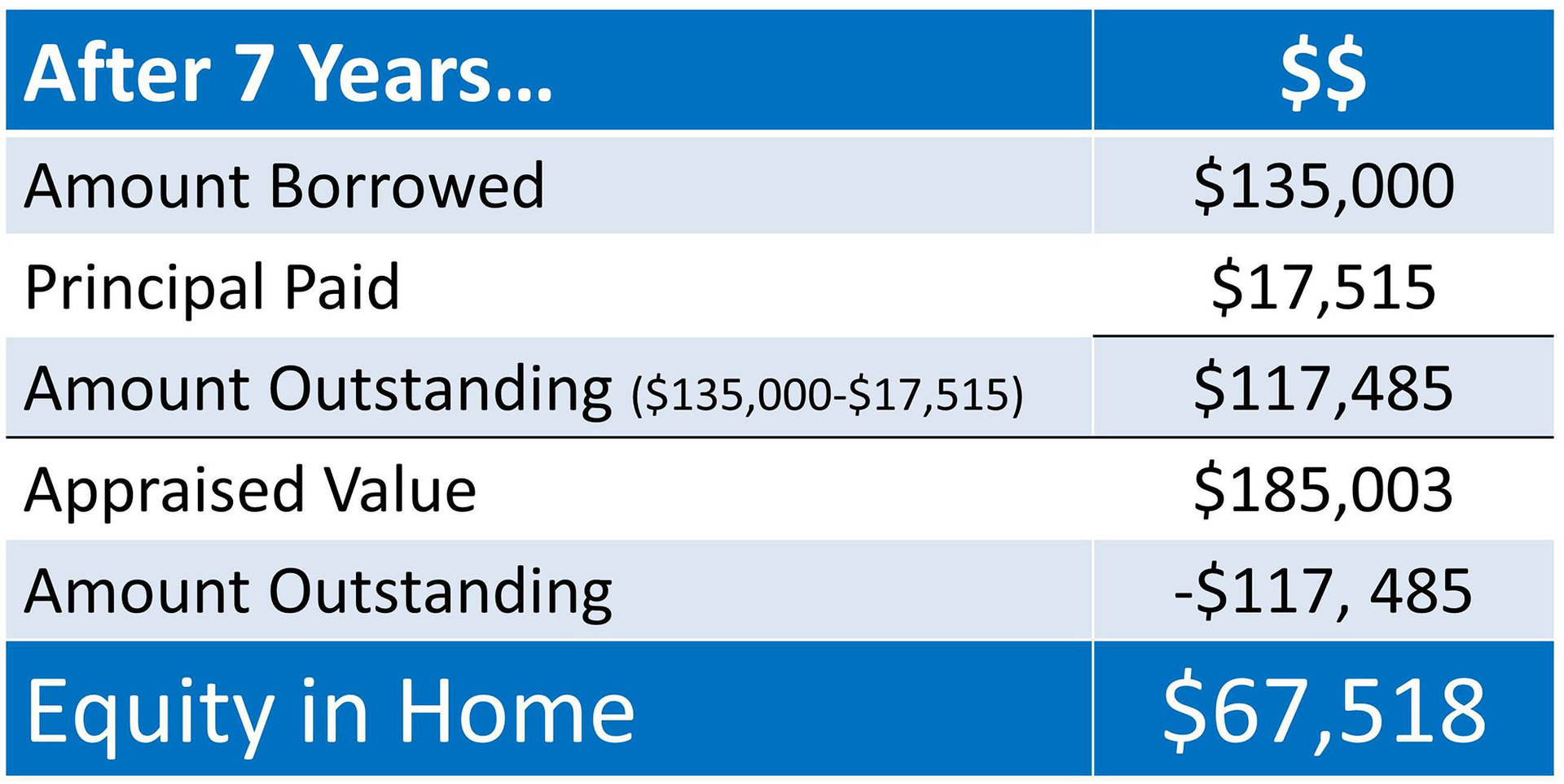
They went on to show an example where a person bought a home for $150,000 with a down payment of 10% ($15K), resulting in a loan amount of $135,000. The buyer secured a 30-year fixed-rate mortgage at 4.5% with a monthly mortgage payment of $684.03 (not including taxes and insurance).
The chart below demonstrates the home equity built after 7 years of making mortgage payments and assuming the historic national average of 3% per year home appreciation:
Home Equity Earned | Keeping Current Matters

And that number continues to build as you continue to own the home.

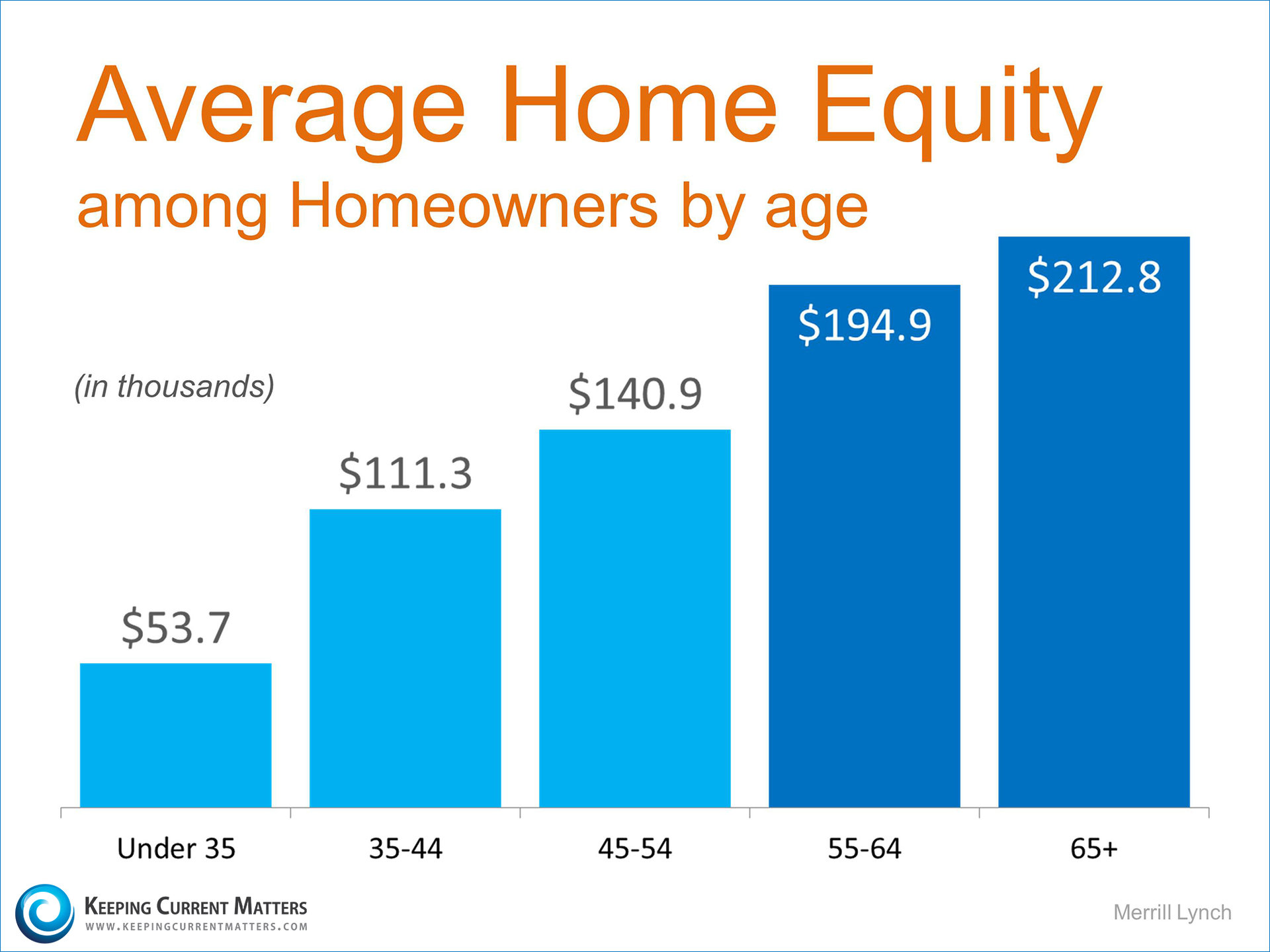
Merrill Lynch published a report earlier this year that showed the average equity homeowners have acquired by certain ages.
Average Home Equity | Keeping Current Matters

Bottom Line

Home equity is important to building wealth as a family. Referring to the first scenario above, Freddie Mac explained:
“Now, if you continued to rent, and made the same payment of $684.03 per month, you'd have zero equity and no means to build it. Building equity is a critical part of homeownership and can help you create financial stability.”
Put your housing cost to work for you and your family. Meet with a real estate professional today to explore your options.