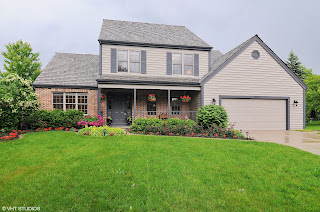
You have one chance to appeal to a buyer. One. And that chance is usually presented on-line. That is why staging for photos is so important. And why pricing the home correctly at the beginning can set the course for success, or for failure. Keeping Current Matters explains it well below :

In today’s market, where demand is outpacing supply in many regions
of the country, pricing a house is one of the biggest challenges real
estate professionals face. Sellers often want to price their home higher
than recommended, and many agents go along with the idea to keep their
clients happy. However, the best agents realize that telling the
homeowner the truth is more important than getting the seller to like
them.
There is no “later.”
Sellers sometimes think, “If the home doesn’t sell for this price, I
can always lower it later.” However, research proves that homes that
experience a listing price reduction sit on the market longer,
ultimately selling for less than similar homes.
John Knight, recipient of the University Distinguished Faculty Award from the
Eberhardt School of Business at the
University of the Pacific,
actually did research on the cost (in both time and money) to a seller
who priced high at the beginning and then lowered the their price. In
his article, Listing Price, Time on Market and Ultimate Selling Price
published in
Real Estate Economics revealed:
“Homes that underwent a price revision sold for less,
and the greater the revision, the lower the selling price. Also, the
longer the home remains on the market, the lower its ultimate selling
price.”
Additionally, the “I’ll lower the price later” approach can paint a
negative image in buyers’ minds. Each time a price reduction occurs,
buyers can naturally think, “Something must be wrong with that house.”
Then when a buyer does make an offer, they low-ball the price because
they see the seller as “highly motivated.” Pricing it right from the
start eliminates these challenges.
Don’t build “negotiation room” into the price.
Many sellers say that they want to price their home high in order to
have “negotiation room.” But, what this actually does is lower the
number of potential buyers that see the house. And we know that limiting
demand like this will negatively impact the sales price of the house.
Not sure about this? Think of it this way: when a buyer is looking
for a home online (as they are doing more and more often), they put in
their desired price range. If your seller is looking to sell their house
for $400,000, but lists it at $425,000 to build in “negotiation room,”
any potential buyers that search in the $350k-$400k range won’t even
know your listing is available, let alone come see it!
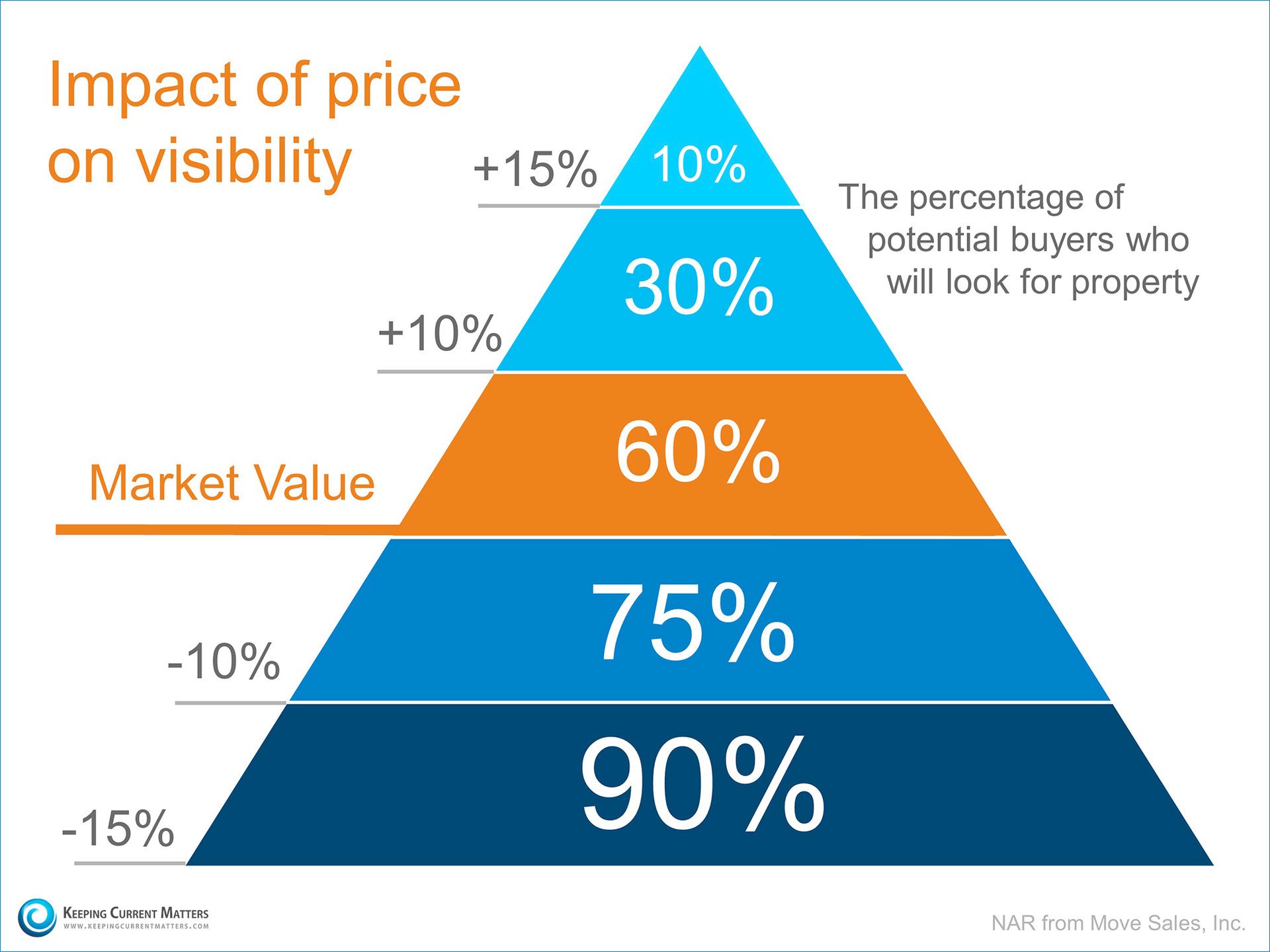
One great way to see this is with the chart below. The higher you
price your home over its market value, the less potential buyers will
actually see your home when searching.

A better strategy would be to price it properly from the beginning
and bring in multiple offers. This forces these buyers to compete
against each other for the “right” to purchase your house.
Look at it this way: if you only receive one offer, you are set up in
an adversarial position against the prospective buyer. If, however, you
have multiple offers, you have two or more buyers fighting to please
you. Which will result in a better selling situation?
The Price is Right
Great pricing comes down to truly understanding the real estate
dynamics in your neighborhood. Look for an agent that will take the time
to simply and effectively explain what is happening in the housing
market and how it applies to your home.
You need an agent that will tell you what you need to know rather
than what you want to hear. This will put you in the best possible
position.