Thursday, November 5, 2015

Five reasons to list your home before the holidays...


Waiting until after the Holidays, Isn’t a Smart Decision | Keeping Current Matters
Every year at this time, many homeowners decide to wait until after the holidays to put their home on the market for the first time. Others who already have their home on the market decide to take it off the market until after the holidays. Here are six great reasons not to wait:
1. Relocation buyers are out there. Companies are not concerned with holiday time and if the buyers have kids, they want them to get into school after the holidays.
2. Purchasers that are looking for a home during the holidays are serious buyers and are ready to buy.
3. You can restrict the showings on your home to the times you want it shown. You will remain in control.
4. Homes show better when decorated for the holidays.
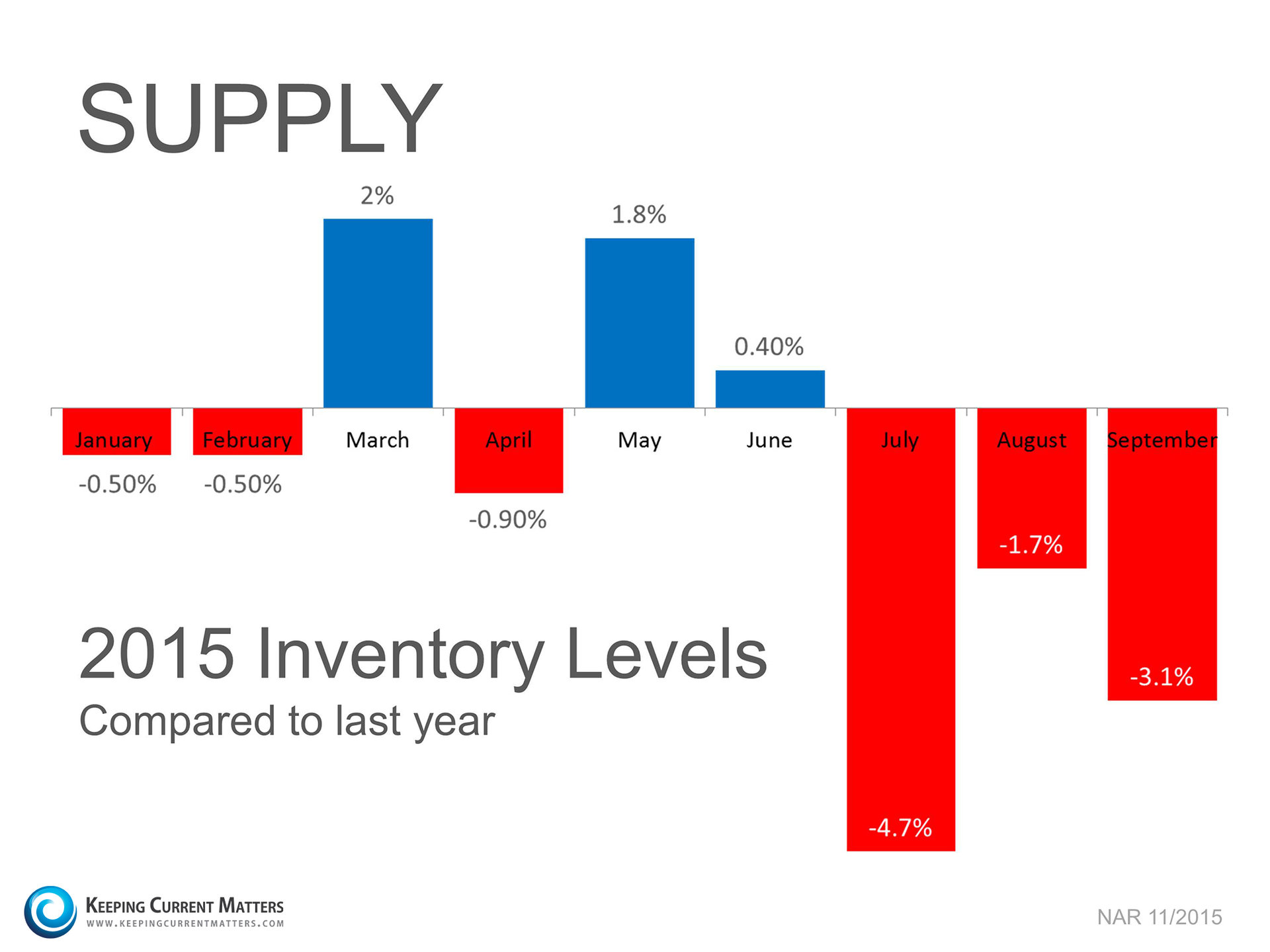
5. There is less competition for you as a seller right now. Let’s take a look at listing inventory as compared to the same time last year:
Supply of Homes | Keeping Current Matters
6. The supply of listings increases substantially after the holidays. Also, in many parts of the country, new construction will make a comeback in 2016. This will lessen the demand for your house.

Bottom Line

Waiting until after the holidays to sell your home probably doesn't make sense.

Tuesday, November 3, 2015

Baby boomers are going to have a big impact on the housing market...


Baby Boomers Finding Freedom In Retirement | Keeping Current Matters
Within the next five years, Baby Boomers are projected to have the largest household growth of any other generation during that same time period, according to the Joint Center for Housing Studies of Harvard. Let’s take a look at why…
In a recent Merrill Lynch study“Home in Retirement: More Freedom, New Choices” they surveyed nearly 6,000 adults ages 21 and older about housing. 

Crossing the “Freedom Threshold”

Throughout our lives, there are often responsibilities that dictate where we live. Whether being in the best school district for our children, being close to our jobs, or some other factor is preventing a move, the study found that there is a substantial shift that takes place at age 61.
The study refers to this change as “Crossing the Freedom Threshold”. When where you live is no longer determined by responsibilities, but rather a freedom to live wherever you like. (see the chart below)
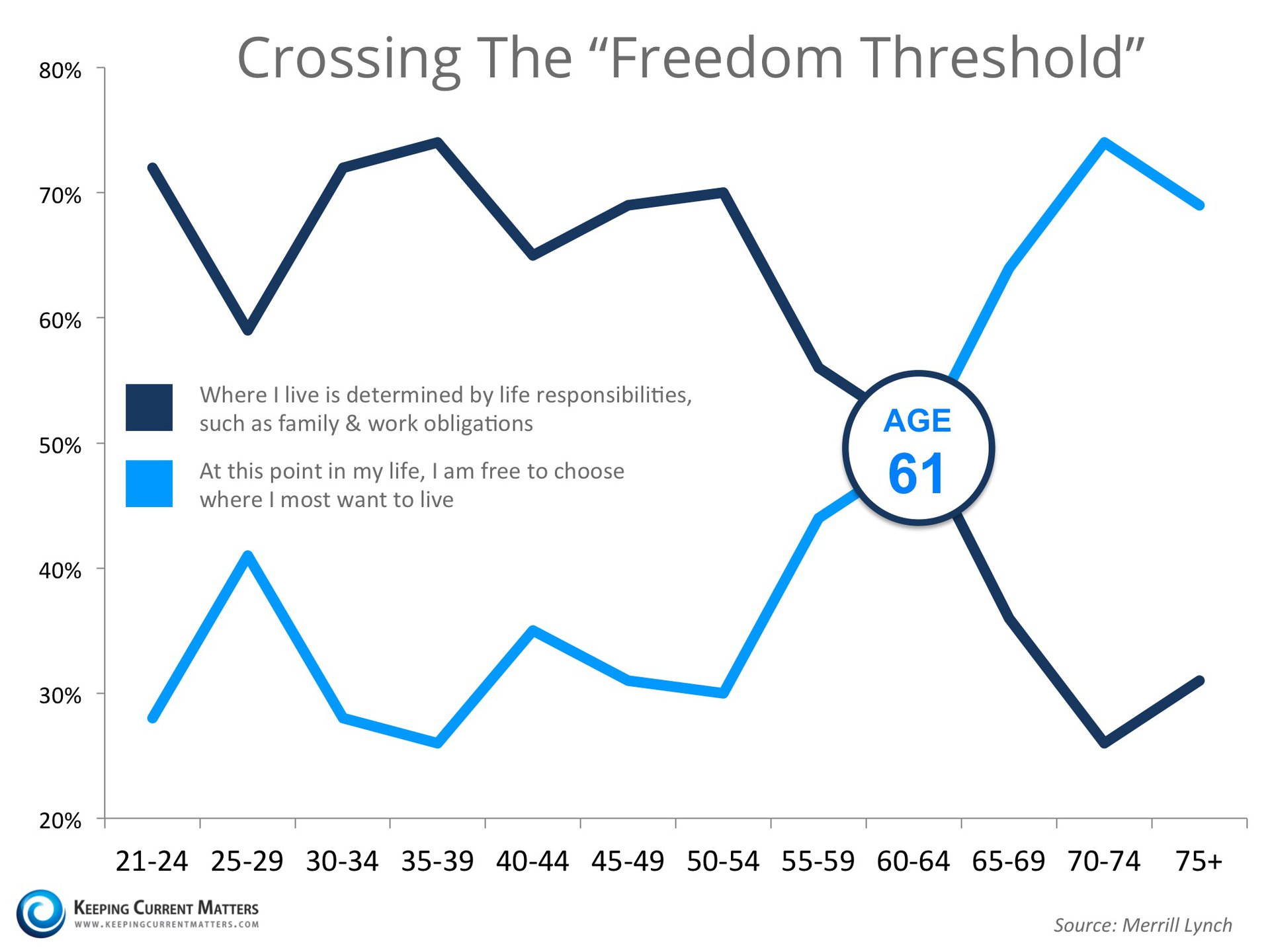
Crossing The Freedom Threshold | Keeping Current Matters
As one participant in the study stated:
“In retirement, you have the chance to live anywhere you want. Or you can just stay where you are. There hasn’t been another time in life when we’ve had that kind of freedom.”

On the Move

According to the study, “an estimated 4.2 million retirees moved into a new home last year alone.” Two-thirds of retirees say that they are likely to move at least once during retirement.
The top reason to relocate cited was “wanting to be closer to family” at 29%, a close second was “wanting to reduce home expenses”. See the chart below for the top 6 reasons broken down.
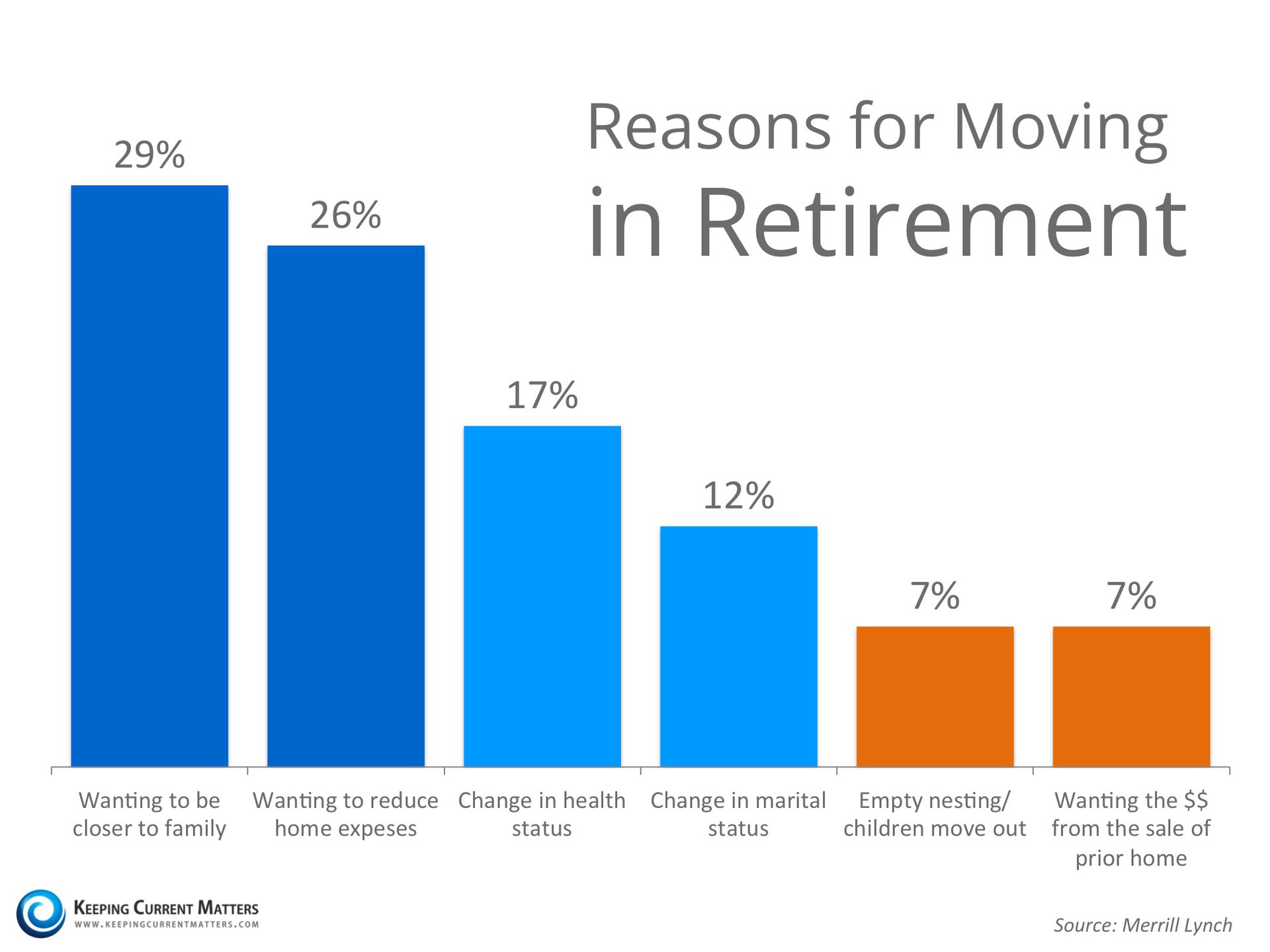
Merrill Lynch Moving In Retirement | Keeping Current Matters

Not Every Baby Boomer Downsizes

There is a common misconception that as retirees find themselves with fewer children at home, they will instantly desire a smaller home to maintain. While that may be the case for half of those surveyed, the study found that three in ten decide to actually upsize to a larger home.
Some choose to buy a home in a desirable destination with extra space for large family vacations, reunions, extended visits, or to allow other family members to move in with them.
"Retirees often find their homes become places for family to come together and reconnect, particularly during holidays or summer vacations."

Bottom Line

If your housing needs have changed or are about to change, meet with a local real estate professional in your area who can help with deciding your next step.

Monday, November 2, 2015

84% of Americans believe that owning a home is a big part of the "American Dream" Do you?

Homeownership is Still a Huge Part of the
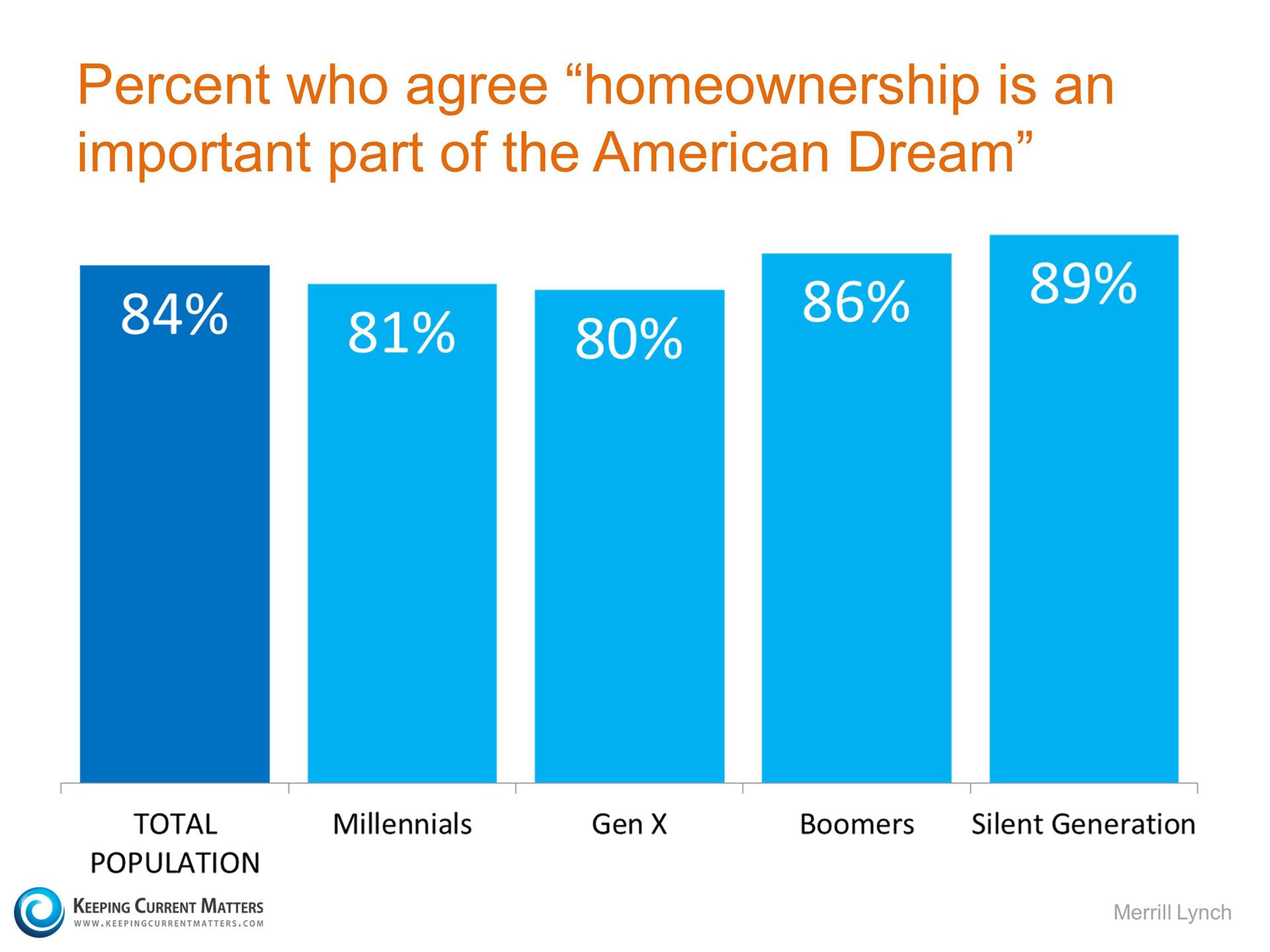
There have been some who have voiced doubt as to whether or not the younger generations still consider buying a home as being part of the “American Dream”. A study by Merrill Lynch puts that doubt to rest.
According to their research, every living generation still believes that owning a home is in fact important. Here are the numbers:
Homeownership is an important part of the American Dream | Keeping Current Matters
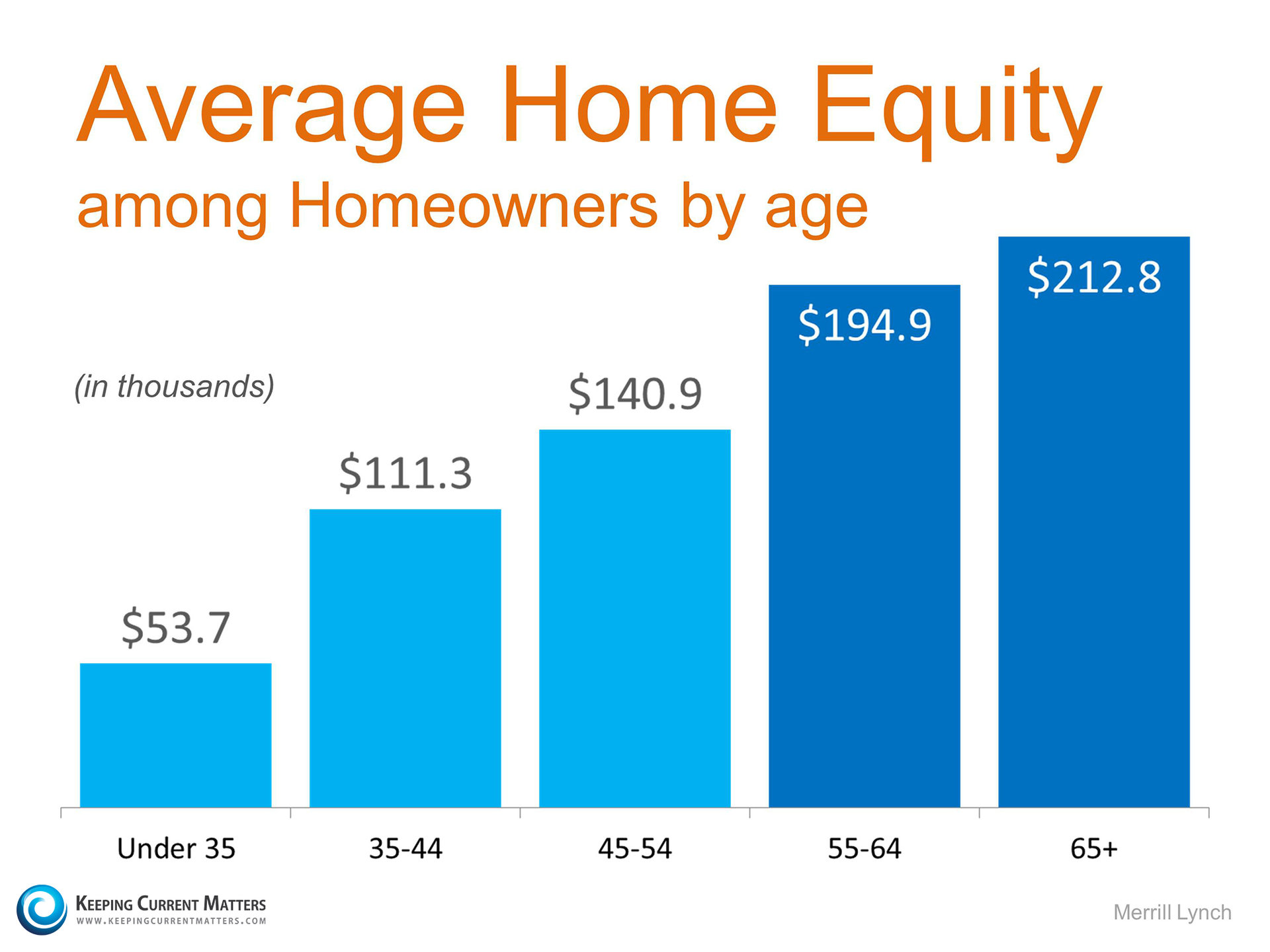
This should not surprise us as many studies have revealed the benefits enjoyed by the families who own their own home. One such study was done by the Joint Center of Housing Studies at Harvard University that addressed a major financial benefit to owning your own home: forced savings. The report explains:
“Since many people have trouble saving and have to make a housing payment one way or the other, owning a home can overcome people’s tendency to defer savings to another day.”
The Merrill Lynch study proves this point with the following data on home equity (a form of savings):
Average Home Equity | Keeping Current Matters

Bottom Line

There are many reasons that owning a home makes sense. The financial reasons are powerful. As one participant in the Merrill Lynch study put it:
“When I was younger, I always worried about that monthly mortgage payment. Now that I am retired, I have the peace of mind of knowing I own my home free and clear.”

Tuesday, October 27, 2015

Want to build some net worth? Stop renting in 2016 and buy a home.


2016: Homeowner’s Net Worth Will Be 45x Greater Than a Renter | Keeping Current Matters
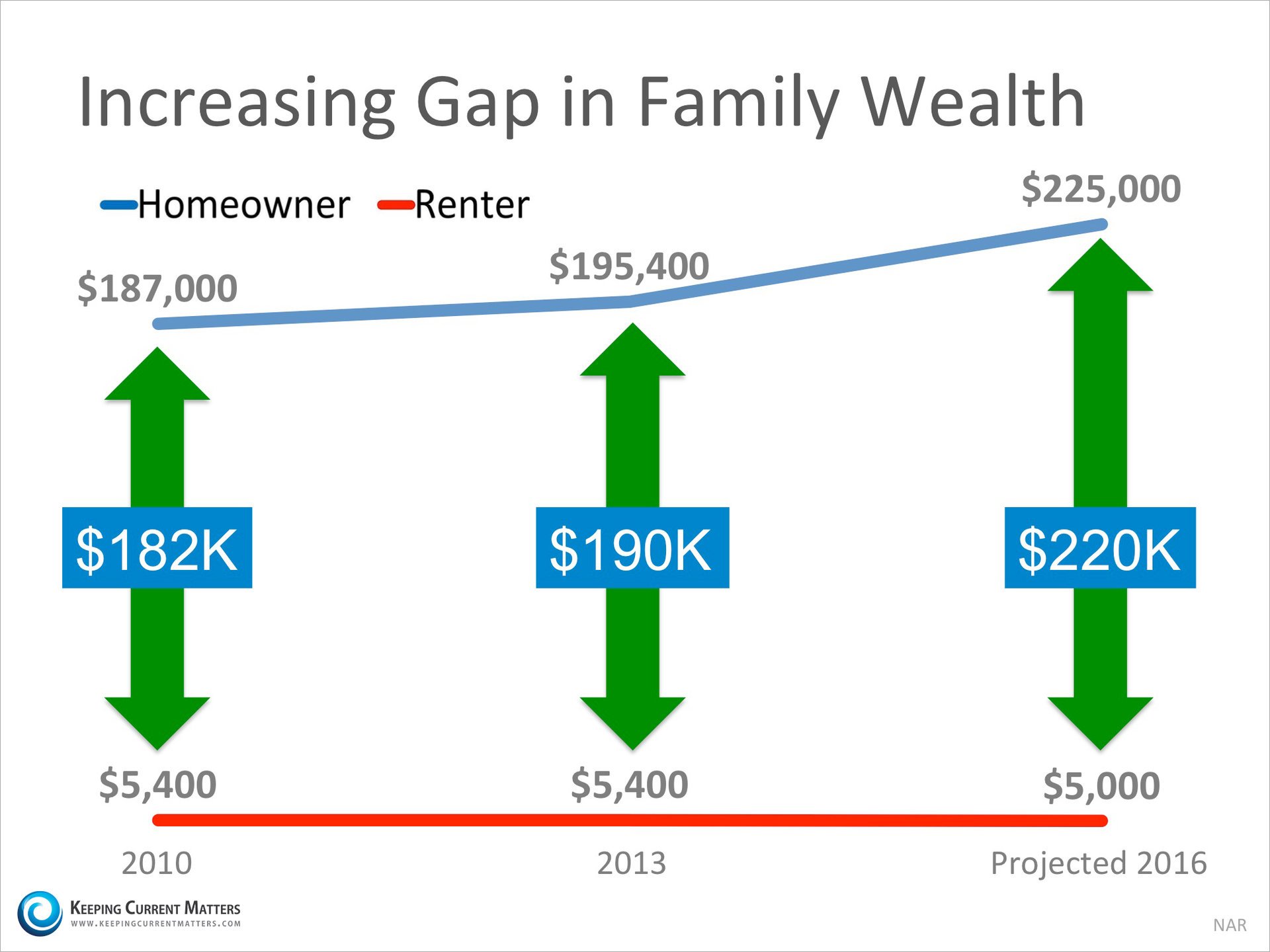
Every three years the Federal Reserve conducts a Survey of Consumer Finances in which they collect data across all economic and social groups. The latest survey, which includes data from 2010-2013, reports that a homeowner’s net worth is 36 times greater than that of a renter ($194,500 vs. $5,400).
In a recent Forbes article the National Association of Realtors’ (NAR) Chief Economist Lawrence Yun predicts that in 2016 the net worth gap will widen even further to 45 times greater.
The graph below demonstrates the results of the last two Federal Reserve studies and Yun’s prediction:
Increasing Gap in Family Wealth | Keeping Current Matters

Put Your Housing Cost to Work For You

Simply put, homeownership is a form of ‘forced savings’. Every time you pay your mortgage you are contributing to your net worth. Every time you pay your rent, you are contributing to your landlord’s net worth.
The latest National Housing Pulse Survey from NAR reveals that 80% of consumers believe that purchasing a home is a good financial decision. Yun comments:
“Though there will always be discussion about whether to buy or rent, or whether the stock market offers a bigger return than real estate, the reality is that homeowners steadily build wealth. The simplest math shouldn’t be overlooked.”

Bottom Line

If you are interested in finding out if you could put your housing cost to work for you through homeownership, meet with a real estate professional in your area who can guide you through the process.

Friday, October 23, 2015

Spooked out by the home buying process? I can make it a lot less scary!


Buying A Home Can Be Scary... Until You Know the FACTS! [INFOGRAPHIC] | Keeping Current Matters

Some Highlights:

  • 36% of Americans think they need a 20% down payment to buy a home. 44% of Millennials who purchased a home this year have put down less than 10%.
  • 71% of loan applications were approved last month
  • The average credit score of approved loans was 723 in September (the lowest recorded score since Ellie Mae began tracking in August 2011).

Wednesday, October 21, 2015

Want to build your family wealth? Build your home equity...


Family Wealth Grows as Home Equity Builds | Keeping Current Matters
With residential real estate values rising quite substantially in most parts of the country over the last few years, many homeowners are seeing a major increase in their family’s wealth as equity continues to build in their house.
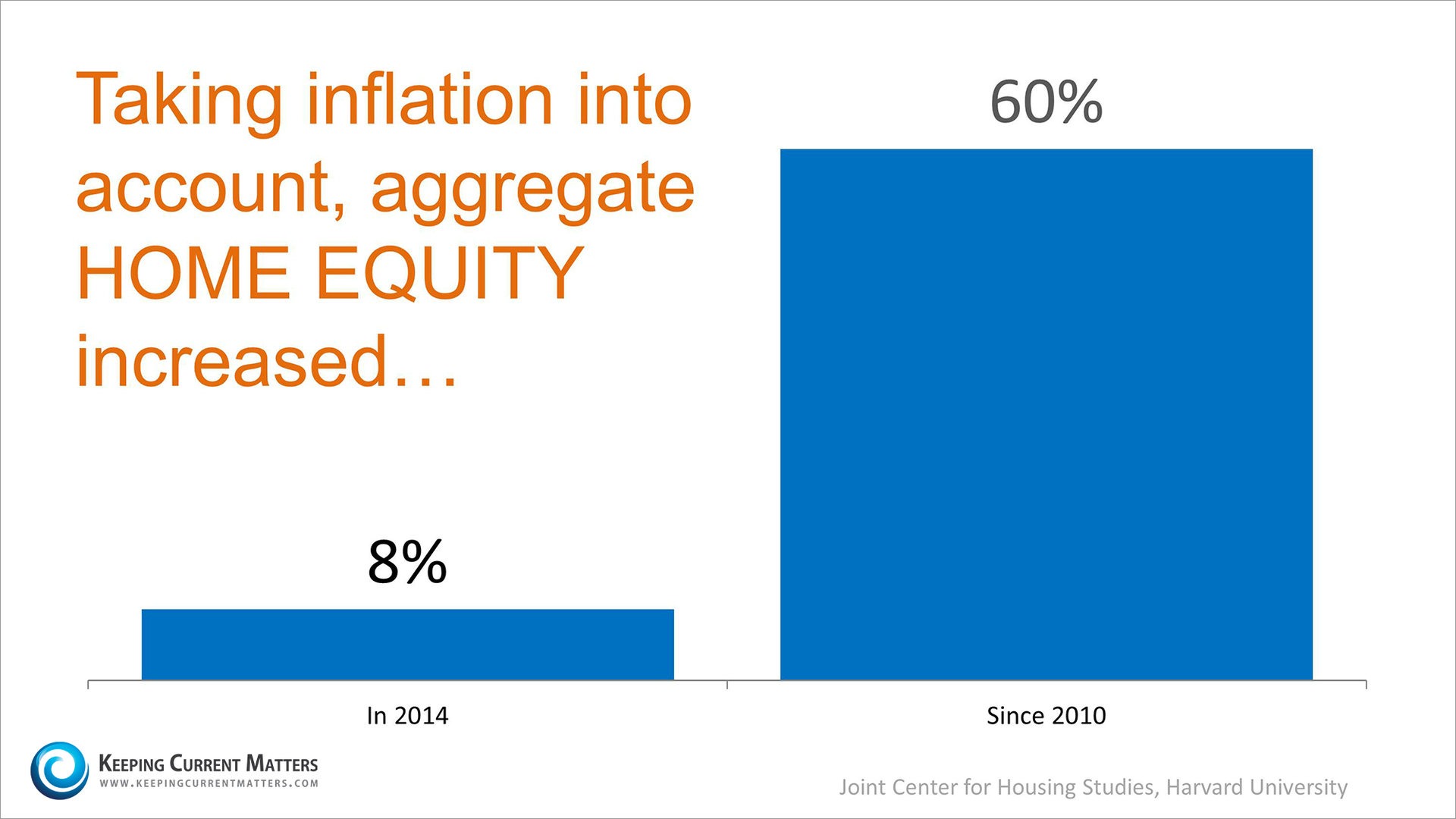
A recent study by the Joint Center of Housing Studies at Harvard University revealed that home equity grew nicely last year and has grown dramatically over the last five years…
Inflation & Home Equity | Keeping Current Matters
Buyers looking today may not see the same build-up in equity but could still do quite well.
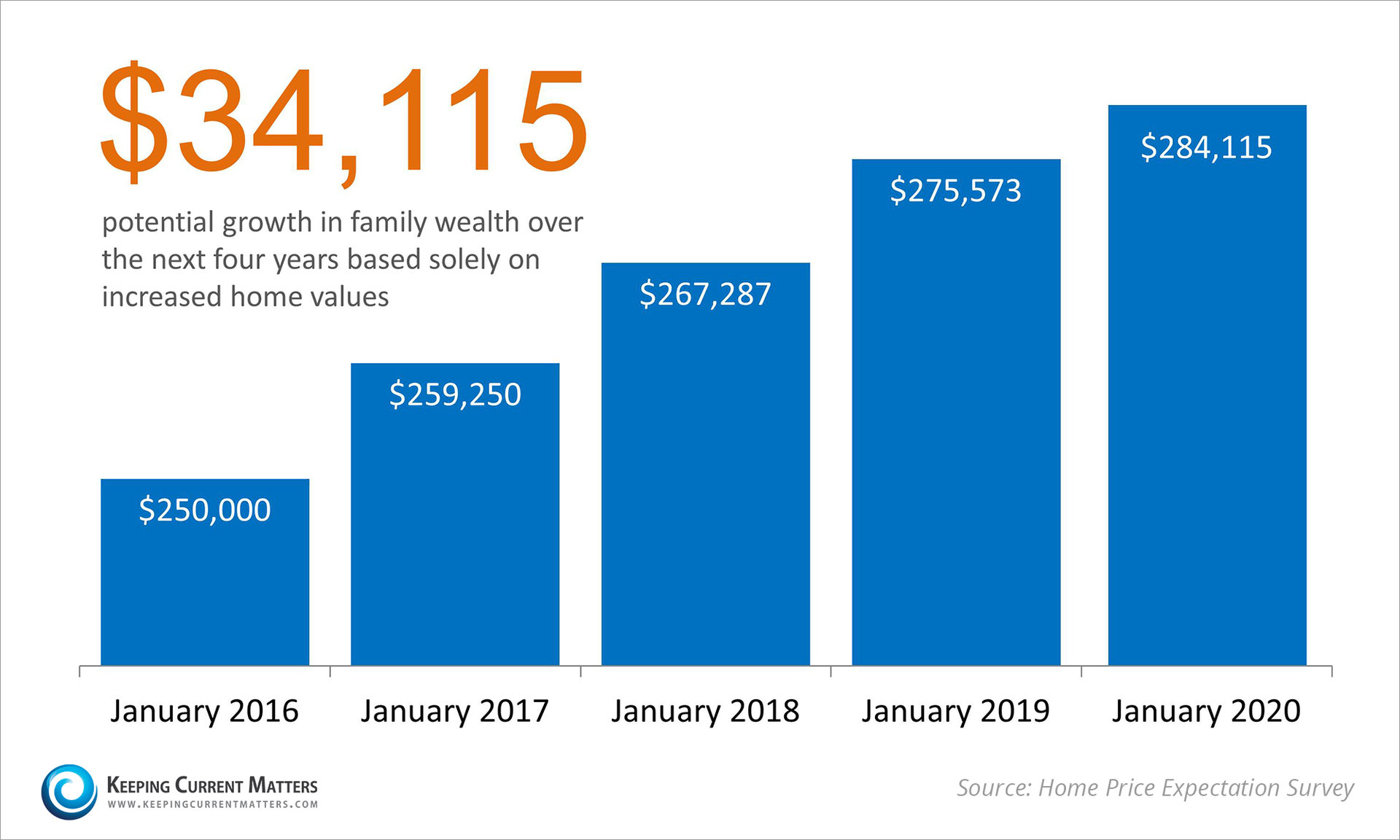
Let’s assume you went into contract in the next six weeks and closed on a $250,000 home in January. If we take the house value projections from the last Home Price Expectation Survey, here is how your equity would grow over the next four years:
Home Price Expectation Survey Equity | Keeping Current Matters

Bottom Line

Homeownership has historically been a great way for the average American family to build wealth over time.

Tuesday, October 20, 2015

Why is there so much mortgage paperwork now? It's quite simple...


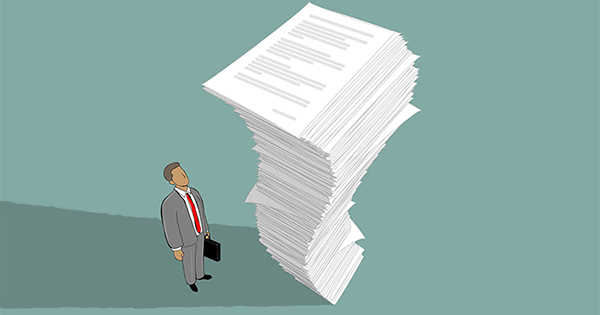
Applying For A Mortgage: Why So Much Paperwork? | Keeping Current Matters
We are often asked why there is so much paperwork mandated by the bank for a mortgage loan application when buying a home today. It seems that the bank needs to know everything about us and requires three separate sources to validate each and every entry on the application form.
Many buyers are being told by friends and family that the process was a hundred times easier when they bought their home ten to twenty years ago.
There are two very good reasons that the loan process is much more onerous on today’s buyer than perhaps any time in history.
  1. The government has set new guidelines that now demand that the bank prove beyond any doubt that you are indeed capable of affording the mortgage. During the run-up in the housing market, many people ‘qualified’ for mortgages that they could never pay back. This led to millions of families losing their home. The government wants to make sure this can’t happen again
  2. The banks don’t want to be in the real estate business. Over the last seven years, banks were forced to take on the responsibility of liquidating millions of foreclosures and also negotiating another million plus short sales. Just like the government, they don’t want more foreclosures. For that reason, they need to double (maybe even triple) check everything on the application.
However, there is some good news in the situation. The housing crash that mandated that banks be extremely strict on paperwork requirements also allowed you to get a mortgage interest rate probably at or below 4%.
The friends and family who bought homes ten or twenty ago experienced a simpler mortgage application process but also paid a higher interest rate (the average 30 year fixed rate mortgage was 8.12% in the 1990’s and 6.29% in the 2000’s). If you went to the bank and offered to pay 7% instead of <4%, they would probably bend over backwards to make the process much easier.

Bottom Line

Instead of concentrating on the additional paperwork required, let’s be thankful that we are able to buy a home at historically low rates.